Wednesday, November 7, 2012


George Soros: Obama Victory Means 'More Sensible Politics'
Sensible politics means satanic laws....

Billionaire investor George Soros said late Tuesday that the re-election of President Barack Obama will open "the door for a more sensible politics."
Soros, who has contributed mightily to Democratic causes, told Reuters: "I'm delighted that President Obama has won. The American electorate has rejected extremist positions, opening the door for a more sensible politics.
"Hopefully the Republicans in office will make better partners in the coming years, most urgently in avoiding the so-called fiscal cliff."
Read Latest Breaking News from Newsmax.com: http://www.newsmax.com/Newsfront/soros-obama-victory/2012/11/07/id/463120#ixzz2BXtU2L4Y
Billionaire investor George Soros said late Tuesday that the re-election of President Barack Obama will open "the door for a more sensible politics."
Soros, who has contributed mightily to Democratic causes, told Reuters: "I'm delighted that President Obama has won. The American electorate has rejected extremist positions, opening the door for a more sensible politics.
"Hopefully the Republicans in office will make better partners in the coming years, most urgently in avoiding the so-called fiscal cliff."
Read Latest Breaking News from Newsmax.com: http://www.newsmax.com/Newsfront/soros-obama-victory/2012/11/07/id/463120#ixzz2BXtU2L4Y
Colorado Legalizes Marijuana For Recreational Use
North America dawned under moral decay........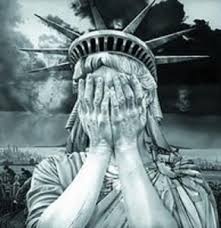
The Rocky Mountain High just got a whole lot higher. On Tuesday night, Amendment 64 -- the measure seeking the legalization of marijuana for recreational use by adults -- was passed by Colorado voters, making Colorado the first state to end marijuana prohibition in the United States.
With about 36 percent of precincts reporting at the time of publishing, 9Newsand Fox31 report that Amendment 64 has passed.
Colorado Gov. John Hickenlooper, a vocal opponent to the measure, reacted to the passage of A64 in a statement late Tuesday night:
The voters have spoken and we have to respect their will. This will be a complicated process, but we intend to follow through. That said, federal law still says marijuana is an illegal drug so don’t break out the Cheetos or gold fish too quickly.
The passage of the state measure is without historical precedent and the consequences will likely be closely-watched around the world. In an interview with The Huffington Post, the authors/researchers behind the book "Marijuana Legalization: What Everyone Needs To Know" pointed out that the measure in Colorado is truly groundbreaking, comparing it to the legalization that Amsterdam enjoys:
A common error is to believe that the Netherlands has already legalized cannabis (the preferred term for marijuana in Europe). What has been de facto legalized is only the retail sale of 5 grams (about a sixth of an ounce) or less. Production and wholesale distribution is still illegal, and that prohibition is enforced, which is largely why the price of sinsemilla in the “coffee shops” isn’t much different than the price in American dispensaries.
Although Colorado "legalized it," it will be several months, perhaps as long as a year, before Colorado adults 21-and-over can enjoy the legal sale of marijuana. However, the parts of the amendment related to individual behavior will go into effect as soon as Governor Hickenlooper certifies the results of the vote, a proclamation he is obligated to do within 30 days of the election, The Colorado Independent reported.
It's a huge victory for the Campaign To Regulate Marijuana Like Alcohol, the pro-pot group behind Amendment 64. "Over the past eight years in Colorado, we have argued that it is irrational to punish adults for choosing to use a product that is far less harmful than alcohol," Mason Tvert, co-director of the campaign, said in a statement. "Today, the voters agreed. Colorado will no longer have laws that steer people toward using alcohol, and adults will be free to use marijuana instead if that is what they prefer. And we will be better off as a society because of it."
This is the second time Colorado voted on legal weed, in 2006 Coloradans voted the measure down, but not in 2012. Tvert told The Huffington Post in an August interviewwhy he thought this year might be different:
The 2006 initiative would have simply removed the penalties for the possession of marijuana legal for individuals 21 years of age or older. The current initiative proposes a fully regulated system of cultivation and sales, which will eliminate the underground marijuana market and generate tens of millions of dollars per year in new revenue and criminal justice savings. It also directs the legislature to regulate the cultivation of industrial hemp, a versatile, popular, and environmentally friendly agricultural crop.
More importantly, voters are more informed about marijuana than ever before. They have also experienced the emergence of a state-regulated medical marijuana system that has not produced any serious problems, but has provided a number of benefits. We now know that marijuana cultivation and sales can be regulated, and that medical marijuana businesses do not contribute to increased crime. We have also seen marijuana use among high school students decrease since the state began implementing regulations, whereas it has increased nationwide where there are no regulations. And, of course, localities and the state have seen how much revenue can be generated through the legal sale of marijuana that would have otherwise gone into the underground market. Voters in Colorado no longer need to imagine what a legal and regulated system of marijuana sales would look like; they have seen it.
It's also worth noting that 2012 is a presidential election year, so we will benefit from increased voter turnout compared to an off-year election like 2006. Historically, the more people who vote, the more support marijuana reform initiatives receive.
On the same night that Colorado passed Amendment 64, Washington state passed Initiative 502 which regulates and taxes sales of small amounts of marijuana for adults, The Associated Press reports. Oregon also had a marijuana measure on the ballot, but as of publishing and with 47 percent of precincts reporting, it looked as if it would not pass.
Under Amendment 64, marijuana is taxed and regulated similar to alcohol and tobacco. It gives state and local governments the ability to control and tax the sale of small amounts of marijuana to adults age 21 and older. According to the Associated Press, analysts project that that tax revenue could generate somewhere between $5 million and $22 million a year in the state. An economist whose study was funded by a pro-pot group projects as much as a $60 million boost by 2017.
"Today, the people of Colorado have rejected the failed policy of marijuana prohibition," Brian Vicente, also a co-director of the Campaign to Regulate Marijuana, said in a statement. "Thanks to their votes, we will now reap the benefits of regulation. We will create new jobs, generation million of dollars in tax revenue, and allow law enforcement to focus on serious crimes. It would certainly be a travesty if the Obama administration used its power to impose marijuana prohibition upon a state whose people have declared, through the democratic process, that they want it to end."
The big unknown still is if the federal government will allow a regulated marijuana market to take shape. Attorney General Eric Holder, who was a vocal opponent of California's legalization initiative in 2010 saying he would "vigorously enforce" federal marijuana prohibition, has continued to remain silent on the issue this year.
In September, Holder was urged by nine former heads of the U.S. Drug Enforcement Administration to take a stand against marijuana legalization again. "To continue to remain silent conveys to the American public and the global community a tacit acceptance of these dangerous initiatives," the nine said in the letter to holder obtained by Reuters.
Earlier this month those same DEA drug warriors joined by former directors of the Office of National Drug Control Policy on a teleconference call to put additional pressure on Holder to speak out against Colorado's marijuana measure as well as similar initiatives on the ballot in Washington state and Oregon.
Huff Post Denver
The Rocky Mountain High just got a whole lot higher. On Tuesday night, Amendment 64 -- the measure seeking the legalization of marijuana for recreational use by adults -- was passed by Colorado voters, making Colorado the first state to end marijuana prohibition in the United States.
With about 36 percent of precincts reporting at the time of publishing, 9Newsand Fox31 report that Amendment 64 has passed.
Colorado Gov. John Hickenlooper, a vocal opponent to the measure, reacted to the passage of A64 in a statement late Tuesday night:
The voters have spoken and we have to respect their will. This will be a complicated process, but we intend to follow through. That said, federal law still says marijuana is an illegal drug so don’t break out the Cheetos or gold fish too quickly.
The passage of the state measure is without historical precedent and the consequences will likely be closely-watched around the world. In an interview with The Huffington Post, the authors/researchers behind the book "Marijuana Legalization: What Everyone Needs To Know" pointed out that the measure in Colorado is truly groundbreaking, comparing it to the legalization that Amsterdam enjoys:
A common error is to believe that the Netherlands has already legalized cannabis (the preferred term for marijuana in Europe). What has been de facto legalized is only the retail sale of 5 grams (about a sixth of an ounce) or less. Production and wholesale distribution is still illegal, and that prohibition is enforced, which is largely why the price of sinsemilla in the “coffee shops” isn’t much different than the price in American dispensaries.
Although Colorado "legalized it," it will be several months, perhaps as long as a year, before Colorado adults 21-and-over can enjoy the legal sale of marijuana. However, the parts of the amendment related to individual behavior will go into effect as soon as Governor Hickenlooper certifies the results of the vote, a proclamation he is obligated to do within 30 days of the election, The Colorado Independent reported.
It's a huge victory for the Campaign To Regulate Marijuana Like Alcohol, the pro-pot group behind Amendment 64. "Over the past eight years in Colorado, we have argued that it is irrational to punish adults for choosing to use a product that is far less harmful than alcohol," Mason Tvert, co-director of the campaign, said in a statement. "Today, the voters agreed. Colorado will no longer have laws that steer people toward using alcohol, and adults will be free to use marijuana instead if that is what they prefer. And we will be better off as a society because of it."
This is the second time Colorado voted on legal weed, in 2006 Coloradans voted the measure down, but not in 2012. Tvert told The Huffington Post in an August interviewwhy he thought this year might be different:
The 2006 initiative would have simply removed the penalties for the possession of marijuana legal for individuals 21 years of age or older. The current initiative proposes a fully regulated system of cultivation and sales, which will eliminate the underground marijuana market and generate tens of millions of dollars per year in new revenue and criminal justice savings. It also directs the legislature to regulate the cultivation of industrial hemp, a versatile, popular, and environmentally friendly agricultural crop.
More importantly, voters are more informed about marijuana than ever before. They have also experienced the emergence of a state-regulated medical marijuana system that has not produced any serious problems, but has provided a number of benefits. We now know that marijuana cultivation and sales can be regulated, and that medical marijuana businesses do not contribute to increased crime. We have also seen marijuana use among high school students decrease since the state began implementing regulations, whereas it has increased nationwide where there are no regulations. And, of course, localities and the state have seen how much revenue can be generated through the legal sale of marijuana that would have otherwise gone into the underground market. Voters in Colorado no longer need to imagine what a legal and regulated system of marijuana sales would look like; they have seen it.
It's also worth noting that 2012 is a presidential election year, so we will benefit from increased voter turnout compared to an off-year election like 2006. Historically, the more people who vote, the more support marijuana reform initiatives receive.
On the same night that Colorado passed Amendment 64, Washington state passed Initiative 502 which regulates and taxes sales of small amounts of marijuana for adults, The Associated Press reports. Oregon also had a marijuana measure on the ballot, but as of publishing and with 47 percent of precincts reporting, it looked as if it would not pass.
Under Amendment 64, marijuana is taxed and regulated similar to alcohol and tobacco. It gives state and local governments the ability to control and tax the sale of small amounts of marijuana to adults age 21 and older. According to the Associated Press, analysts project that that tax revenue could generate somewhere between $5 million and $22 million a year in the state. An economist whose study was funded by a pro-pot group projects as much as a $60 million boost by 2017.
"Today, the people of Colorado have rejected the failed policy of marijuana prohibition," Brian Vicente, also a co-director of the Campaign to Regulate Marijuana, said in a statement. "Thanks to their votes, we will now reap the benefits of regulation. We will create new jobs, generation million of dollars in tax revenue, and allow law enforcement to focus on serious crimes. It would certainly be a travesty if the Obama administration used its power to impose marijuana prohibition upon a state whose people have declared, through the democratic process, that they want it to end."
The big unknown still is if the federal government will allow a regulated marijuana market to take shape. Attorney General Eric Holder, who was a vocal opponent of California's legalization initiative in 2010 saying he would "vigorously enforce" federal marijuana prohibition, has continued to remain silent on the issue this year.
In September, Holder was urged by nine former heads of the U.S. Drug Enforcement Administration to take a stand against marijuana legalization again. "To continue to remain silent conveys to the American public and the global community a tacit acceptance of these dangerous initiatives," the nine said in the letter to holder obtained by Reuters.
Earlier this month those same DEA drug warriors joined by former directors of the Office of National Drug Control Policy on a teleconference call to put additional pressure on Holder to speak out against Colorado's marijuana measure as well as similar initiatives on the ballot in Washington state and Oregon.
Huff Post Denver
Maine and Maryland first U.S. states to approve same-sex marriage by popular vote
Shame shame shame to North America
Maine and Maryland have become the first states to approve same-sex marriage by popular vote.
The outcomes in Maine and Maryland broke a 32-state streak, dating back to 1998, in which gay marriage had been rebuffed by every state that held a vote on it. They will become the seventh and eighth states to allow same-sex couples to marry.
“For the first time, voters in Maine and Maryland voted to allow loving couples to make lifelong commitments through marriage — forever taking away the right-wing talking point that marriage equality couldn’t win on the ballot,” said Chad Griffin of the Human Rights Campaign, a national gay-rights group.
Washington state also was voting on a measure to legalize same-sex marriage, though results were not expected until Wednesday at the soonest. Minnesota voters also rejected a conservative-backed amendment that would place a ban on same-sex marriage in the state constitution.
The outcomes in the four states could possibly influence the U.S. Supreme Court, which will soon be considering whether to take up cases challenging the law that denies federal recognition to same-sex marriages.
Maine’s referendum on same-sex marriage marked the first time that gay-rights supporters put the issue to a popular vote. They collected enough signatures over the summer to schedule the vote, hoping to reverse the outcome of a 2009 referendum that quashed a gay-marriage law enacted by the Legislature.
In both Maryland and Washington, gay-marriage laws were approved by lawmakers and signed by the governors earlier this year, but opponents gathered enough signatures to challenge the laws.
Maryland Gov. Martin O’Malley, who campaigned vigorously for approval of the marriage measure, spoke to a jubilant crowd in Baltimore, which celebrated with hugs, dancing and popping of balloons.
“Every child’s home deserves to be protected under the law,” O’Malley said.
The president of the most active advocacy group opposing same-sex marriage, Brian Brown of the National Organization for Marriage, insisted the Maryland and Maine results did not mark a watershed moment.
“At the end of the day, we’re still at 32 victories and they’ve got two,” he said. “Just because two extreme blue states vote for gay marriage doesn’t mean the Supreme Court will create a constitutional right for it out of thin air.”
Heading into the election, gay marriage was legal in six states and the District of Columbia — in each case the result of legislation or court orders, not by a vote of the people.
National Post
Maine and Maryland have become the first states to approve same-sex marriage by popular vote.
The outcomes in Maine and Maryland broke a 32-state streak, dating back to 1998, in which gay marriage had been rebuffed by every state that held a vote on it. They will become the seventh and eighth states to allow same-sex couples to marry.
“For the first time, voters in Maine and Maryland voted to allow loving couples to make lifelong commitments through marriage — forever taking away the right-wing talking point that marriage equality couldn’t win on the ballot,” said Chad Griffin of the Human Rights Campaign, a national gay-rights group.
Washington state also was voting on a measure to legalize same-sex marriage, though results were not expected until Wednesday at the soonest. Minnesota voters also rejected a conservative-backed amendment that would place a ban on same-sex marriage in the state constitution.
The outcomes in the four states could possibly influence the U.S. Supreme Court, which will soon be considering whether to take up cases challenging the law that denies federal recognition to same-sex marriages.
Maine’s referendum on same-sex marriage marked the first time that gay-rights supporters put the issue to a popular vote. They collected enough signatures over the summer to schedule the vote, hoping to reverse the outcome of a 2009 referendum that quashed a gay-marriage law enacted by the Legislature.
In both Maryland and Washington, gay-marriage laws were approved by lawmakers and signed by the governors earlier this year, but opponents gathered enough signatures to challenge the laws.
Maryland Gov. Martin O’Malley, who campaigned vigorously for approval of the marriage measure, spoke to a jubilant crowd in Baltimore, which celebrated with hugs, dancing and popping of balloons.
“Every child’s home deserves to be protected under the law,” O’Malley said.
The president of the most active advocacy group opposing same-sex marriage, Brian Brown of the National Organization for Marriage, insisted the Maryland and Maine results did not mark a watershed moment.
“At the end of the day, we’re still at 32 victories and they’ve got two,” he said. “Just because two extreme blue states vote for gay marriage doesn’t mean the Supreme Court will create a constitutional right for it out of thin air.”
Heading into the election, gay marriage was legal in six states and the District of Columbia — in each case the result of legislation or court orders, not by a vote of the people.
National Post
Merkel calls Christianity world’s ‘most persecuted’ religion

BERLIN (AP) — Opposition lawmakers and human rights groups are criticizing German Chancellor Angela Merkel for claiming that Christianity is “the most persecuted religion worldwide.”
Lawmaker Jerzy Montag of the opposition Greens party on Tuesday described Merkel’s comments as “mistaken” and “not very helpful.”
Rights campaigners said ranking faiths according to how persecuted they are is pointless.
Human Rights Watch noted that Muslims in Myanmar, members of Falun Gong in China and Jews in many countries worldwide also face persecution.
Merkel’s comments came at a meeting of the German Protestant Church late Monday in which she emphasized Germany needed to protect Christian minorities as part of its foreign policy.
Merkel, the daughter of a pastor, also spoke out against a strict separation of church and state and said Europe was built on Christian foundations.
The Times of Israel
Dollar falls as Obama win

The dollar fell against the yen on speculation Barack Obama’s re-election as president will boost chances the U.S. will maintain monetary stimulus policies that tend to weaken the greenback.
The euro erased gains as European Central Bank President Mario Draghi said the Europe’s crisis is affecting Germany. The U.S. currency was mixed versus its major peers as Obama defeated Republican challenger Mitt Romney, who disagreed with current Federal Reserve policy. Obama now faces the so-called fiscal cliff, $600 billion in tax increases and spending cuts set to be implemented in 2013.
The dollar traded at $1.2812 per euro as of 8:18 a.m. in Tokyo from $1.2814 at the close yesterday, when it reached $1.2764, the strongest since Sept. 11. Photographer: Kiyoshi Ota/Bloomberg
Oct. 29 (Bloomberg) -- John Normand, head of global currency strategy at JPMorgan Chase & Co., talks about the outlook for the U.S. dollar. He speaks with Tom Keene and Sara Eisen on Bloomberg Television's "Surveillance." (Source: Bloomberg)
Nov. 1 (Bloomberg) -- Jane Foley, senior currency strategist at Rabobank International, talks about the outlook for the dollar, yen and pound. She speaks from London with Caroline Hyde on Bloomberg Television's "The Pulse." (Source: Bloomberg)
Sponsored Links
“The size of the victory was perhaps at the upper end of what people were expecting, so that may mean that his negotiations with the Republicans to stop us going over the fiscal cliff might be a bit easier,” said Paul Robson, a senior foreign-exchange strategist at Royal Bank of Scotland Group Plc in London. “The idea of unchanged Fed policy is slightly supportive for equities, slightly weaker dollar, and I think that’s how people are playing it today.”
The U.S. currency depreciated 0.3 percent to 80.08 yen at 7:44 a.m. in New York after declining to 79.81 yen, the weakest level since Nov. 1. The dollar rose 0.4 percent to $1.2764 per euro after falling 0.1 percent yesterday. The euro slipped 0.8 percent to 102.20 yen.
Obama prevailed over Romney narrowly in the popular vote, yet achieved an electoral sweep by carrying the crucial states of Colorado, Ohio and Virginia. With Florida too close to call, Obama had captured 303 Electoral College votes, well beyond the 270 needed to win the White House, compared with 206 for Romney.
‘Dollar Selling’
“Monetary policy will remain loose under Obama so the dollar will be sold,” said Michiyoshi Kato, senior vice president of foreign-currency sales at Mizuho Corporate Bank Ltd. inTokyo. “Dollar selling may not last that long as the U.S. faces the fiscal cliff.”
Romney had said he disagreed with the Fed’s measures to stimulate the economy and would replace Chairman Ben S. Bernanke at the end of the latter’s term in January 2014. U.S. policy makers unveiled a plan in September to buy $40 billion of mortgage-backed securities every month in a third round of so- called quantitative easing after $2.3 trillion purchases of bonds from December 2008 and June 2011.
“Obama’s re-election is likely to boost expectations of continued easing by the Fed,” said Junya Tanase, chief currency strategist at JPMorgan Chase & Co. in Tokyo. “If it leads to lower U.S. yields and higher stock prices, the bias will be for the dollar-yen to fall.”
Extra Yield
The extra yield investors demand to hold two-year U.S. Treasuries instead of similar-maturity Japanese government bonds shrank to 17 basis points, the least since Oct. 16, curbing the allure of the dollar over the yen.
Australia’s dollar rose to a six-week high against the U.S. currency as the MSCI Asia PacificIndex (MXAP) of shares gained 0.7 percent.
“The Aussie has popped in a very short-term market reaction,” said Sacha Tihanyi, a senior currency strategist at Scotiabank in Hong Kong. With Obama poised to begin another four-year term, “the consistent approach that will be executed by the current administration is positive. The one thing we don’t need these days is uncertainty.”
The Australian currency traded at $1.0435 after rising to $1.0480, the strongest since Sept. 21.
Greek Austerity
Gains in the euro were tempered as Greek lawmakers prepared to vote on austerity measures needed to keep its international bailout on track.
The 238 pages of additional austerity plans, ranging from raising the retirement age to eliminating holiday payments for pensioners, will be debated by the Greek parliament today with a roll-call vote expected. Approval is the first of the parliamentary votes required by Nov. 12 to unlock a 31 billion- euro portion of international aid.
“There is an expectation that will pass, and that again just takes yet another tail risk away from the euro,” Royal Bank of Scotland’s Robson said.
The euro declined 1.2 percent over the past month, according to Bloomberg Correlation-Weighted Indexes, which track 10 developed-nation currencies. The dollar rose 0.5 percent and the yen fell 1.9 percent.
“The weak overall economic situation, combined with slow money growth, means that the risks of inflation are currently very low over the medium term,” ECB President Draghi said in a speech in Frankfurt. “Our interventions will not change this outlook.”
Switzerland’s central bank said its foreign-currency reserves declined last month for the first time since February.
Holdings dropped to 424.4 billion francs ($451 billion) at the end of October from a revised 429.5 billion francs the previous month, the Swiss National Bank said. Economists surveyed by Bloomberg News forecast 432 billion francs.
SNB President Thomas Jordan pledged to enforce a franc ceiling of 1.20 per euro introduced in September 2011 “with the utmost determination” even as the euro area’s fiscal crisis prompted policy makers to pile up record currency holdings.
Bloomberg
Decoding what's coming with pastor Lankford
Listen to internet radio with VoiceOfEvangelism on Blog Talk Radio
Subscribe to:
Posts (Atom)