
Expectations have been growing of a possible interest rate cut to support the weakening European economy as the region's debt crisis saps business confidence and raises the spectre of another recession.
The 3pc inflation figure for the 17 countries that share the euro is a first estimate from the EU's statistics agency Eurostat, up from the 2.5pc in August and compared to a 2.5pc forecast by economists.
As a two-year run of strong manufacturing growth slowed, the ECB changed its tone at its last rates meeting in early September and opened the door to cuts, signalling that it had halted a cycle of interest rate rises begun five months ago.
ECB President Jean-Claude Trichet said then there were "intensified downside risks" for the eurozone's economy.
In Germany, the region's biggest economy, annual consumer prices rose to 2.6pc in September from 2.4pc a month earlier, compared to expectations for it to be steady, while month-on-month prices rose 0.1pc instead of an expected drop of the same magnitude.
Eurostat's flash estimate for the month does not include a monthly calculation nor any full data.
The statistics agency also reported unemployment for August, which in the euro zone was unchanged from July at 10pc and down slightly from 10.2pc in the same month a year ago. That suggests companies are not yet laying off staff even as the economy loses pace.
The Telegraph
hostgator coupon 2011
Stagnations typically mean long periods of sluggish growth of about 0.5pc, low inflation, rising and sticky unemployment, stagnant house prices, and lower returns on shares, they said.
There is a 40pc chance of the current situation developing into a period of stagnation among developed economies, Goldman calculated.
"Trends in Europe and the US are so far still following growth paths that would be typical of stagnations," they said in a note.
"Given those risks, whether these countries manage to avoid a ‘Great Stagnation’ by a pick-up in the recovery is likely to depend on policy being able to restore confidence and putting in place reforms that can decisively jolt growth".
Looking at 150 years of macroeconomic history, they found that the probability of stagnation is much higher after financial crises.
Stagnant periods tend not to be volatile and so lack sharp new recessions or significant recoveries.
The research by Goldman found that about 60pc of stagnations that occurred since the late 1800s in dozens of countries - both developed and emerging markets - did so in the post Second World War period. About 24pc of them lasted more than a decade.
The longest-lasting period of stagnation took place in India for almost two decades following the early 1930s.
The Telegraph
hostgator coupon 2011
Reading the British or American press these days, the villains of the euro crisis are easy to spot: Germany and the European Central Bank (ECB).
If only they would stop holding the single currency to ransom, say the armchair strategists, get with the programme, and write a blank cheque for the euro, that will finally silence the markets' fears.
Then, so the argument runs, the crisis will be over, and that cheque might never be cashed.
Well, perhaps.Who will pay?

But spending a few days in Germany this week, I've been reminded that there is another side of the story, and it isn't just that the German people would rather not fork out cash for distant neighbours (though that is true too).
The way many German officials see it, they are playing the conscience of the eurozone.
They are the ones asking who, ultimately, will stand behind these grand promises, and when, exactly, elected governments are going to get a chance to have their say.
That is why Chancellor Merkel and her finance minister repeated, again and again, this week that they would reform the eurozone "one step at a time".
It's not just a practical necessity - in their view - it is also a moral one.
On this line of reasoning, the future of the eurozone shouldn't be decided at gunpoint, under pressure from the financial markets - or foreigners like the US Treasury Secretary, Tim Geithner, who seem to think you write the cheque first, and ask questions after.Two hundred years
Mr Geithner says that the lesson of 2008, and nearly every other financial crisis, is that the slower you react, the more it costs you in the end.
He is almost certainly right.
But, as some in Berlin would add, didn't the US have its own problems, getting the TARP programme passed by Congress, in October 2008?
And the TARP didn't require them to re-write the US Constitution. If it had, it would never have happened.
The last constitutional amendment to be ratified by all 50 US states was about Congressional pay.
This 27th Amendment became law in 1992, more than 200 years after it was first passed by Congress and submitted to the states.
Chancellor Merkel isn't asking for 200 years (we hope). But as I point out in my piece for the Thursday TV bulletins, even the response to the crisis we have seen so far has taken the eurozone many steps towards a fiscal union, without much of a democratic debate.Legitimacy
We see these steps with the development of the EFSF, but also, and less transparently, in the many interventions by the ECB, whose balance sheet has become, in effect, a stalking horse for a common eurobond.
If the ECB loses its shirt in the Greek bailout - or its purchases of Spanish and Italian debt - it is eurozone taxpayers collectively who will pay, whether they feel collective or not.
Outsiders want them now to integrate faster, to resolve the crisis - even eurosceptics, like George Osborne, who would never in a million years want the UK to be included.
But the faster they move, the less legitimate that union may be in the eyes of voters, especially German ones, who understandably fear that in a fiscal union, we will see the same problems crop up again and again.
You may not share the German desire to punish unwise investors and profligate governments - so that others do not do the same.
You might think it hopelessly backward to want to respond to a financial crisis "one step at a time".
But with the future of Europe at stake, it's not the most unreasonable thing in the world to want to take it slow.
BBC
hostgator coupon 2011
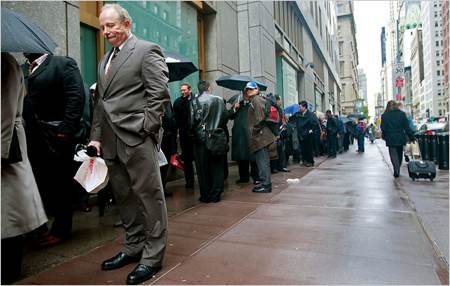
Sept. 29 (Bloomberg) -- Federal Reserve Chairman Ben S. Bernanke said the U.S. is facing a crisis with a jobless rate at or above 9 percent since April 2009, and that fiscal discipline would help spur the economic recovery.
“This unemployment situation we have, the jobs situation, is really a national crisis,” Bernanke said in response to questions after a speech yesterday in Cleveland. “We’ve had close to 10 percent unemployment now for a number of years and, of the people who are unemployed, about 45 percent have been unemployed for six months or more. This is unheard of.”
The chairman is contending with the most opposition on the Federal Open Market Committee in almost 19 years, with three policy makers opposing the central bank’s decision last week to push down longer-term interest rates. Fed regional bank presidents Thomas Hoenig of Kansas City and Richard Fisher of Dallas spoke out against the plan this week, while Eric Rosengren of Boston backed it and Dennis Lockhart of Atlanta said the move will probably have a “modest” effect.
The speech was Bernanke’s first since the Fed announced on Sept. 21 that it would replace $400 billion of short-term debt in its portfolio with longer-term Treasuries in an effort to further reduce borrowing costs and strengthen the flagging economy. U.S. growth has stalled even as the Fed purchased $2.3 trillion in assets in two rounds of quantitative easing and held interest rates near zero since December 2008.
“Monetary policy is not a panacea,” Bernanke said. “There are certainly some areas where other policy makers could contribute,” and “strong housing policies to help the housing markets recover would certainly be useful.”
Stocks Decline
The Standard & Poor’s 500 Index of stocks fell 2.1 percent yesterday to 1,151.06 in New York trading, while yields on 10- year Treasury notes rose 1 basis point, or 0.01 percentage point, to 1.97 percent.
The U.S. should learn from the success of many emerging market economies and support strong economic growth through “disciplined fiscal policies,” Bernanke said in his speech yesterday. He didn’t address the outlook for the U.S. economy or monetary policy in his remarks on “Lessons from Emerging Market Economies on the Sources of Sustained Growth.”
The experience of emerging markets shows “the need to encourage private capital formation while undertaking necessary public investments,” Bernanke said. He also cited open trade, investment in education, technological advances and a regulatory framework that “encourages entrepreneurship and innovation while maintaining financial stability.”
Set of Guidelines
Bernanke’s speech reviewed the recommendations of John Williamson, an economist and senior fellow at the Peterson Institute for International Economics, a set of guidelines known as the Washington Consensus.
During the U.S. recession from December 2007 to June 2009, the BRIC nations of Brazil, Russia, India and China became the engines of the global economy, with Chinese gross domestic product expanding 7.9 percent even as the U.S. was still contracting.
While emerging countries produced about 85 percent of global economic growth since then, China, India and Brazil are slowing after they lifted interest rates to curb inflation following at least $870 billion of fiscal stimulus during the financial crisis.
“Over time, as the emerging market countries become wealthier and technologically more sophisticated, they will gradually lose the advantages of starting from behind,” Bernanke said.
Both emerging markets and advanced economies will have to “do their part” to reduce global imbalances, Bernanke said.
hostgator coupon 2011
BRUSSELS (AP) -- Until recently, the idea that the 27-nation European Union might disintegrate would have been unthinkable, for uniting a continent ripped apart by two World Wars was considered a rousing diplomatic success.
But the EU's two most cherished achievements -- a common currency and the free movement of people across borders -- are under threat. And the possibility that the decades-long experiment that is the EU might not survive in its present form has now entered mainstream debate.
The Polish finance minister, Jacek Rostowski, has raised the prospect that the EU might split apart. German Chancellor Angela Merkel said if its common currency, the euro, failed, so too would Europe itself. And experts say the euro's stability is by no means assured: George Osborne, the British chancellor, has said that only a few weeks remain to save it.
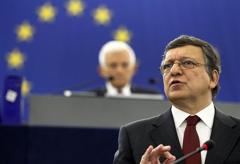
On Wednesday, Jose Manuel Barroso, the president of the European Commission, the EU's executive arm, described the state of the union in unusually stark terms. The EU, he said, was facing the biggest challenge since its creation.
"We're in a crucial moment in history," he said. "If we do not move forward with more unification, we will suffer more fragmentation."
None of these officials is predicting the EU's demise. But it is a measure of the gravity of situation that they are discussing the possibility at all.
Since the 1950s, the strengthening of European integration had seem slow and fitful, but also inexorable. In 1951, six countries formed the European Coal and Steel Community. In 1957, they established the European Economic Community.
In 1985, the Schengen Agreement was signed with the aim of abolishing checks at the borders between member countries. In 2002, the switch from national currencies to the euro went off without a hitch -- and 17 nations now share the common currency.
Over time, the EU has grown from six countries to 27, and currently it is home to more than 500 million people.
The challenge now is how to manage a currency that covers 17 countries, and a borderless travel area of 25 -- including some nations outside the EU -- without strong central governance. As the EU is currently run, decisions must be approved unanimously, meaning a single country can block action.
That's why Finland can throw a wrench into the Greek bailout negotiations and why the Netherlands has been able to block Serbian entrance into the group.
Without clearer rules, the EU will have to dramatically scale back its ambitions, says Karel Lannoo, the head of the Brussels-based Center for European Policy Studies.
"It needs to be much more consistent in the way it works as a federal structure," he said Wednesday, citing the U.S. model where the hierarchy between states and the federal government is well-defined.
As it is, he said, some EU countries simply do not accept rules they do not like.
That same point was made by Barroso in his state of the union speech Wednesday to the European Parliament in Strasbourg, France, when he pleaded for stronger central governance and decried "the constraint of unanimity."
"The pace of our joint endeavor cannot be dictated by the slowest," he said.
These constraints have meant that European officials have consistently reacted more slowly and less decisively to the euro crisis than financial markets would have liked, exacerbating the situation and throwing the future of the euro in doubt. And when countries did not follow EU rules on budget deficits, contributing to the euro debt crisis, no federal structure sanctioned them.
Lannoo, the policy analyst, said he was "rather pessimistic" about the survival of the euro. But he does not agree that the collapse of the euro would mean the collapse of the European Union. It could continue, he says, maybe with fewer members as a free trade zone with common rules but no common currency.
Paul de Grauwe, an economics professor and EU expert at the Catholic University of Leuven in Belgium, says the EU faces a stark choice.
"One road is more integration to save the project, to save the Schengen zone and the monetary union," de Grauwe said. "But there is a lot of opposition. It's also possible that we take the other road, no further integration, and then we risk the collapse of these two experiments."
British Foreign Secretary William Hague of the Conservative party, a longtime Euro-skeptic, says the euro was doomed from the start. Britain, which united with other European nations in 1973, never did join the euro and has no plans to now.
"It was folly to create this system, it will be written about for centuries as a kind of historical monument to collective folly. But it's there and we have to deal with it," Hague was quoted as saying Wednesday in The Spectator magazine.
"I described the euro as a burning building with no exits and so it has proved for some of the countries in it," he said.
The European Union was created out of the ashes of World War II: Its initial goal was to use economic integration to prevent Europe from ever going to war with itself again. By that measure it has succeeded admirably -- and for that reason, some politicians greatly fear its demise.
"The game is not only about the well-being of this generation or the next generation, but is goes without saying we're also fighting for the safety of this and future generations," said Rostowski, the Polish finance minister. "It is difficult to imagine Europe to be as safe as it is now without the European Union."
But Barroso, having first raised the specter of "fragmentation," told lawmakers he was confident that Europe would summon the political will to survive.
"I tell you, yes, it is possible to get out of this crisis," he said. "Not only is it possible, it's necessary."
hostgator coupon 2011

