Wednesday, July 6, 2011


California lawmakers pass bill to teach gay history
SHAME..............
(Reuters) - A bill to require California public schools to teach the historical accomplishments of gay men and lesbians passed the state Legislature on Tuesday in what supporters call a first for the nation.
Governor Jerry Brown, a Democrat, has not said publicly whether he supports the bill, which he has 12 days to sign or veto once it reaches his desk later this month. If he takes no action, the measure would become law automatically.
The bill gained final passage from the state Assembly on a vote of 49-25, without a single Republican supporting it. The measure cleared the state Senate in April.
California already requires public schools to teach the contributions made to society by women and by racial and ethnic groups that were historically discriminated against, such as blacks, Latinos and Native Americans.
Supporters of the latest bill said it would simply include gays, lesbians, bisexuals and transgender individuals in that existing requirement, making it part of the curriculum in history and other social studies classes.
"It's unfair to leave out or exclude an entire portion of our population from history," said Carolyn Laub, executive director of San Francisco-based Gay-Straight Alliance Network.
The group, which supported the bill, said no other state has passed similar legislation requiring the teaching of gay and lesbian contributions to society.
In fact, Laub pointed to a bill that passed the Tennessee state Senate this year that would prohibit the state's schools from teaching about homosexuality before secondary school.
The Tennessee proposal, which detractors have nicknamed the "don't say gay bill," has still not passed the state House of Representatives.
California Assemblyman Donald Wagner is one of the Republicans who opposed the state's bill requiring teaching about the accomplishments of gays and lesbians.
"Writing these provisions into textbooks will further an agenda rather than teach facts," Wagner said. "When we do things, we politicize them because that's the nature of politics. We should leave education to the educators."
Governor Jerry Brown, a Democrat, has not said publicly whether he supports the bill, which he has 12 days to sign or veto once it reaches his desk later this month. If he takes no action, the measure would become law automatically.
The bill gained final passage from the state Assembly on a vote of 49-25, without a single Republican supporting it. The measure cleared the state Senate in April.
California already requires public schools to teach the contributions made to society by women and by racial and ethnic groups that were historically discriminated against, such as blacks, Latinos and Native Americans.
Supporters of the latest bill said it would simply include gays, lesbians, bisexuals and transgender individuals in that existing requirement, making it part of the curriculum in history and other social studies classes.
"It's unfair to leave out or exclude an entire portion of our population from history," said Carolyn Laub, executive director of San Francisco-based Gay-Straight Alliance Network.
The group, which supported the bill, said no other state has passed similar legislation requiring the teaching of gay and lesbian contributions to society.
In fact, Laub pointed to a bill that passed the Tennessee state Senate this year that would prohibit the state's schools from teaching about homosexuality before secondary school.
The Tennessee proposal, which detractors have nicknamed the "don't say gay bill," has still not passed the state House of Representatives.
California Assemblyman Donald Wagner is one of the Republicans who opposed the state's bill requiring teaching about the accomplishments of gays and lesbians.
"Writing these provisions into textbooks will further an agenda rather than teach facts," Wagner said. "When we do things, we politicize them because that's the nature of politics. We should leave education to the educators."
Iran’s nuclear program helped by China, Russia

The foundation of Iran’s nuclear program can be traced to extensive Chinese and Russian cooperation in the 1990s, according to a formerU.S. intelligence official who specialized on Tehran’s program.
“Russian and Chinese cooperation in the 1990s with Iran created the foundation of the Iranian nuclear program today,” said Susan Voss, a former nuclear engineering analyst with Los Alamos National Laboratorywho has worked closely with the U.S. intelligence community.
Many analysts in recent years have focused on how Iran obtained the centrifuge technology used at the Natanz nuclear plant and declared to the International Atomic Energy Agency in 2002. That design, known as a P1 centrifuge, came from the illicit smuggling network of Pakistani scientist A.Q. Khan.
But much of Iran’s program, including the design of its uranium hexaflouride facility and the reactor used in its Arak heavy water facility to produce plutonium, can be traced to cooperation in the 1990s with China and Russia.
Ms. Voss said Chinese cooperation began in 1987 and continued for about 10 years. It provided Iran with a uranium mining capability by providing specialists as well as the design for its uranium hexaflouride plant.
In the case of Russia, many of Iran’s engineers were trained at Russian nuclear labs in the 1990s as well, she said.
An element of Russian cooperation with Iran was disclosed first in 2009 by the Institute for Science and International Security (ISIS) when the private group wrote a technical paper describing how the Iranian Arak facility contained an element of its structure that appeared to be a copy of the Soviet-era fuel rod system used in a heavy water reactor to make plutonium.
“ISIS put out a document where they pulled together everything that shows the Arak facility must have been built with Russian support,” Ms. Voss said.
However, she also pointed out that officially the Russian government at the time denied providing that support to Iran, leading her to conclude that the cooperation was carried out covertly.
David Albright, a former weapons inspector and the president ISIS, said the Russian cooperation likely went beyond the heavy water reactor atArak.
“We know of at least one former nuclear weapons expert in Russia who helped Iran develop a triggering mechanism to set off high explosives in a nuclear weapon,” he said.
Ms. Voss says the Iranians turned to Russia and China for help with their nuclear program after the United States and France curtailed nuclear cooperation with Iran following the 1979 Islamic revolution.
Nonetheless, Ms. Voss says U.S. nuclear cooperation with Iran before 1979 was important.
“We would like to say we are innocent, but we are not that innocent,” she said. “Many of the Iranian nuclear engineers were trained in the United States prior to the Shah’s ouster. Then the training went to China and Russia.”
Washington Times
More:
http://www.washingtontimes.com/news/2011/jul/5/irans-nuclear-program-helped-by-china-russia/?utm_source=RSS_Feed&utm_medium=RSS
hostgator coupon 2011
Why the Dow will end up plunging to 7,000
One theory of economics says that any market can return to a point where it has been in the past. The Great Recession was, by some measures as bad as the Great Depression. Unemployment was 3.6 percent in November 1966. It was at 4 percent in December 1999. There is no precedent for zero unemployment, but those two periods came close.
Recent movements in the stock market could repeat themselves as the economy lurches toward another recession. The DJIA fell to just below 6,630 on March 2, 2009. Back in October 2007, 17 months earlier, it briefly traded above 14,000. What happened? The most frequent answer is the recession that lasted from December 2007 until June 2009, a period determined by the National Bureau of Economic Research, caused the collapse. The recession lasted 18 months, which made it the longest of any downturn since World War II.
The DJIA could drop below 7,000 again before the middle of next year, down from 12,000 where it trades now. The market fell over 50 percent last 2008 and 2009. A correction to 7,000 this time would be 42 percent.
The major drivers of a sharp drop in the DJIA would be:
1. Recovery is uneven Some regions of America are almost economically dead. The first reason the market is likely to plunge is that the current recovery is a 35-state recovery and not a 50-state one. The U.S. economy is not running on all its cylinders now. It runs on about two-thirds of them during a good quarter. There has not been and will not be much of a recovery in Nevada, Michigan, Florida, California, Rhode Island, Ohio, Illinois, Louisiana, South Carolina, and sections of Kentucky, Tennessee, Arizona, Idaho and Mississippi.Many areas that counted on construction to bolster their economy can no longer do so. Unemployment will stay at or above 10 percent in parts of these states and large cities like Las Vegas, Detroit, Stockton, and Providence. Most have negative GDP growth. The US economy cannot grow at a rate of 3 percent or better, which some economists are forecasting for the second half of the year, if large regions of the country are shrinking economically.
2. Underwater mortgages
More than a quarter of U.S. mortgages are underwater. Economists use several ways to measure the housing market disaster such as foreclosures, delinquencies, home price drops, housing start and new and existing home sales. None of these captures the heart of the market the way underwater mortgages statistics do.
3. Stocks are expensive
Many market analysts believe that this is nearly a perfect time to buy stocks. Yields on bonds are low. Gold price are unstable. The S&P 500 EPS will be $100 this year based on many forecasts. Is a twelve multiple on that inexpensive? Perhaps. But if so, that indicates that the Dow should be trading about where it is now. S&P 500 earnings, however, will start to decline soon and in some industries they will disappear entirely. The process has already begun among consumer products companies, retailers, grocery chains, and transportation companies like airlines. Even tech firms like Oracle have signaled that growth has slowed. Jim Cramer mentioned a long list of “cheap” shares on “Mad Money” in October 2007. Stock looked “inexpensive” in late 2007. That only lasted until corporate earnings collapsed.
4. Inflation is a problem No matter what the Federal Reserve says, inflation is in full bloom. The Bank for International Settlements just warned policymakers and world leaders that central banks need to raise interest rates. Otherwise, the BIS stated, the price of commodities will continue to march higher. Chinese inflation hit a 34-month high in May despite rapid tightening by banks there. The core of this rise was food prices, which were up 11.7 percent for the month.
5. Companies hoarding
Companies are still holding their cash. A McKinsey and Co. report published in May stated that European and US companies have excess cash of more than $2 trillion. Firms like Apple and Google have accumulated multi-billion dollar cash hordes and have elected to hold that money even at extremely low yields.
6. Everyone’s shedding their workforce
Companies are no longer adding jobs and governments are laying off employees. The May unemployment numbers told a story of a stagnant job market. Recent jobless claim levels have confirmed it. The private sector has become worried about GDP which has only grown by 2 percent recently.
7. China’s slowing economy
China’s economy will slow considerably. The economic dynamics of China combine high food costs with faltering purchasing and manufacturing. China’s factory output is no longer growing and it is entering what it would view as a recession by the standards of the People’s Republic —
8. Greece is tanking
Greece will go under and take many other small EU nations with it. Austerity measures by Greece will not save it from default according to most credit experts.
More than a quarter of U.S. mortgages are underwater. Economists use several ways to measure the housing market disaster such as foreclosures, delinquencies, home price drops, housing start and new and existing home sales. None of these captures the heart of the market the way underwater mortgages statistics do.
3. Stocks are expensive
Many market analysts believe that this is nearly a perfect time to buy stocks. Yields on bonds are low. Gold price are unstable. The S&P 500 EPS will be $100 this year based on many forecasts. Is a twelve multiple on that inexpensive? Perhaps. But if so, that indicates that the Dow should be trading about where it is now. S&P 500 earnings, however, will start to decline soon and in some industries they will disappear entirely. The process has already begun among consumer products companies, retailers, grocery chains, and transportation companies like airlines. Even tech firms like Oracle have signaled that growth has slowed. Jim Cramer mentioned a long list of “cheap” shares on “Mad Money” in October 2007. Stock looked “inexpensive” in late 2007. That only lasted until corporate earnings collapsed.
4. Inflation is a problem No matter what the Federal Reserve says, inflation is in full bloom. The Bank for International Settlements just warned policymakers and world leaders that central banks need to raise interest rates. Otherwise, the BIS stated, the price of commodities will continue to march higher. Chinese inflation hit a 34-month high in May despite rapid tightening by banks there. The core of this rise was food prices, which were up 11.7 percent for the month.
5. Companies hoarding
Companies are still holding their cash. A McKinsey and Co. report published in May stated that European and US companies have excess cash of more than $2 trillion. Firms like Apple and Google have accumulated multi-billion dollar cash hordes and have elected to hold that money even at extremely low yields.
6. Everyone’s shedding their workforce
Companies are no longer adding jobs and governments are laying off employees. The May unemployment numbers told a story of a stagnant job market. Recent jobless claim levels have confirmed it. The private sector has become worried about GDP which has only grown by 2 percent recently.
7. China’s slowing economy
China’s economy will slow considerably. The economic dynamics of China combine high food costs with faltering purchasing and manufacturing. China’s factory output is no longer growing and it is entering what it would view as a recession by the standards of the People’s Republic —
8. Greece is tanking
Greece will go under and take many other small EU nations with it. Austerity measures by Greece will not save it from default according to most credit experts.
UN Security Council to discuss Palestinian bid for statehood in July
Security Council to hold open debate on Middle East on July 26, according to provisional calendar.
The UN Security Council plans to discuss in July the possibility of Palestine becoming a United Nations member state, the Security Council president said on Tuesday.
The Arab League has said it would request UN membership for a Palestinian state in the Gaza Strip and the West Bank, with East Jerusalem as its capital at the UN General Assembly in September.
An open debate on the Middle East has been scheduled for July 26 according to a provisional calendar for the Security Council for July.
"I think (that) will be an occasion to explore the various options that might exist on the Palestinian side," said German Ambassador Peter Wittig, UN Security Council president, in response to a question about when the issue would be debated. Germany holds the Security Council presidency in July.
Wittig pointed to an upcoming Quartet meeting as a possible indicator on the situation.
The Arab League has said it would request UN membership for a Palestinian state in the Gaza Strip and the West Bank, with East Jerusalem as its capital at the UN General Assembly in September.
An open debate on the Middle East has been scheduled for July 26 according to a provisional calendar for the Security Council for July.
"I think (that) will be an occasion to explore the various options that might exist on the Palestinian side," said German Ambassador Peter Wittig, UN Security Council president, in response to a question about when the issue would be debated. Germany holds the Security Council presidency in July.
Wittig pointed to an upcoming Quartet meeting as a possible indicator on the situation.
The Quartet of Middle East peace negotiators -- the United States, Russia, the European Union and the United Nations -- are expected to meet on July 11. The meeting, expected to take place in Washington, will come amid a U.S. push to revive peace negotiations between Israel and the Palestinians.
Separately, a spokesman for UN chief Ban Ki-Moon said he could not give a firm date as to when the much-delayed findings from a panel set up to investigate the 2010 Gaza flotilla incident would be released.
"I don't think we are at the point where the report would be handed over - when that happens obviously we'll let you know," he said at a press conference on Tuesday.
Last August, Ban appointed a panel headed by former New Zealand Prime Minister Geoffrey Palmer to investigate last year's Israeli attack on an aid convoy bound for Gaza.
Haarez
hostgator coupon 2011
Separately, a spokesman for UN chief Ban Ki-Moon said he could not give a firm date as to when the much-delayed findings from a panel set up to investigate the 2010 Gaza flotilla incident would be released.
"I don't think we are at the point where the report would be handed over - when that happens obviously we'll let you know," he said at a press conference on Tuesday.
Last August, Ban appointed a panel headed by former New Zealand Prime Minister Geoffrey Palmer to investigate last year's Israeli attack on an aid convoy bound for Gaza.
Haarez
hostgator coupon 2011
Amazing: ‘HOWLING WINDS’ DRIVE MASSIVE DUST STORM ACROSS PHOENIX
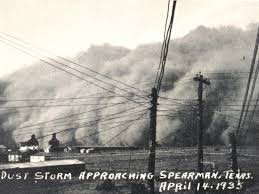
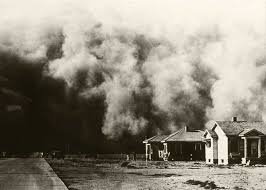
Same as in the great depression the sandstorms are back to the land under judgement
At the end the great depression sandstorms pictures


A massive dust storm has swept into the Phoenix area and drastically reduced visibility on highways and roads across much of the valley.
The wall of dust moving from the south descended on the valley on Tuesday night and could be seen from downtown Phoenix. Winds brought in the storm that KSAZ-TV reported to be roughly 50 miles wide.


hostgator coupon 2011
At the end the great depression sandstorms pictures
A massive dust storm has swept into the Phoenix area and drastically reduced visibility on highways and roads across much of the valley.
The wall of dust moving from the south descended on the valley on Tuesday night and could be seen from downtown Phoenix. Winds brought in the storm that KSAZ-TV reported to be roughly 50 miles wide.
hostgator coupon 2011
Subscribe to:
Posts (Atom)