We will have a mirror site at http://nunezreport.wordpress.com in case we are censored, Please save the link

Sunday, January 3, 2016

2015 Was The Worst Year For The Stock Market Since 2008

New Year's Eve - Public DomainIt’s official – 2015 was a horrible year for stocks.  On the last day of the year, the Dow Jones Industrial Average was down another 178 points, and overall it was the worst year for the Dow since 2008.  But of course the Dow was far from alone.  The S&P 500, the Russell 2000 and Dow Transports also all had their worst years since 2008.  Isn’t it funny how these things seem to happen every seven years?  But compared to other investments, stocks had a relatively “good” year.  In 2015, junk bonds, oil and industrial commodities all crashed hard – just like they all did just prior to the great stock market crash of 2008.  According to CNN, almost 70 percent of all investors lost money in 2015, and things are unfolding in textbook fashion for much more financial chaos in 2016.
Globally, over the past 12 months we have seen financial shaking unlike anything that we have experienced since the last great financial crisis.  During the month of August markets all over the world started to go haywire, and at one point approximately 11 trillion dollars of financial wealth had been wiped out globally according to author Jonathan Cahn.
Since that time, U.S. stocks rebounded quite a bit, but they still ended red for the year.  Other global markets were not nearly as fortunate.  Some major indexes finished 2015 down 20 percent or more, and European stocks just had their second worst December ever.
I honestly don’t understand the “nothing is happening” crowd.  The numbers clearly tell us that a global financial crisis began in 2015, and it threatens to accelerate greatly as we head into 2016.
Actually, there are a whole lot of people out there that would be truly thankful if “nothing” had happened over the past 12 months.  For example, there are five very unfortunate corporate CEOs that collectively lost 20 billion dollars in 2015…
Five CEOs of companies in the Russell 1000 index, including Nicholas Woodman of camera maker GoPro (GPRO), Sheldon Adelson of casino operator Las Vegas Sands (LVS) and even the famed investor Warren Buffett of Berkshire Hathaway (BRKA), lost more money on their companies’ shares than any other CEOs this year, according to a USA TODAY analysis of data from S&P Capital IQ.
These five CEOs were handed a whopping collective $20 billion loss on their company stock in 2015. Each and every one of these CEOs lost $1 billion or more – based on the average number of shares they’ve owned this year.
The biggest loser of the group was Warren Buffett.
He lost an astounding 7.8 billion dollars in 2015.
Do you think that he believes that “nothing happened” this past year?
And if “nothing happened”, then why are hedge funds “dropping like flies” right now?  The following comes from Zero Hedge…
Two days, ago we noted that hedge funds are now dropping like flies in a year in which generating alpha has become virtually impossible for the majority of the vastly overpaid 2 and 20 “smart money” out there (and where levered beta is no longer the “sure thing” it used to be when the Fed was pumping trillions into stocks) when we reported that Seneca Capital, the $500 million multi-strat hedge fund belonging to Doug Hirsh (of Sohn Investment Conference fame), is shutting down.
And just within the last 24 hours, another very prominent hedge fund has collapsed.  SAB Capital, which once managed more than a billion dollars, is shutting down after huge losses this year.  Here is more from Zero Hedge…
It turns out that despite our intention, the question was not rhetorical because just a few hours later Bloomberg answered when it reported that the latest hedge fund shutdown casualty was another iconic, long-term investor: Scott Bommer’s SAB Capital, which as of a year ago managed $1.1 billion, and which after 17 years of managing money and after dropping roughly 11% in the first eight month of 2015, has decided to return all outside client money, and converting the hedge fund into a family office (after all one has to preserve one’s offshore tax benefits).
Overall, 674 hedge funds shut down during the first nine months of this year, and the final number for 2015 will actually be far higher because the rate of closings has accelerated as we have approached the end of this calendar year.  When the final numbers come in, I would not be surprised to hear that 1,000 hedge funds had closed up shop in 2015.
Meanwhile, underlying economic conditions continue to deteriorate.
Corporate profits are steadily falling, the bond distress ratio just hit the highest level that we have seen since September 2009, and corporate debt defaults have risen to the highest level that we have seen since the last recession.
And this week we got a couple of new numbers that indicate that the U.S. economy is slowing down much faster than anticipated.
The Dallas Fed’s general business activity index plunged to -20.1 in December from -4.9 in November. This was much worse than the -7.0 expected by economists.
Any reading below 0 signals contraction, and this index has been below 0 all year.
The next big surprise was the Chicago purchasing manager index…
The Chicago purchasing manager index unexpectedly plunged to 42.9 in December, its lowest reading since July 2009.
Any reading below 50 signals a contraction in business activity.
This was down from 48.7 in November and much worse than the 50.0 expected by economists.
When the final numbers for the fourth quarter are in a few months from now, I believe that they will show that the U.S. economy officially entered recession territory at this time.
And the truth is that deep recessions have already started for some of the other biggest economies on the planet.  For example, I recently wrote about the deep troubles that Canada is now experiencing, and things have already gotten so bad in Brazil that Goldman Sachs is referring to that crisis as “an outright depression“.
Many people seem to assume that since I have a website called “The Economic Collapse Blog” that I must want everything to fall apart.  But that is not true at all.  I love my country, I enjoy my life, and I would be perfectly content to spend 2016 peacefully passing the time here in the mountains with my wonderful wife.  The longer things can stay somewhat “normal”, the better it is for all of us.
Unfortunately, for decades we have been making incredibly foolish decisions as a society, and the consequences of those decisions are now catching up with us in a major way.
Jonathan Cahn likes to say that “a great shaking is coming”, and I very much agree with him.
In fact, I think that it is going to be here a lot sooner than most people think.
So buckle up, because I believe that 2016 is going to be quite a wild ride.
Credit to Economic Collapse

Saturday, January 2, 2016

George Soros Tells America To Take Their Money Out of the Banks Before It Is too Late

The present objective of George Soros. 
The present objective of George Soros:
When George Soros is not donating millions to the North American Man Boy Love Association (NAMBLA), his money  movements have been predictive of an impending economic collapse. This has made him the most watched bankster in the world. If you have any money in a domestic American bank, you would be wise to read this article and act accordingly.

George Soros Is the Enemy of the American People and Traditional American Values

Judge a man by what he does, not by what he says. Through his actions, George Soros is telling the American people to take their money out of the bank before it is too late!
Soros has made billions of dollars in investing and currency trading and has used his fortune to fund a vast array of leftist organizations dedicated to undermining liberty and capitalism. Soros has funded pro-abortion groups, pro-pedophile organizations (NAMBLA), anti-Israel efforts and radical environmental groups who are dedicated to the complete evisceration of American property rights.
soros the nazi
  • Since 2003, Soros has spent more than $52 million funding media properties, including the infrastructure of news—journalism schools, investigative journalism, and even industry organizations. His foundation has been deeply involved in churning out hard-left reporters from Columbia University’s School of Journalism.
  • Soros has direct and very strong ties to more than 30 mainstream news outlets, including The New York Times, The Washington Post, the Associated Press, CNN, MSNBC and ABC.
  • Soros has also forced his way into the foundations of the journalism industry, through associations like the National Federation of Community Broadcasters, the National Association of Hispanic Journalists, and the Committee to Protect Journalists as he attempts to control public opinion and obscure his intended takedown of the United States.
  • Soros is heavily involved in funding the lobbying for amnesty. His self-funded National Immigration Forum is behind the effort to strong-arm wobbly Republicans to support Congress’s immigration bill that will give full citizenship to illegal immigrants whose “legal” entry into the workforce will destroy the wage structure of this country and hasten the economic crash of the middle class.
Soros' second puppet, Hillary Clinton
Another Soros puppet, Hillary Clinton
George Soros has now accepted a position on the National Finance Council of the Ready for Hillary Super PAC, a group paving the way for a 2016 presidential run for the former first lady and thoroughly disgraced former Secretary of State with regard to the Benghazi affair and her email scandals. It is becoming clear that after the economic collapse, Hillary will become the Commissar of economic, political and social subjugation.
In short, George Soros is on a mission to turn the United States into a socialist utopia devoid of any of its traditional values. Out of chaos comes order and Soros feels compelled to collapse the old in order to usher in the new and this is exactly what America is witnessing.

Soros Is the Ultimate Economic Hit Man

soros puppet obamaJust over 20 years ago, international banker George Soros made his most famous investment by shorting the British pound and pocketing a billion dollars in the process.  Following this watershed event, he has become well known for moving money and then betting on stock market crashes. In several instances, Soros has been known to rig various markets to fail for his own gain as well as the gain of the international banking cartel in Basel.
Several months ago, Soros made raised eyebrows by making  a billion dollar stock bet against the S&P 500. At that particular time, Soros proclaimed, through his actions, that there were warning signs of coming S&P 500 troubles which signaled dangerous times ahead for the US economy. Today, the American Stock Market has an unprecedented bubble which is reminding many of the months leading of the 1929 Stock Market crash.

Disturbingly, Soros has had both accurate and advanced knowledge of market crashes in the past. Subsequently, savvy investors keep a very close eye on his money movements and resulting holdings as Soros is the “Canary in the mine”. He is the world’s ultimate economic hit man and both bankers and politicians watch his every move with fear and apprehension.
According to a 2014 filing with the Securities and Exchange Commission, it was revealed that Soros sold his holdings in Citigroup, J.P. Morgan and Bank of America. Soros subsequently moved his money and took up new positions in gold and tech stocks associated with Chinese money movement. Soros has moved his money to RF Micro Devices, Nuance Communications, Marvel Technology Group, Nokia Corp., and Cypress Semiconductor. Soros also boosted his stake in Herbalife and took up a new position in Yamana Gold and AuRico Gold, and New Gold Inc.
Soros’ money movements are significant for several reasons. First, he is now betting against both the U.S. Stock Market and now the three major US domestic banks. Second, Soros has obtained a sizable gold portfolio which is something one would want to do if one were expecting, or causing a crash of currency to occur. Finally, and most significantly, Soros is betting against the solvency of the Federal Reserve by running from the three of the major investors (i.e. the three major banks) in the Federal Reserve. This is highly significant  because this is occurring at a time when the Federal Reserve gave permission to various Chinese interests (i.e. all controlled by the Chinese military) to purchase sizable positions in American banking which serves to underwrite and partially fund the Federal Reserve.
It is interesting to note that JP Morgan Chase  has sold their property located at One Chase Manhattan Plaza skyscraper to Fosun International, a Chinese investment firm, for  the bargain basement price of $725 million. This is only the latest in a series of New York real estate purchases by Chinese investors for properties formerly reserved for Federal Reserve members. In part two, I will reveal why the Chinese, and not just America, is walking into a George Soros created trap.

Nothing Financial Occurs In Isolation

As investors scramble to make sense out of Soros’ money movements, it is important to look for collaborating data in peripheral financial interests and we find that various sectors of the American economy are recoiling in anticipation of the American economy going into freefall.
After examining the following facts related to a significant change in money policies, in  2014 when Soros began ditching American banks, I am convinced that the time to have taken your money out of the bank was yesterday. For example, the IMF’s plans to steal 10%, for starters, of all bank accounts in Europe, America cannot be far behind. Further, and as of the first quarter of this year, JP Morgan Chase is banning wire transfers from their bank to foreign banks to prevent American capital flight which will surely happen as America wakes up to the desperate situation that the banks are in. JP Morgan Chase is also prohibiting any cash withdrawals of $50,000 or more. HSBC bank  (America) followed suit and, in fact, all major banks are making it more difficult to move money out of the country.

It Is a Case of Simple Math

The media shows a great deal of concern about our debt of $19 trillion dollars and the fact that President Obama is adding $1 trillion per year to the total. The MSM is trying to get you and I to focus on the least troubling of our economic statistics. What the MSM is trying to get the American people see and feel is the metaphorical equivalent of showing anxiety of over having a simple cold when the person is has stage four cancer. There are two other debt-related numbers which are much more telling.
Our national unfunded liabilities (e.g. Social Security, Medicare, etc.) total a whopping $240 trillion dollars and this is not even the worst economic news.
As a result of the hijacking of our economy through the 2008 bailouts, the American people have been saddled with the derivatives debt. Nearly every economic publication estimates the derivatives debt to be in the range of one quadrillion dollars to $1.5 quadrillion dollars. Conservative estimates tell us that this derivatives debt, that has been assumed by the governments of the world, is at least 16 times the entire value of the assets of Planet Earth. This generation can never pay off this debt. Your children, grandchildren and even great-great-great-great-great grandchildren cannot pay off this debt. If the status quo were to remain in place, this debt could not be paid off in the 25th century, the 30th century, nor the 50th century. My estimates place the interest on the debt to exceed the entire value of the world’s assets and the interest is increasing far faster than the governments of the world can even service the debt. Who is the debt owed to? It is owed to the first movers, the owners of the central banking system. And this is who is collapsing the system and George Soros knows this. In fact, he is working to this end.
Credit to Common Sense


Turkey Detains 27 Russian Ships

China builds new aircraft carrier in show of strength to Washington


China intends to beef up its maritime presence by building a second aircraft carrier. Beijing wants to exert its presence in the South China Sea, after complaining of “provocations” from the US, as well as defending its interests in the region.

Little is known about China’s aircraft carrier program, however a spokesman for the Defense Ministry, Yang Yujun, said the ship had been designed in China and was being built in the port of Dalian.

“China has a long coastline and a vast maritime area under our jurisdiction. To safeguard our maritime sovereignty, interests and rights is the sacred mission of the Chinese armed forces,” Yang said, as cited by Reuters.

The Defense Ministry spokesman added that the aircraft carrier will be able to operate J-15 fighter jets and will also have a ski-jump take-off. China’s only other aircraft carrier, the Liaoning, was purchased from Ukraine in 1998 before being refitted in China.

China has been looking to increase its maritime defense capabilities, as it exerts its claims in the South China Sea.

“The US has many aircraft carriers that are traveling all over the place in the South China Sea, which have caused problems for us. Having a second aircraft carrier reduces the pressure on us. It will keep us from being bullied,” a Shanghai-based naval expert, who asked not to be named because of the sensitivity of the matter, told Reuters.

Earlier this month the Chinese Navy commissioned its third Type 052D Kunming-class destroyer, ‘Hefei’, armed with surface-to-surface missiles as its primary assault weapon. Beijing says it plans to build at least 10 warships, while they will be based at the naval complex in Sanya on the island of Hainan.

“My men have familiarized themselves with the advanced equipment and weapons [onboard the ship]. In the near future, we will focus on training, aiming to make the ship become fully operational within a short period,” Hefei’s captain, Commander Zhao Yanquan, told China Daily on December 14.

Two weeks ago, China filed a complaint with the Pentagon after a US nuclear-capable B-52 bomber flew over a man-made island in the South China Sea that China claims gives it sovereignty over the surrounding waters. Beijing said the move was a “provocation.”

It urged the United States “to immediately adopt measures to put an end to such kind of dangerous actions, in order not to impact the two countries’ military relations,” the Defense Ministry said in a statement.

Over the past few years China has reclaimed several islands in the South China Sea and built infrastructure on them capable of supporting combat missions of the Chinese Air Force. Beijing insists that the effort is primarily civilian and is meant to make the South China Sea, the region with some of the heaviest maritime traffic in the world, most of it China-bound, a safer place.

The US rejects Beijing’s claim and occasionally sends its warplanes and warships through the 12 nautical mile area around the artificial islands, which China sees as its exclusive zone. In late October, the US guided missile destroyer USS Lassen sailed close to Subi Reef with one such mission, provoking an angry rebuke from China.

The South China Sea is believed to have massive deposits of oil and gas, while around $5 trillion of shipping trade passes through the area per year.

Credit to Eu Times

Erdogan cites Hitler’s Germany as example of effective presidential system


Image result for Erdogan cites Hitler’s Germany as example of effective presidential system

Turkish President Recep Tayyip Erdogan has reiterated his desire to ensure Turkey adopts a presidential system of government and has even cited Adolf Hitler’s Germany as an example of how this can be achieved. 
Speaking at a news conference, Erdogan was asked by a journalist whether Turkey would be able to keep a unitary structure of government if a presidential system was implemented.
“There are already examples in the world. You can see it when you look at Hitler’s Germany,” he said on Thursday, according to a recording broadcast by the Dogan news agency. “There are later examples in various other countries.”
On Friday, the president’s office said that the words of Erdogan had been misunderstood, explaining that he had referred to Hitler’s era in an attempt to show that bad rule can emerge in all types of political systems.
“Whether it is parliamentary system or a presidential system, bad rules that end in disasters can emerge if the system is misused, as it was by Hitler’s Germany,” the statement reads according to AP.
“It is unacceptable to reflect the president’s statement as a positive reference to Hitler’s Germany,” the office added. The statement also stressed that Erdogan has declared the Holocaust, anti-semitism, and Islamophobia to be crimes against humanity.
Both Erdogan and Turkish Prime Minister Ahmet Davutoglu believe that Ankara needs to move away from its current parliamentary system to streamline the government.

“What is right for Turkey is to adopt the presidential system in line with the [democratic] spirit. This system will not evolve into dictatorship but if we do not have this spirit, even the parliamentary system can turn into this [dictatorship],”Davutoglu said in an interview with NTV, as reported by the Hurriyet Daily News. 
The ruling Justice and Development Party (AKP), who won an absolute majority in the November’s elections, are looking to adopt a new Turkish constitution to facilitate the move toward a presidential system. Opposition parties have condemned the move, saying it would give Erdogan too much power and would make it easier for him to create one-man rule. 
“[Erdogan] wants a presidential system in Turkey. He did not change his mind after the last election. I think he will force that, somehow. And I think this is the last exit before the full dictatorship for Turkey,” Ceyda Karan, an opposition journalist at Cumhuriyet newspaper, told RT. 
Meanwhile, Ronald Suny, from the University of Michigan, told RT that the move towards a presidential system was “dangerous,” especially given that around “40-45 percent” of the population oppose this.
“We’re dealing with the situation here that is close to a kind of civil war, and that is really dangerous – it is dangerous for Turkey domestically, and it is also dangerous for the international scene where Turkey, the US, Russia, Syria – all these countries, the Kurds are all involved in the struggle against ISIS in Syria and in Iraq,”Suny said in November. 
Erdogan has already jailed a number of his political opponents and journalists who are critical of him. On New Year’s Eve, political opponent Feyzi Isbasaran was sentenced to nearly three years in jail for posting tweets deemed insulting to the Turkish president. Isbasaran is a former member of Erdogan’s own AKP party. 
Meanwhile, opposition MP Eren Erdem, from the Republican People's Party (CHP), was accused of “treason” for telling RT that Islamic State had obtained sarin gas supplies via Turkey. He also alleged that Ankara had done nothing to stop the flow, despite having all the evidence at their disposal.
“There is a deputy in this country, buried so deep in a pit of betrayal, and to a party that claims to be as old as the republic, saying during an interview to a foreign television channel that Turkey is selling chemical weapons to terrorists,” a furious Erdogan said on December 18.
He has also unleashed a harsh crackdown on Kurds in the southeast of the country, who have had week-long curfews imposed on them.
On Tuesday, Ankara used tear gas against thousands of Kurds protesting against the implementation of the curfews, which has led to schools closing and has severely disrupted people’s way of life. With more than 10,000 security troops alongside with tanks and armored vehicles deployed in the region, Turkish forces have turned residential areas into piles of rubble in a six-month offensive against Kurdish militants. 
Credit to RT

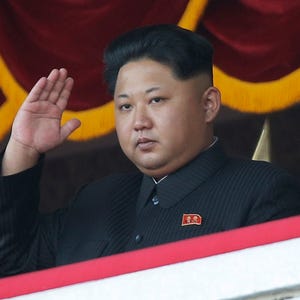
Kim Jong Un says he's ready for war in New Year speech


Image result for Kim Jong Un says he's ready for war in New Year speech


In his annual New Year's speech Friday, North Korean leader Kim Jong Un said he is ready for war if provoked by "invasive" outsiders.
In the address, his fourth since taking power in 2011, Kim spoke of the need to increase the "political and military might" of his country "in every way," according to the official Korean Central News Agency.
"The year 2015 was a year of gigantic struggle recorded with significant events and eye-opening successes and a year of victory and glory that strikingly demonstrated the dignity and might of socialist Korea," Kim said in the 30-minute televised speech.
"We will continue to work patiently to achieve peace on the Korean Peninsula and regional stability," he added. "But if invasive outsiders and provocateurs touch us even slightly, we will not be forgiving in the least and sternly answer with a merciless, holy war of justice."
Such remarks aren't unprecedented. In an October speech marking the 70th anniversary of the founding of the ruling communist Workers' Party, Kim said he was prepared to wage war against the United States if necessary.
Credit to USA Today

Financial Armageddon Approaches: U.S. Banks Have 247 Trillion Dollars Of Exposure To Derivatives

Nuclear War - Public DomainDid you know that there are 5 “too big to fail” banks in the United States that each have exposure to derivatives contracts that is in excess of 30 trilliondollars?  Overall, the biggest U.S. banks collectively have more than 247 trilliondollars of exposure to derivatives contracts.  That is an amount of money that is more than 13 times the size of the U.S. national debt, and it is a ticking time bomb that could set off financial Armageddon at any moment.  Globally, the notional value of all outstanding derivatives contracts is a staggering 552.9 trillion dollars according to the Bank for International Settlements.  The bankers assure us that these financial instruments are far less risky than they sound, and that they have spread the risk around enough so that there is no way they could bring the entire system down.  But that is the thing about risk – you can try to spread it around as many ways as you can, but you can never eliminate it.  And when this derivatives bubble finally implodes, there won’t be enough money on the entire planet to fix it.
A lot of readers may be tempted to quit reading right now, because “derivatives” is a term that sounds quite complicated.  And yes, the details of these arrangements can be immensely complicated, but the concept is quite simple.  Here is a good definition of “derivatives” that comes from Investopedia…
A derivative is a security with a price that is dependent upon or derived from one or more underlying assets. The derivative itself is a contract between two or more parties based upon the asset or assets. Its value is determined by fluctuations in the underlying asset. The most common underlying assets include stocks, bonds, commodities, currencies, interest ratesand market indexes.
I like to refer to the derivatives marketplace as a form of “legalized gambling”.  Those that are engaged in derivatives trading are simply betting that something either will or will not happen in the future.  Derivatives played a critical role in the financial crisis of 2008, and I am fully convinced that they will take on a starring role in this new financial crisis.
And I am certainly not the only one that is concerned about the potentially destructive nature of these financial instruments.  In a letter that he once wrote to shareholders of Berkshire Hathaway, Warren Buffett referred to derivatives as “financial weapons of mass destruction”…
The derivatives genie is now well out of the bottle, and these instruments will almost certainly multiply in variety and number until some event makes their toxicity clear. Central banks and governments have so far found no effective way to control, or even monitor, the risks posed by these contracts. In my view, derivatives are financial weapons of mass destruction, carrying dangers that, while now latent, are potentially lethal.
Since the last financial crisis, the big banks in this country have become even more reckless.  And that is a huge problem, because our economy is even more dependent on them than we were the last time around.  At this point, the four largest banks in the U.S. are approximately 40 percent larger than they were back in 2008.  The five largest banks account for approximately 42 percent of all loans in this country, and the six largest banks account for approximately 67 percent of all assets in our financial system.
So the problem of “too big to fail” is now bigger than ever.
If those banks go under, we are all in for a world of hurt.
Yesterday, I wrote about how the Federal Reserve has implemented new rules that would limit the ability of the Fed to loan money to these big banks during the next crisis.  So if the survival of these big banks is threatened by a derivatives crisis, the money to bail them out would probably have to come from somewhere else.
In such a scenario, could we see European-style “bail-ins” in this country?
Ellen Brown, one of the most fierce critics of our current financial system and the author of Web of Debt, seems to think so…
Dodd-Frank states in its preamble that it will “protect the American taxpayer by ending bailouts.” But it does this under Title II by imposing the losses of insolvent financial companies on their common and preferred stockholders, debtholders, and other unsecured creditors. That includes depositors, the largest class of unsecured creditor of any bank.
Title II is aimed at “ensuring that payout to claimants is at least as much as the claimants would have received under bankruptcy liquidation.” But here’s the catch: under both the Dodd Frank Act and the 2005 Bankruptcy Act, derivative claims have super-priority over all other claims, secured and unsecured, insured and uninsured.
The over-the-counter (OTC) derivative market (the largest market for derivatives) is made up of banks and other highly sophisticated players such as hedge funds. OTC derivatives are the bets of these financial players against each other. Derivative claims are considered “secured” because collateral is posted by the parties.
For some inexplicable reason, the hard-earned money you deposit in the bank is not considered “security” or “collateral.” It is just a loan to the bank, and you must stand in line along with the other creditors in hopes of getting it back.
As I mentioned yesterday, the FDIC guarantees the safety of deposits in member banks up to a certain amount.  But as Brown has pointed out, the FDIC only has somewhere around 70 billion dollars sitting around to cover bank failures.
If hundreds of billions or even trillions of dollars are ultimately needed to bail out the banking system, where is that money going to come from?
It would be difficult to overstate the threat that derivatives pose to our “too big to fail” banks.  The following numbers come directly from the OCC’s most recent quarterly report (see Table 2), and they reveal a recklessness that is on a level that is difficult to put into words…
Citigroup
Total Assets: $1,808,356,000,000 (more than 1.8 trillion dollars)
Total Exposure To Derivatives: $53,042,993,000,000 (more than 53 trillion dollars)
JPMorgan Chase
Total Assets: $2,417,121,000,000 (about 2.4 trillion dollars)
Total Exposure To Derivatives: $51,352,846,000,000 (more than 51 trillion dollars)
Goldman Sachs
Total Assets: $880,607,000,000 (less than a trillion dollars)
Total Exposure To Derivatives: $51,148,095,000,000 (more than 51 trillion dollars)
Bank Of America
Total Assets: $2,154,342,000,000 (a little bit more than 2.1 trillion dollars)
Total Exposure To Derivatives: $45,243,755,000,000 (more than 45 trillion dollars)
Morgan Stanley
Total Assets: $834,113,000,000 (less than a trillion dollars)
Total Exposure To Derivatives: $31,054,323,000,000 (more than 31 trillion dollars)
Wells Fargo
Total Assets: $1,751,265,000,000 (more than 1.7 trillion dollars)
Total Exposure To Derivatives: $6,074,262,000,000 (more than 6 trillion dollars)
As the “real economy” crumbles, major hedge funds continue to drop like flies, and we head into a new recession, there seems to very little alarm among the general population about what is happening.
The mainstream media is assuring us that everything is under control, and they are running front page headlines such as this one during the holiday season: “Kylie Jenner shows off her red-hot, new tattoo“.
But underneath the surface, trouble is brewing.
A new financial crisis has already begun, and it is going to intensify as we head into 2016.
And as this new crisis unfolds, one word that you are going to want to listen for is “derivatives”, because they are going to play a major role in the “financial Armageddon” that is rapidly approaching.
Credit to Economic Collapse