
JERUSALEM (JTA) -- The Western Wall belongs to Israel, despite what the United Nations says, Israeli Prime Minister said in interviews with Israel's three major networks.
"The Western Wall has always been and always will belong to Israel,” Netanyahu said Saturday in pre-election interviews with Israeli channels 1, 2 and 10. "We have resided in the Jewish nation's capital for 3,000 years. The Western Wall is not occupied territory and I don't care what the U.N. says about that."
Netanyahu said the announcements of plans to build Jewish housing in the E1 area east of Jerusalem and in other Jerusalem neighborhoods had nothing to do with the upcoming Jan. 22 elections; rather, they were a response to the Palestinians' decision to appeal to the United Nations General Assembly for enhanced statehood status.
Meanwhile, Palestinian Authority President Mahmoud Abbas said over the weekend that the Palestinian Authority would stop Netanyahu from authorizing building in the E1 area, which connects the West Bank settlement of Maaleh Adumim to Jerusalem, an area that the Palestinians say is necessary to create an eventual viable, contiguous Palestinian state.
The housing is still in the planning stages and construction is a long way off, according to reports
JTA

North Korea's recent rocket launch shows it has the ability to fire a rocket more than 10,000km (6,200 miles), South Korean officials say.
The estimate, which would potentially put the Western US in range, was based on an analysis of rocket debris.
However, there was no confirmation that the North had the re-entry technology needed to deliver a missile.
Experts believe North Korea is also years away from gaining the ability to mount a nuclear bomb on a missile.
North Korea launched the Unha-3 rocket on 12 December, in defiance of sanctions and international warnings.
It was the first time the North had made successful use of a three-stage rocket to put a satellite into orbit, and observers said it appeared to mark a step towards fielding an intercontinental range ballistic missile.
"As a result of analysing the material of Unha-3 (North Korea's rocket), we judged North Korea had secured a range of more than 10,000km in case the warhead is 500-600kg," a South Korean defence ministry official told journalists
BBC

China’s government provided goods and expertise for Iran’s nuclear program in the past and also gave Tehran’s Islamist regime missiles and other arms as part of the nations’ anti-United States policies, according to a congressional commission report made public Thursday.
“The authoritarian governments centered in Beijing and Tehran share an animus towards ‘hegemonism’ and a fear of internal instability,” the report prepared for the U.S.-China Economic and Security Review Commission states.
“In recent decades the United States, supported by regional allies and security partners, has represented the principal hegemonic threat to Iran and China in two different regional contexts: the Persian Gulf and the Western Pacific.”
Read more:http://times247.com/articles/report-china-aids-iran-s-missile-nuke-programs#ixzz2FvsCdEB8
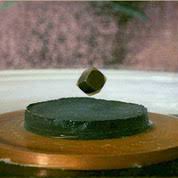
Following up on earlier theoretical predictions, MIT researchers have now demonstrated experimentally the existence of a fundamentally new kind of magnetic behavior, adding to the two previously known states of magnetism.
Ferromagnetism, the simple magnetism of a bar magnet or compass needle -- has been known for centuries. In a second type of magnetism, antiferromagnetism, the magnetic fields of the ions within a metal or alloy cancel each other out. In both cases, the materials become magnetic only when cooled below a certain critical temperature. The prediction and discovery of antiferromagnetism -- the basis for the read heads in today's computer hard disks -- won Nobel Prizes in physics for Louis Neel in 1970 and for MIT professor emeritus Clifford Shull in 1994.
"We're showing that there is a third fundamental state for magnetism," says MIT professor of physics Young Lee. The experimental work showing the existence of this new state, called a quantum spin liquid (QSL), is reported this week in the journal Nature, with Lee as the senior author and Tianheng Han, who earned his PhD in physics at MIT earlier this year, as lead author.
The QSL is a solid crystal, but its magnetic state is described as liquid: Unlike the other two kinds of magnetism, the magnetic orientations of the individual particles within it fluctuate constantly, resembling the constant motion of molecules within a true liquid.
Finding the evidence
There is no static order to the magnetic orientations, known as magnetic moments, within the material, Lee explains. "But there is a strong interaction between them, and due to quantum effects, they don't lock in place," he says.
Although it is extremely difficult to measure, or prove the existence, of this exotic state, Lee says, "this is one of the strongest experimental data sets out there that [does] this. What used to just be in theorists' models is a real physical system."
Philip Anderson, a leading theorist, first proposed the concept in 1987, saying that this state could be relevant to high-temperature superconductors, Lee says. "Ever since then, physicists have wanted to make such a state," he adds. "It's only in the past few years that we've made progress."
The material itself is a crystal of a mineral called herbertsmithite. Lee and his colleagues first succeeded in making a large, pure crystal of this material last year -- a process that took 10 months -- and have since been studying its properties in detail.
"This was a multidisciplinary collaboration, with physicists and chemists," Lee explains. "You need both … to synthesize the material and study it with advanced physics techniques. Theorists were also crucial to this."
Through its experiments, the team made a significant discovery, Lee says: They found a state with fractionalized excitations, which had been predicted by some theorists but was a highly controversial idea. While most matter has discrete quantum states whose changes are expressed as whole numbers, this QSL material exhibits fractional quantum states. In fact, the researchers found that these excited states, called spinons, form a continuum. This observation, they say in their Nature paper, is "a remarkable first."
Scattering neutrons
To measure this state, the team used a technique called neutron scattering, which is Lee's specialty. To actually carry out the measurements, they used a neutron spectrometer at the National Institute of Standards and Technology (NIST) in Gaithersburg, Md.
The results, Lee says, are "really strong evidence of this fractionalization" of the spin states. "That's a fundamental theoretical prediction for spin liquids that we are seeing in a clear and detailed way for the first time."
It may take a long time to translate this "very fundamental research" into practical applications, Lee says. The work could possibly lead to advances in data storage or communications, he says -- perhaps using an exotic quantum phenomenon called long-range entanglement, in which two widely separated particles can instantaneously influence each other's states. The findings could also bear on research into high-temperature superconductors, and could ultimately lead to new developments in that field, he says.
"We have to get a more comprehensive understanding of the big picture," Lee says. "There is no theory that describes everything that we're seeing."
Subir Sachdev, a professor of physics at Harvard University who was not connected with this work, says that these findings, which have been anticipated for decades, "are very significant and open a new chapter in the study of quantum entanglement in many-body systems." The detection of such states, he says, was an "exceptionally difficult task. Young Lee and his group brilliantly overcame these challenges in their beautiful experiment."
In addition to Lee and Han, the work was carried out by J.S. Helton of NIST, research scientist Shaoyan Chu of MIT's Center for Materials Science and Engineering, MIT chemistry professor Daniel Nocera, Jose Rodriguez-Rivera of NIST and the University of Maryland, and Colin Broholm of Johns Hopkins University. The work was supported by the U.S. Department of Energy and the National Science Foundation.
Science Daily

