Monday, April 16, 2012


Joe Stiglitz's Presentation On Why The Entire Global Economic System Is Doomed To Fail

At the Institute for New Economic Thinking conference in Berlin, economist Joe Stiglitz delivered a presentation titled Is Mercantilism Doomed to Fail? China, Germany, and Japan and the Exhaustion of Debtor Countries.
The basic idea is: A few powerhouses like China, Germany, and Japan, plus some commodity based economies, have thrived in a system where they do all the exporting, and a few countries like the US run massive trade deficits.
But that system is coming to an end, as countries realize that their trade deficits are unsustainable, and seek to become trade surplus countries at the same time. Of course, not everyone can run surpluses, so this becomes a game of hot potato, with everyone pushing the deficit to someone else, via currency devaluation and other aggressive trade moves.
In this presentation, Stiglitz explains why the system is heading towards collapse.
Stiglitz hints a globalist solution, with a non-dollar reserve currency, and more coordination of monetary policy to avoid currency wars and competitive devaluations.
Read more: http://www.businessinsider.com/joe-stiglitz-on-mercantilism-2012-4?utm_source=feedburner&utm_medium=feed&utm_campaign=Feed%3A+TheMoneyGame+%28The+Money+Game%29&utm_content=Google+Reader#ixzz1sD2g0VPy
A German-owned freighter loaded with weapons from Iran was stopped on Friday
A German-owned freighter loaded with weapons from Iran was stopped on Friday near the Syrian port of Tartus in the Mediterranean Sea, SPIEGEL has learned.
A few days prior, the Atlantic Cruiser, owned by the Emden carrier Bockstiegel, had allegedly picked up heavy military equipment and munitions meant for Syrian dictator Bashar Assad's regime from an Iranian freighter at the Djibouti port. The cargo, desperately needed reinforcements for Assad's crackdown on dissidents, was supposed to be unloaded on Friday.
But defectors from inside the Syrian government had learned of the delivery and warned the shipping company. On Friday the Atlantic Cruiser suddenly changed course, heading for the Turkish harbor of Iskenderun instead. Then the ship stopped some 80 kilometers (50 miles) southwest of Tartus, sailing in circles for the next few hours.
"We stopped the ship after getting information on the weapons cargo," shipping agent Torsten Lüddeke of Hamburg-based C.E.G. Bulk Chartering told SPIEGEL.
According to Lüddeke, the ship had been chartered by an Odessa, Ukraine-based company called White Whale Shipping. "They declared to us as cargo mainly pumps and similar things," he said. "We never would have allowed weapons on board." For now, the 6,200-ton ship will "stay where it is," he added.
Meanwhile, the Ukrainian shipping company has insisted that the Atlantic Cruiser is not carrying weapons and that it be allowed to dock in Tartus.
However, SPIEGEL has learned that the ship's crew had attempted to refuel in the Cypriot port of Limassol, but was turned away after reporting its cargo as "weapons and munitions."
UN Negotiations Continue
The German Economics Ministry told the Associated Press on Saturday that it was looking into the matter, but provided no further details.
The route between Djibouti and Tartus is known as a path for transporting weapons, according to intelligence experts. In January another ship out of Russia was halted with munitions in Cyprus, but later continued its journey with the cargo to Syria after the captain declared he would head to a different port than initially planned.
Due to Syrian dictator Assad's brutal crackdown on the protest movement, the European Union has placed a number of sanctions on the country, including a weapons embargo. The United Nations Security Council has not yet followed suit.
This Saturday, the United Nations is scheduled to vote on a draft resolution authorizing military observers to embark on a mission to monitor a cease-fire between opposition fighters and the Syrian government. But negotiations were reportedly tougher than expected, diplomats in New York said on Friday evening. Both Pakistan and Russia expressed reservations about the initiative, which would be the first UN resolution since the violence began in Syria more than a year ago. Since then some 9,000 people have been killed there, according to UN estimates.
The third day of the fragile cease-fire, which began officially on Thursday, was reportedly disrupted on Saturday when the Syrian army bombarded the opposition stronghold of Homs. British-based Syrian Observatory for Human Rights (SOHR) reported that the shelling killed one person and injured several others.
SPIEGEL/kla
Spain is even worse for Portugal and Greece.
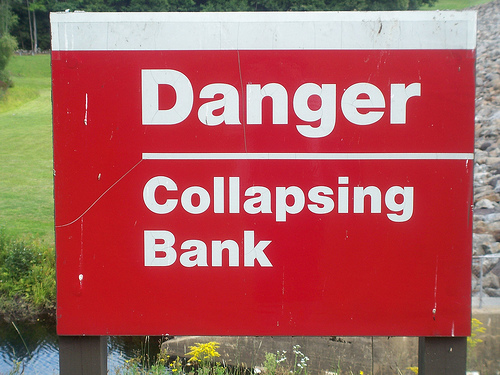
It's a phrase that has sprung to mind pretty often since the eurozone crisis started, and it now applies - in block capitals - to Spain.
The biggest Catch 22 for the Spanish government is also the most obvious.
Its cost of borrowing (the bond yield) goes up when financial markets worry that it will not get a handle on its budget deficit. But it also goes up when ministers talk about the tough measures they are going to take to get that deficit down, because of fears that spending cuts and tax rises will tank the economy and therefore be self-defeating.
It's a good example of the market's "schizophrenia" on the subject of fiscal austerity, highlighted by the IMF's chief economist at the end of last year and often debated.
But, as Goldman Sachs economists make clear in a recent, very thorough four-part analysis of the fiscal and competitiveness problems facing the European periphery, the Catch 22s for Spain go deeper than that, and they are even worse for Portugal and Greece.
I've bored you many times with the thought that the crisis economies have not just a fiscal problem, but a competitiveness problem, built up over their first decade in the euro.
To fix that latter problem, the Goldman Sachs team reckon that Portugal needs a real devaluation of around 35%. In other words, the nominal cost of Portuguese labour and other inputs has to fall by 35%, relative to their trading partners.
The equivalent figure for Greece is around 30%, while Spain needs a real depreciation of just over 20%, and Italy about 10-15%. Interestingly, they think this part of Ireland's adjustment is more or less complete.
To put these figures into perspective, the fall in the value of the pound in 2008 was one of the largest depreciations to have occurred in a major industrial country since the war - and produced an increase in UK competitiveness of around 20%.
So, Spain now has to pull off the same thing, but without changing its nominal exchange rate by one peseta - because, to state the obvious, it doesn't have pesetas any more. It has euros.
As I've also mentioned many times, achieving that kind of improvement without changing the exchange rate requires a long period in which domestic prices and wages in these economies are falling relative to other countries' - notably Germany.
Germany is not so keen on that part of the remedy.
President Sarkozy has started talking about the ECB again, and what it might do to help eurozone growth. He might ask it to pay less attention to German inflation for a few years - maybe halve Germany's share in the eurozone inflation index? But I digress....
German officials do tend to argue that structural reforms to improve the country's competitiveness will itself support growth - and, theoretically, help the budget.
That might be true in the long run. But in the short run, improving competitiveness is likely to make things worse, and not just because shrinking pay packets will tend to shrink the economy.
The other reason that improving competitiveness makes the fiscal challenge that much tougher, in the short run, is that, by definition, cutting (or slowing the growth of) domestic prices and wages has to slow the growth of domestic inflation - and therefore the cash value of national output.
That matters because, remember, all those crucial targets for the deficit and the debt are all measured as a share of nominal, or cash, GDP.
Other things equal, the slower the growth of nominal GDP, the more cuts and tax rises will be needed to bring those ratios down.
The numbers here are not small.
The Goldman Sachs analysis suggests that, other things equal, the output effects of restoring competitiveness could raise Portugal's debt to GDP ratio by around 35 percentage points over a decade, and the Greek ratio by around 30 points.
On this reckoning, both Spain and France could see a 10-15 percentage point rise in their public debt ratio over 10 years, from this factor alone.
So, you can see there are really two Catch 22s for Spain, which are even worse for Portugal and Greece.
The "austerity" Catch 22 is that tougher action to bring down the deficit will hurt the real economy, and could thus make their debt problem even worse.
The "competitiveness" Catch 22 is that tougher action to make Spain more competitive on world markets will almost certainly squeeze the cash value of the economy, which (you guessed it) is likely to make their debt problems even worse.
Here's the conclusion that Goldman Sachs draws, on the basis of its extended analysis:
"Our results suggest that, for some euro area countries - notably Greece and Portugal, but arguably Spain as well - the task of regaining fiscal and external balance through cyclical adjustment alone appears large, to the point of being insurmountable."
Or, to put it another way, these governments may well be damned if they do, and damned if they don't.
BBC
Why The Situation In Europe Is Only Getting Worse....George Soros
In his speech at the Institute For New Economic Thinking conference in Berlin, George Soros delivered one of the best and most concise assessments of what went wrong in Europe, and why things are getting worse.
In relatively few words he correctly assess the flaws of the Maastricht Treaty (the treaty that established the common currency and the rules designed to prevent government overindebtedness), and how the steps being taken to rectify things now are only exacerbating the split between core and peripheral Europe.
On this last point, he's especially critical of the deflationary stance of the Bundesbank, in Germany, and the impact that's having on sapping the domestic German demand that would be crucial towards helping the peripheral countries and staving off total collapse.
Even if you think you know it well, it's worth a quick read just to see Soros' brilliant way of describing the situation.
------
The Maastricht Treaty was fundamentally flawed, demonstrating the fallibility of the authorities. Its main weakness was well known to its architects: it established a monetary union without a political union. The architects believed however, that when the need arose the political will could be generated to take the necessary steps towards a political union.
But the euro also had some other defects of which the architects were unaware and which are not fully understood even today. First of all it failed to take into account the fallibility of the architects: there is neither an enforcement mechanism nor an exit mechanism and member countries cannot resort to printing money. This put the weaker members into the position of a third world country that became over-indebted in a hard currency.
The Maastricht Treaty also assumed that only the public sector is capable of producing unacceptable imbalances; the market was expected to correct its own excesses. And the Maastricht Treaty was supposed to have established adequate safeguards against public sector imbalances. Consequently, when the European Central Bank started operated it treated government bonds as riskless assets that
banks could hold without allocating any capital reserves against them. This encouraged commercial banks to accumulate the bonds of the weaker countries in order to earn a few extra basis points. This caused interest rates to converge which, contrary to expectations, led to divergences in economic performance. Germany, struggling with the burdens of reunification, undertook structural reforms and
became more competitive. Other countries enjoyed a housing boom that made them less competitive. Yet others had to bail out their banks after the crash of 2008. This created conditions that were far removed from those prescribed by the Maastricht Treaty with totally unexpected consequences. Government bonds which had been considered riskless turned out to carry significant credit risks.
Unfortunately the European authorities had little understanding of what hit them. They were prepared to deal with fiscal problems but only Greece qualified as a fiscal crisis; the rest of Europe suffered from a banking crisis and the divergence in competitiveness also gave rise to a balance of payments crisis. The authorities did not even understand the nature of the problem, let alone see a solution. So they tried to buy time.
Usually that works. Financial panics subside and the authorities realize a profit on their intervention. But not this time because the financial problems were reinforced by a process of political and social disintegration. While the European Union was being created, the leadership was in the forefront of further integration; but after the outbreak of the financial crisis the authorities became wedded to preserving the status quo.
This has forced all those who consider the status quo unsustainable or intolerable into an anti-European posture. That is the political dynamic that makes the disintegration of the European Union just as self- reinforcing as its creation has been. At the onset of the crisis a breakup of the euro was inconceivable: the assets and liabilities denominated in a common currency were so intermingled that a breakup would have led to an uncontrollable meltdown. But as the crisis progressed the financial system has been progressively reoriented along national lines. This trend gathered momentum in recent months.
The LTRO enabled Spanish and Italian banks to engage in a very profitable and low risk arbitrage in the bonds of their own countries. And the preferential treatment received by the ECB on its Greek bonds will discourage other investors from holding sovereign debt. If this continued for a few more years a break-up of the euro would become possible without a meltdown – the omelet could be unscrambled – but it would leave the central banks of the creditor countries with large claims against the central banks of the debtor countries which would be difficult to collect.
The Bundesbank has become aware of the danger. It is now engaged in a campaign against the indefinite expansion of the money supply and it has started taking measures to limit the losses it would sustain in case of a breakup. This is creating a self-fulfilling prophecy. Once the Bundesbank
starts guarding against a breakup everybody will have to do the same. Markets are beginning to reflect this.
The Bundesbank is also tightening credit at home. This would be the right policy if Germany was a freestanding country but the heavily indebted member countries badly need stronger demand from Germany to avoid recessions. Without it, the eurozone’s “fiscal compact,” agreed last
December, cannot possibly work. The heavily indebted countries will either fail to implement the necessary measures, or, if they do, they will fail to meet their targets because of collapsing demand. Either way, debt ratios will rise, and the competitiveness gap with Germany will widen.
Whether or not the euro endures, Europe is facing a long period of economic stagnation or worse. Other countries have gone through similar experiences. Latin American countries suffered a lost decade after 1982, and Japan has been stagnating for a quarter-century; both have survived. But the European Union is not a country, and it is unlikely to survive. The deflationary debt trap is threatening to destroy a still-incomplete political union.
Read more: http://www.businessinsider.com/george-soros-on-the-eurozone-crisis-2012-4?utm_source=feedburner&utm_medium=feed&utm_campaign=Feed%3A+TheMoneyGame+%28The+Money+Game%29&utm_content=Google+Reader#ixzz1sCwPcSOJ
The Bundesbank has become aware of the danger. It is now engaged in a campaign against the indefinite expansion of the money supply and it has started taking measures to limit the losses it would sustain in case of a breakup. This is creating a self-fulfilling prophecy. Once the Bundesbank
starts guarding against a breakup everybody will have to do the same. Markets are beginning to reflect this.
The Bundesbank is also tightening credit at home. This would be the right policy if Germany was a freestanding country but the heavily indebted member countries badly need stronger demand from Germany to avoid recessions. Without it, the eurozone’s “fiscal compact,” agreed last
December, cannot possibly work. The heavily indebted countries will either fail to implement the necessary measures, or, if they do, they will fail to meet their targets because of collapsing demand. Either way, debt ratios will rise, and the competitiveness gap with Germany will widen.
Whether or not the euro endures, Europe is facing a long period of economic stagnation or worse. Other countries have gone through similar experiences. Latin American countries suffered a lost decade after 1982, and Japan has been stagnating for a quarter-century; both have survived. But the European Union is not a country, and it is unlikely to survive. The deflationary debt trap is threatening to destroy a still-incomplete political union.
Read more: http://www.businessinsider.com/george-soros-on-the-eurozone-crisis-2012-4?utm_source=feedburner&utm_medium=feed&utm_campaign=Feed%3A+TheMoneyGame+%28The+Money+Game%29&utm_content=Google+Reader#ixzz1sCwPcSOJ
Israeli TV report shows air force gearing up for Iran attack
A major Israel TV station on Sunday night broadcast a detailed report on how Israel will go about attacking Iran’s nuclear facilities in the event that diplomacy and sanctions fail and Israel decides to carry out a military strike.
The report, screened on the main evening news of Channel 10, was remarkable both in terms of the access granted to the reporter, who said he had spent weeks with the pilots and other personnel he interviewed, and in the fact that his assessments on a strike were cleared by the military censor.
No order to strike is likely to be given before the P5+1 talks with Iran resume in May, the reporter, Alon Ben-David, said. “But the coming summer will not only be hot but tense.”
In the event that negotiations fail and the order is given for Israel to carry out an attack on Iranian nuclear facilities, “dozens if not more planes” will take part in the mission: attack and escort jets, tankers for mid-air refueling, electronic warfare planes and rescue helicopters, the report said.
Ben-David said the Israel Air Force “does not have the capacity to destroy the entire Iranian program.” There will be no replication of the decisive strikes on Iraq’s Osirak reactor in 1981 or on Syria in 2007, he said. “The result won’t be definitive.” But, a pilot quoted in the report said, the IAF will have to ensure that it emerges with the necessary result, with “a short and professional” assault.
Ben-David said that if negotiations break down, and Iran moves key parts of its nuclear program underground to its Qom facility, the IAF “is likely to get the order and to set out on the long journey to Iran.”
“Years of preparations are likely to come to realization,” he said, adding that “the moment of truth is near.”
Ben-David interviewed several squadron leaders, pilots and other officers. He noted that some of the IAF personnel, “it is likely, will not return from the mission.” An officer named Gilad said it would be “naive” to think there would be no losses.
The IAF is said to be worried about the advanced anti-aircraft systems that Russia has sold to countries in the region, the report said. Among those systems, the SA 17 and 22 in Syria and Iran present a challenge.
According to the report, it’s the older versions of the F-15 that can fly further than any other plane in Israel’s arsenal, and this puts them on the front line of any potential attack.
One pilot said in the report that the F-15 “is a plane with a very wide range of operation — a combination of relatively energy-efficient engines, and significant flightworthiness regarding weapons and fuel.”
The IAF has a full-sized unmanned plane, the “Eitan,” that is said to be able to fly to Iran, the report indicated. “This plane can do all that is required of it when the order is given,” a pilot said, without elaboration.
The attack, the report said, would presumably trigger a war in northern Israel, with missile attacks (presumably from the Iranian-proxy Hezbollah in Lebanon). “There will be no tranquility and peace anywhere in Israel,” Ben-David said.
This could be the first full-scale war the IAF has fought in nearly 30 years, the report stated.
Pilots had already been told where their families would be moved, away from their bases, for safety, the report said.
The Times of Israel
Subscribe to:
Posts (Atom)