
Twenty thousand students in 25 of Vitoria da Conquista’s 213 public schools started using T-shirts with chips earlier this week, secretary Coriolano Moraes said by telephone.
By 2013, all of the city’s 43,000 public school students, aged 4 to 14, will be using the chip-embedded T-shirts, he added.
“I believe we may be setting a trend because we have received many requests from all over Brazil for information on how our system works,” he said.
Radio frequency chips in “intelligent uniforms” let a computer know when children enter school and it sends a text message to their cell phones. Parents are also alerted if kids don’t show up 20 minutes after classes begin with the following message: “Your child has still not arrived at school.”
“We noticed that many parents would bring their children to school but would not see if they actually entered the building because they always left in a hurry to get to work on time,” Moraes said in a telephone interview. “They would always be surprised when told of the number times their children skipped class.
After a student skips classes three times parents will be asked to explain the absences. If they fail to do so, the school may notify authorities, Moares said. The city government invested $670,000 to design, test and make the microchipped T-shirts, he said.
The chips, similar to those used to track pets in many countries, are placed underneath each school’s coat-of-arms or on one of the sleeves below a phrase that says: “Education does not transform the world. Education changes people and people transform the world.”
The T-shirts, can be washed and ironed without damaging the chips, Moraes said adding that the chips have a “security system that makes tampering virtually impossible.”
Moraes said that Vitoria da Conquista is the first city in Brazil “and maybe in the world” to use this system.
“I believe we may be setting a trend because we have received many requests from all over Brazil for information on how our system works,” he said.
Yahoo News

A mountain looming over a French commune with a population of just 200 is being touted as a modern Noah's Ark when doomsday arrives – supposedly less than nine months from now.
A rapidly increasing stream of New Age believers – or esoterics, as locals call them – have descended in their camper van-loads on the usually picturesque and tranquil Pyrenean village of Bugarach. They believe that when apocalypse strikes on 21 December this year, the aliens waiting in their spacecraft inside Pic de Bugarach will save all the humans near by and beam them off to the next age.
As the cataclysmic date – which, according to eschatological beliefs and predicted astrological alignments, concludes a 5,125-year cycle in the Mesoamerican Long Count calendar – nears, the goings-on around the peak have become more bizarre and ritualistic.
For decades, there has been a belief that Pic de Bugarach, which, at 1,230 metres, is the highest in the Corbières mountain range, possesses an eery power. Often called the "upside-down mountain" – geologists think that it exploded after its formation and the top landed the wrong way up – it is thought to have inspired Jules Verne's Journey to the Centre of the Earth and Steven Spielberg's Close Encounters of the Third Kind. Since the 1960s, it has attracted New Agers, who insist that it emits special magnetic waves.
Further, rumours persist that the country's late president François Mitterrand was transported by helicopter on to the peak, while the Nazis, and, later, Israel's Mossad, performed mysterious digs there. Now the nearby village is awash with New Agers, who have boosted the local economy, though their naked group climbs up to the peak have raised concerns as well as eyebrows. Among other oddities, some hikers have been spotted scaling the mountain carrying a ball with a golden ring, strung together by a single thread.
A grizzled man wearing a white linen smock, who calls himself Jean, set up a yurt in the forest a couple of years ago to prepare for the earth's demise. "The apocalypse we believe in is the end of a certain world and the beginning of another," he offers. "A new spiritual world. The year 2012 is the end of a cycle of suffering. Bugarach is one of the major chakras of the earth, a place devoted to welcoming the energies of tomorrow."
Upwards of 100,000 people are thought to be planning a trip to the mountain, 30 miles west of Perpignan, in time for 21 December, and opportunistic entrepreneurs are shamelessly cashing in on the phenomenon. While American travel agents have been offering special, one-way deals to witness the end of the world, a neighbouring village, Saint-Paul de Fenouillet, has produced a wine to celebrate the occasion.
Jean-Pierre Delord, the perplexed mayor of Bugarach, has flagged up the situation to the French authorities, requesting they scramble the army to the tiny village for fear of a mass suicide. It has also caught the attention of France's sect watchdog, Miviludes.
A genial sexagenarian, Mr Delord says: "We've seen a huge rise in visitors. Already this year more than 20,000 people have climbed right to the top, and last year we had 10,000 hikers, which was a significant rise on the previous 12 months. They think Pic de Bugarach is 'un garage à ovnis' [an alien garage]. The villagers are exasperated: the exaggerated importance of something which they see as completely removed from reality is bewildering. After 21 December, this will surely return to normal."
Masking his fears of what might happen on 21 December, Mr Delord jokes that he will throw a party and supply vin chaud and cheese. "I'm sure we'll have a little fete to celebrate that we're still alive," he smiles. "I suppose it's up to each of us to find our own way."
The Independent

WASHINGTON – Vladimir Putin, slated to become the next president of Russia as a result of recent elections, believes that the Obama administration is behind the opposition that seeks to remove him, according to a report from Joseph Farah’s G2 Bulletin.
That prospect has made Putin more assertive in reversing the perception of a weakened Russia in the face of what he envisions as a direct Western challenge to the foundation of his country.
Consequently, Putin’s perception could mean a greater prospect for confrontation with the U.S. and the end of the Obama administration’s “reset concept,” according to informed sources.
Putin and others in Russian leadership never were great fans of the reset concept, since it implied restoring the relationship to a period during the George W. Bush administration.
To many Russians, that period was marked by weakness and humiliation and a strong challenge to Russia’s nuclear capabilities, making analysts conclude that it may be very difficult to implement future security agreements with Washington.
Major differences between Moscow and Washington also could make future cooperation in using Russian territory to get supplies to U.S. and coalition forces in Afghanistan very difficult.
As it now stands, the U.S. is using the Northern Distribution Network, or NDN, to provide supplies after Pakistan cut off supply routes through the Khyber Pass in Pakistan following an attack by U.S. forces that killed some 26 Pakistani soldiers on the border of Afghanistan and Pakistan.
In addition to making the flow of supplies through Russia increasingly difficult, the Kremlin also could make it difficult for the supplies to continue through the NDN by applying pressure on former Soviet republics on the route, such as Uzbekistan.
WND
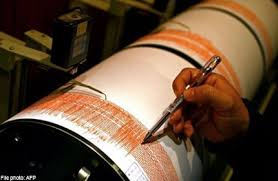
Australia has been hit by its biggest earthquake in 15 years,seismologists said, rattling a remote part of the desert with local Aboriginals reporting strong shaking but no major damage.
The 6.1-magnitude earthquake had its epicentre near Ernabella, in the middle of Australia, at a shallow depth of three kilometres (1.8 miles), Geoscience Australia said on Saturday.
Ernabella is an indigenous arts hub home to about 500 Aboriginal people, some 317 kilometres southwest of the popular Alice Springs.
Seismologist David Jepsen said: "An event like this, there are a number of Aboriginal communities around there and they have experienced strong shaking.
"We've heard from them, people have felt strong shaking, but we haven't heard of any damage yet, but there is that possibility."
It was Australia's biggest quake since a 6.3-magnitude one was recorded in West Australia in 1997.
Resident Ria Nicholls told ABC radio houses shook and windows rattled for about 30 seconds with elderly people on her street terrified by late Friday's quake.
"My husband and I just reassured them that it would be fine and it would pass, but they were frightened," she said.
Yahoo News

