We will have a mirror site at http://nunezreport.wordpress.com in case we are censored, Please save the link

Friday, March 9, 2012

Panetta: US attack on Iran would be more effective


Have you noticed that Obama was dress for a funeral


WASHINGTON – United States Defense Secretary Leon Panetta addressed the possibility of a strike against Iran, clarifying Thursday that the US has better attack capabilities than Israel's.

In an interview with the National Journal Panetta discussed what were to happen if Israel carries out an attack on Iran's nuclear facilities. “If they decided to do it there’s no question that it would have an impact, but I think it’s also clear that if the United States did it we would have a hell of a bigger impact,” Panetta stated.

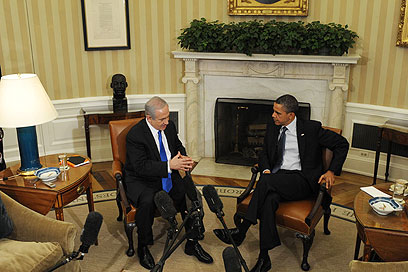
Washington's diplomatic escalation in regards to Iran comes after a long week of meetings between US President Barack Obama and Israel's Prime Minister Benjamin Netanyahu and President Shimon Peres, in which the US declared it's committed to preventing Iran from achieving nuclear capabilities.


אובמה ונתניהו. לא דיברו על פצצות חודרות בונקרים (צילום: עמוס בן גרשום, לע"מ)
Netanyahu and Obama (Photo: Amos Ben Gershom, GPO)


“Let me be clear—we do not have a policy of containment,” Panetta clarified. “We have a policy of preventing Iran from acquiring nuclear weapons.”

Just like his fellow Washington officials, Panetta has come to a conclusion that Israel has yet to make up its mind about whether or not to attack Iran. “As the president himself has said, I don’t believe they’ve made a final decision here,” Panetta said. “I feel confident that they really are seriously weighing all of the ramifications of how best to deal with Iran.”

Panetta mentioned the US has far more advanced weapons and a significantly larger air force than Israel, concluding that an American attack on Iran would be a lot more effective.


Ynet

Thursday, March 8, 2012

Chuck Missler: Ten attributes of the messiah

Japan Holds Firm on Disputed Islands with Russia


Japan reiterated on Thursday that it will only sign a peace treaty with Russia if it returns the disputed Kuril Islands, the BBC Russian Service reported.

The four islands, which lie off Japan's northern-most island of Hokkaido, were seized by Soviet troops at the end of World War II. The dispute over the islands - which Russia calls the southern Kurils and Japan the Northern Territories - has stopped the two countries from signing a treaty to end the war.

Speaking in parliament on Thursday, Japanese Parime Minister Yoshihiko Noda said Tokyo wanted all four islands returned and would not accept a Russian offer to return part of the islands but not all.

Last week, Japan dropped the provocative wording, "illegal occupation," for the long-running dispute, and agreed to refer to the islands as being "occupied without legal grounds" by Russia.

Russian President Dmitry Medvedev sparked a diplomatic row with Tokyo in November 2010 by making the first ever visit by a Russian leader to the Kuril islands.

He later said Russia would increase its military presence there. Japan’s then prime minister Naoto Kan called Medvedev’s visit an "inexcusable rudeness."

RIA Novosti

Satellite images back our claims Iran is developing nuclear weapon


An Israeli official claims satellite images that raised suspicions Iran is trying to conceal a key nuclear test back Israel's concerns that Tehran is developing an atomic bomb.

The official said the pictures "reinforce what Israel has been saying all along ... the Iranian nuclear program is not benign." He spoke on condition of anonymity pending a formal government response.


The base in Parchin where Iran conducted nuclear tests.

On Wednesday, pictures provided by unspecified member countries to the International Atomic Energy Agency - the UN nuclear agency - appear to show trucks and earth-moving vehicles at Iran's Parchin military site. Diplomats said the images suggested the trucks could be carting away radioactive material created in nuclear testing.

Iran says its nuclear program is solely for peaceful purpose - a claim Israel and the West reject.

Earlier Thursday, Yukiya Amano, the head of the International Atomic Energy Agency, told CNN that Iran is not telling us everything about its nuclear program.
"We have the indication or information that Iran has engaged in activities relevant to the development of nuclear explosive devices," Yukiya Amano told CNN.

Iran faces growing international pressure over its nuclear program, which it insists is peaceful. Israel has hinted that it might resort to a pre-emptive military strike to stop Tehran's program.

The diplomatic account came only a day after the ISNA news agency reported that Iran indicated that it would give the UN nuclear watchdog access to the Parchin complex.

An International Atomic Energy Agency report last year said that Iran had built a large containment chamber at Parchin, southeast of Tehran, to conduct explosives tests that are "strong indicators" of efforts to develop an atom bomb.

Haaretz

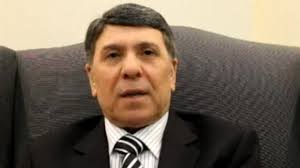
Syria deputy oil minister resigns to join opposition


A Syrian deputy oil minister says he is resigning to join the revolt against the government.

Abdo Hussameddin, 58, announced his defection in a video posted on YouTube.

He is the highest level political figure to abandon the government of President Bashar al-Assad since the uprising erupted a year ago.

Earlier, after a visit to the city of Homs, the UN humanitarian chief said some areas had been "devastated" in the offensive by Syrian government troops.

Valerie Amos said the bombed-out Baba Amr district felt like it had been closed down entirely. The government retook the district last week after fierce shelling.

Activists say troops committed massacres since they went in. Damascus blames rebels for many deaths.'Driven by barbarism'

Abdo Hussameddin - who is one of two deputy oil ministers - posted his video on YouTube late on Wednesday.

Wearing a smart jacket, collar and tie, and sitting in a high-backed armchair, he read out a four-minute ringing denunciation of the regime he said he had served in one capacity or another for the past 33 years.

This is potentially very significant. One of the key elements we have seen in Syria is that the regime itself - the inner core - has not cracked.

If you look at what happened in Tunisia, in Egypt and in Libya, very quickly the regime broke apart and the leadership lost the support of key players.

That hasn't happened yet in Syria - this may be the first sign of it, or it may be just one isolated example.

As the deputy minister intimated in his video, anybody trying to defect from that inner core faces enormous pressure. They fear their homes and families will be destroyed.

"I, Abdo Hussameddin, deputy oil and mineral wealth minister in Syria, announce my defection from the regime, resignation from my position and withdrawal from the Baath Party.

"I am joining the revolution of the people who reject injustice and the brutal campaign of the regime."

Mr Hussameddin - deputy oil minister since August 2009 - added: "I tell the regime, which claims to own the country, you have nothing but the footprint of the tank driven by your barbarism to kill innocent people."

He said he was stepping aside although he knew that his house would be burnt and his family persecuted by the regime.

An activist who shot the video and posted it on YouTube told the AFP news agency in Beirut that the opposition had helped to arrange the resignation.

The Syrian government has not publicly commented on Mr Hussameddin's announcement.

Observers say public defections have been rare among civilian officials of the Syrian state, which is controlled by President Assad's minority Alawite sect.

However, there have been high-profile defections from the military, including Gen Mustapha al-Sheikh who fled to Turkey earlier this year. Also thousands of chiefly Sunni soldiers and conscripts are reported to have deserted since the start of the uprising.

A spokeswoman from the opposition National Transitional Council of Syria said she believed many more cabinet members and their deputies were prepared to defect.

The BBC's Jim Muir in Beirut says the deputy minister's resignation would appear to signal growing strains within the regime, as the violence intensifies, and the economy comes under increasing stress because of sanctions.

Violence continued across Syria on Wednesday. Opposition groups said 39 people were killed - 26 in Homs, six in Idlib, three in Deraa and two each in suburbs of Damascus and Aleppo.

The UN says more than 7,500 people have died as a result of the violence in Syria over the past 12 months.

International media organisations are heavily restricted in Syria, making it impossible to verify the claims of either side.'No to force'

In further diplomatic efforts to halt the violence, special envoy Kofi Annan is due to meet representatives of both sides in Damascus at the weekend.

Speaking after talks in Cairo on Thursday, Mr Annan - joint envoy for the UN and Arab League - rejected any military intervention in Syria.

One woman told the BBC's Paul Wood how two of her brothers were detained, and one was killed

"I hope no-one is thinking very seriously of using force in this situation. I believe further militarisation will make the situation worse," he said after meeting Arab League Secretary General Nabil al-Arabi.

Separately, Beijing announced on Thursday that its envoy had talks in Syria this week with representatives of the government and the opposition.

China's foreign ministry said envoy Li Huaxin met Syrian Foreign Minister Walid al-Moallem and his deputy during a two-day visit.

Observers say Mr Li's visit is Beijing's latest attempt to counter charges by Western and Arab leaders that by vetoing two previous UN resolutions, China and Russia have aided the growing violence by Syrian government forces.

On Wednesday, US Defence Secretary Leon Panetta said no options - including military action - had been ruled out to end the violence in Syria.

However Mr Panetta - appearing before the Senate Armed Services Committee - stressed that the US still preferred a diplomatic solution.

Washington is currently trying to draft a new UN Security Council resolution to try to end the violence.

Russia and China said the earlier motions were unbalanced.

BBC
Russia Blasts NATO over Libya exporting revolution

Purim holds Israel - Iran lessons


In Persia, an oppressive and vengeful leader seeks the total annihilation of the Jewish people. It sounds like a line from an Israeli speech, but it’s also the story of the Purim holiday that Jews mark this week.

From sundown on Wednesday, religious Jews will start the traditional reading of the Book of Esther, while their secular counterparts celebrate by dressing up as characters from the Purim story, and other less traditional figures.

This year the holiday has additional meaning for some, providing historical parallels as Israel’s leaders weigh their response to Iran’s nuclear program.

Prime Minister Benjamin Netanyahu and others here fear the program masks a weapons drive and argue that a nuclear-armed Iran would create a new Persian threat to the existence of the Jewish people.

In Washington this week, he presented U.S. President Barack Obama with a copy of the Book of Esther, which tells of the genocidal plot against the Jews devised by Haman the Agagite.

The gift sent a clear message, said Israeli author Yossi Klein Halevi: “It helps Obama understand how Jews look at the world.”

Netanyahu also reportedly explicitly told Obama that Israel faced a modern-day Haman, and drew similar parallels in a speech to a U.S. pro-Israel lobby group.

“In every generation, there are those who wish to destroy the Jewish people,” he said. “In this generation, we are blessed to live in an age when there is a Jewish state capable of defending the Jewish people.”

In Israel, others have made the connection, with senior ultra-Orthodox rabbi Ovadia Yosef warning last month: “There is now also a Haman in Persia.”

But while Netanyahu and his confidantes are said to be considering military action against Iran, Yosef noted that the Purim story teaches that salvation came through prayer.

“Tradition emphasizes that (the Book of Esther) is the only sacred text in the Hebrew Bible without God’s name in it, and that’s understood as an indication that this is a story that requires human initiative, that saving oneself requires human initiative, and that God’s help is implicit rather than overt,” he said.

“In that sense, Netanyahu is reading the Purim story correctly when he advocates active Israeli self defense against a perceived existential threat.”

Al Arabiya News