Tuesday, February 28, 2012


3 doomsaying experts who foresee economic devasation ahead
NEW YORK – Behind the mainstream Wall Street happy talk about more stable financial markets and an improving economy are grim warnings of tough times ahead from a small cadre of doomsayers who warn that the worst of the financial crisis is still to come.

Harry Dent, author of the new book The Great Crash Ahead, says another stock market crash is coming due to a bad ending to the global debt bubble. He has pulled back on his earlier prediction of a crash in 2012, as central banks around the world have been flooding markets with money, giving stocks an artificial short-term boost. But a crash is coming in 2013 or 2014, he warns. "This will be a repeat of 2008-09, only bigger, when it finally hits," Dent told USA TODAY.
Gerald Celente, a trend forecaster at the Trends Research Institute, says Americans should brace themselves for an "economic 9/11" due to policymakers' inability to solve the world's financial and economic woes. The coming meltdown, he predicts, will lead to growing social unrest and anti-government sentiment, aU.S. dollar with far less purchasing power and more people out of work.
Celente won't rule out another financial panic that could spark enough fear to cause a run on the nation's banks by depositors. That risk could cause the government to invoke "economic martial law" and call a "bank holiday" and close banks as it did during the Great Depression.
"We see some kind of threat of that magnitude," Celente, publisher of The Trends Journal newsletter, warned in an interview.
Robert Prechter, author of Conquer the Crash, first published in 2002 and updated in 2009, is still bearish. He says today's economy has similarities to the Great Depression and warns that 1930s-style deflation is still poised to cause financial havoc. Prechter predicts that the major U.S. stock indexes, such as the Dow Jones industrials and Standard & Poor's 500, will plunge below their bear market lows hit in March 2009 during the last financial crisis. The brief recovery will fail as it did in the 1930s, he says.
2 very different viewpoints
If he's right, stocks would lose more than half of their value. "The economic recovery has been weak, so the next downturn should generate bad news in a big way," Prechter said in an e-mail interview. "For the third time in a dozen years, the stock market is in a very bearish position."
These dire forecasts differ sharply with the brighter outlooks being espoused by the bulls, or optimists, on Wall Street. Recent stock performance and fresh readings on the economy also suggest a future that is less gloomy than the doomsayers predict.
The Dow, for instance, is in rebound mode and has climbed back to levels not seen since the early days of the financial crisis in May 2008. Tech stocks in the Nasdaq composite are trading at levels last seen in 2000. Data on auto sales, manufacturing and consumer confidence have been firming. Job creation is also on the rise. The unemployment rate dipped to 8.3% in January, its lowest level in three years.
As a result, stock market strategists such as Rod Smyth of RiverFront Investment have been raising their outlooks for 2012. Smyth raised his target range for the S&P 500 to 1250-1500. If the market hits the top of the range, stocks would have risen 10%. Similarly, Brian Belski, strategist at Oppenheimer, recently said he remains comfortable with his year-end 2012 target of 1400. That's up 2.5% from here. Bespoke Investment Group published research that shows the market, which is closing in on a new bull market high, has done well in the past once it breaks through old highs.
Bulls are betting that Europe's banking system will be stabilized, minimizing the risk of a severe credit crisis. Bulls are also encouraged by recent data from around the world that show modest growth and a pickup in economic momentum.
The causes of economic calamity
So what has the super-bears so worried?
Dent says the combination of aging Baby Boomers exiting their big spending years and a shift toward debt reduction and austerity around the world will cause the economy to suffer another severe leg down, making it more difficult for the government and Federal Reserve to avert a new meltdown. He has not always been bearish. In 1993 he wrote The Great Boom Ahead.
Celente, who as far back as 2008 has been warning of economic calamity, argues that the ballooning debt and the growing divide between the haves and have-nots has put the U.S. in a weakened state.
As a result, he says, the nation is more vulnerable to potential shocks. He worries about potential chaos caused by people all trying to yank their money out of financial markets at the same time. He also sees risk in the event there is a loss of confidence in elected leaders.
Societal unrest in the form of street protests and increased crime are possible, too, he adds. Markets could also be spooked by an oil price shock due to a military conflict between Israel and Iran, or a bad outcome to Europe's debt crisis.
"2012 is when many of the long-simmering socioeconomic and political trends that we have been forecasting and tracking will climax," Celente noted in his Top 12 Trends 2012 newsletter. In an interview he added: "When money stops flowing to the man on the street, blood starts flowing in the street."
While bulls are urging investors to get back into stocks, the doomsayers are advising a far different strategy. Dent's investment advice is simple: "Get out of the way." He recommends buying short-term U.S. Treasury bills and the U.S. dollar, which will benefit from safe-haven cash flows. He says stocks will fall sharply in value.
Celente's advice centers on survival. He says buy gold so you don't lose purchasing power when the value of the dollar plummets. He says buy a gun to protect your family against desperate people in search of food and money. He says plan a getaway to places with more stable finances and governments.
Prechter says to keep your powder dry and buy when things get really bad: "When things get really scary, as in early 2009, I get bullish."
USA Today
QE 3 Is Already Taking Place, Look At The Federal Reserve`s Balance Sheet

We already have QE 3. Get out the Federal Reserve‘s balance sheet. You’ll see that they’ve been pumping up – you can see unadjusted M2 is going through the roof. Look at their balance sheet.
All sorts of assets are suddenly appearing on their balance sheet. Where did they come from? They didn’t come from the Tooth Fairy; they came because they’re in there buying in the market as fast as they can. There Is QE 3 already. They don’t call it that but it’s there. –in Reuters
Jim Rogers is an author, financial commentator and successful international investor. He has been frequently featured in Time, The New York Times, Barron’s, Forbes, Fortune, The Wall Street Journal, The Financial Times and is a regular guest on Bloomberg and CNBC.
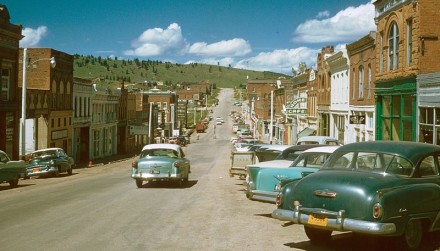
America 1950 vs. America 2012
Would you rather live in the America of 1950 or the America of 2012? Has the United States changed for the better over the last 62 years? Many fondly remember the 1950s and the 1960s as the "golden age" of America. We emerged from World War II as the wealthiest and most powerful nation on the planet. During that time period, just about anyone that wanted to get a job could find a job and the U.S. middle class expanded rapidly. Back in 1950, America was still considered to be a "land of opportunity" and the economy was growing like crazy. There was less crime, there was less divorce, the American people had much less debt and the world seemed a whole lot less crazy. Most of the rest of the world deeply admired us and wanted to be more like us. Of course there were a lot of things that were not great about America back in 1950, and there are many things that many of us dearly love that we would have to give up in order to go back and live during that time. For example, there was no Internet back in 1950. Instead of being able to go online and read the articles that you want to read, your news would have been almost entirely controlled by the big media companies of the day. So there are definitely some advantages that we have today that they did not have back in 1950. But not all of the changes have been for the better. America is in a constant state of change, and many are deeply concerned about where all of these changes are taking us.
There has never been any society in the history of the world that has been perfect. America was flawed in 1950 just as America is flawed today.
But that doesn't mean that we should not reflect on how much things have changed over the past 62 years.
So which version of America would you rather live in?
America 1950 vs. America 2012 - you make the call....
In 1950, a gallon of gasoline cost about 27 cents.
In 2012, a gallon of gasoline costs $3.69.
In 1950, you could buy a first-class stamp for just 3 cents.
In 2012, a first-class stamp will cost you 45 cents.
In 1950, more than 80 percent of all men were employed.
In 2012, less than 65 percent of all men are employed.
In 1950, the average duration of unemployment was about 12 weeks.
In 2012, the average duration of unemployment is about 40 weeks.
In 1950, the average family spent about 22% of its income on housing.
In 2012, the average family spends about 43% of its income on housing.
In 1950, gum chewing and talking in class were some of the major disciplinary problems in our schools.
In 2012, many of our public schools have been equipped with metal detectors because violence has become so bad.
In 1950, mothers decided what their children would eat for lunch.
In 2012, lunches are inspected by government control freaks to make sure that they contain the "correct foods" in many areas of the country. For example, one 4-year-old girl recently had her lunch confiscated by a "lunch monitor" because it did not meet USDA guidelines....
A preschooler at West Hoke Elementary School ate three chicken nuggets for lunch Jan. 30 because the school told her the lunch her mother packed was not nutritious.The girl’s turkey and cheese sandwich, banana, potato chips, and apple juice did not meet U.S. Department of Agriculture guidelines, according to the interpretation of the person who was inspecting all lunch boxes in the More at Four classroom that day.The Division of Child Development and Early Education at the Department of Health and Human Services requires all lunches served in pre-kindergarten programs - including in-home day care centers - to meet USDA guidelines. That means lunches must consist of one serving of meat, one serving of milk, one serving of grain, and two servings of fruit or vegetables, even if the lunches are brought from home.
In 1950, the United States was #1 in GDP per capita.
In 2012, the United States is #13 in GDP per capita.
In 1950, redistribution of wealth was considered to be something that "the communists" did.
In 2012, the U.S. government redistributes more wealth than anyone else in the world.
In 1950, about 13 million Americans had manufacturing jobs.
In 2012, less than 12 million Americans have manufacturing jobs even though our population has more than doubled since 1950.
In 1950, the entire U.S. military was mobilized to protect the borders of South Korea.
In 2012, the U.S. borders with Mexico and Canada are wide open and now there are 1.4 million gang members living inside the United States.
In 1950, there were about 2 million people living in Detroit and it was one of the greatest cities on earth.
In 2012, there are about 700,000 people living in Detroit and it has become a symbol of what is wrong with the U.S. economy.
In 1950, the Dow Jones Industrial Average was slightly over the 200 mark.
In 2012, the Dow Jones Industrial Average is threatening to soar over the 13,000 mark.
In 1950, corporate taxes accounted for about 30 percent of all federal revenue.
In 2012, corporate taxes will account for less than 7 percent of all federal revenue.
In 1950, the median age at first marriage was about 22 for men and about 20 for women.
In 2012, the median age at first marriage is about 28 for men and about 26 for women.
In 1950, many Americans dressed up in suits and dresses before getting on an airplane.
In 2012, security goons look at the exposed forms of our women and our children before they are allowed to get on to an airplane.
In 1950, each retiree's Social Security benefit was paid for by 16 workers.
In 2012, each retiree's Social Security benefit is paid for by approximately 3.3 workers.
In 1950, many Americans regularly left their cars and the front doors of their homes unlocked.
In 2012, many Americans live with steel bars on their windows and gun sales are at record highs.
In 1950, the American people had a great love for the U.S. Constitution.
In 2012, if you are "reverent of individual liberty", you may get labeled as a potential terrorist by the U.S. government.
In 1950, the United States loaned more money to the rest of the world than anybody else.
In 2012, the United States owes more money to the rest of the world than anybody else.
In 1950, the U.S. national debt was about 257 billion dollars.
In 2012, the U.S. national debt is 59 times larger. It is currently sitting at a grand total of $15,435,694,556,033.29. Surely our children and our grandchildren will thank us for that.
One of the only things that is constant in life is change.
Whether we like it or not, America is going to continue to change.
Back in the 1950s and 1960s, about 70 percent of all American adults were married.
Today, only about 50 percent of all American adults are married.
We are more independent, less religious, more addicted to entertainment and more doped up on prescription drugs than Americans used to be.
We have a higher standard of living than Americans in 1950 did, but we are also drowning in an ocean of debt unlike anything the world has ever seen.
For a lot more on how the U.S. economy is doing in 2012, just check out this list of interesting facts.
So is America 2012 a better version than America 1950 was?
Have we made progress since then or are we going backwards?
Please feel free to leave a comment with your thoughts below....
Economic Collapse
Syrian regime threatens Christians, clamps down on churches
As part of its campaign against all pro-democracy activists, the Syrian regime has been persecuting Christian citizens and clergy who take part in the revolution or help the revolutionaries.
The Syrian regime issued instructions to all banks across the country to stop transactions with the Greek Orthodox Mariamite Church on charges of money laundry, said a Christian activist from the southwestern governorate of Rif Dimashq.
“This step was taken right after the church started receiving money from churches abroad to support Syrian revolutionaries,” he said.
The activist added that security forces killed Christian activist Friday Hossam Mikhail for links with the Free Syrian Army.
“A few weeks ago, the Syrian army also killed priest Basilius Nassar and state TV held terrorist groups accountable for his death.”
Nassar, the activist explained, used to deliver food to areas attacked by the Syrian army and was helping doctors out in Hama.
The activist added that according to a priest who worked with him, Nassar was killed while rescuing a victim of an army attack in the Jarajmah neighborhood in Hama.
Syrian forces also fired a non-explosive missile at the Convent of our Lady of Saidnaya north of the capital Damascus after knowing that its monks were involved in delivering medicine and supplies to bombed areas.
In addition to delivering supplies to victims, several churches in Damascus and other Syrian cities have been giving lectures against the Syrian regime and its brutal repression of peaceful protestors.
Three months ago, Syrian revolutionaries declared their solidarity with Father Paolo Dall’Oglio, an Italian monk who has for 20 years been the abbot of the monastery of Mar Musa in Rif Dimashq after Syrian authorities asked him to leave the country citing involvement in “activities unrelated to his job,” in reference to supporting the revolution.
Under the slogan “Syria is your homeland Paolo,” Syrian youths took to the streets in support of Dall’Oglio. The priest was finally allowed to stay in Syria after pledging not to speak about politics again.
Individual Christian activists are also harassed by the regime as many of them are summoned for interrogation on almost monthly basis while others receive threats whether directly or through their family members to stop taking part in the revolution or be killed.
This drove several Christians to leave the country like activist Yara Nosseir who took part in protests and relief in Christian neighborhoods in Damascus like al-Qasaa, Baba Toma, and Bab Sharqi.
In the beginning of the protests, the Syrian regime tried to win Christians to its side like it did with other minorities in the country. The regime tried to convince those minorities that protests aim at dividing the country along sectarian lines and that the regime would protect them.
That is why the first months of the Syrian revolution saw several monks and priests from neighboring countries issue statements in support of the Syrian regime. Shortly after, however, the situation started changing with many priests arguing that since Christianity is a religion of love, justice, and equality, its clergy in Syria cannot support the killing of innocent civilians who are fighting tyranny.
Several Christians also started realizing the hollowness of the regime’s words as they were reminded of the Syrian constitution’s stipulation that the president of the country should be Muslim, an article that also enraged several Muslim activists, who agreed with Christians that the presidency is a national and not a sectarian matter.
Christians were more outraged at the regime after security forces attacked the historic Syriac Orthodox Um al-Zennar Church in Homs and stole its contents. This incident was followed by a remarkable participation of Christians in anti-regime protests.
Anti-regime Christians have also established dozens of pages on the social networking website Facebook and which are all dedicated to posting news and videos about the revolution.
Despite the increasingly prominent presence of Christians in pro-democracy protests, several activists still argue that it is not enough.
George Sabra, member of the General Secretariat of the Syrian National Council, attributed the relatively weak participation of Syrian Christians in anti-regime protests to the church’s stance.
“The fact that the church has not yet taken a clear position on the revolution makes many Christians still reluctant to take part in the protests,” he said to Al Arabiya in an earlier interview.
Many members of the Christian community in Syria, Sabra added, still take the regime’s side.
“As for Christians who have already become part of the opposition, these are mainly from the elite rather than the masses.”
Al Arabbiya News
North Korea warning as US and S Korea begin joint drill
US and South Korean forces have begun military exercises on the Korean peninsula amid warnings from Pyongyang that the drills should not go ahead.
The annual exercises, known as Key Resolve, have brought hundreds of extra US troops into South Korea.
They will be followed later in the week by another set of joint military exercises called Foal Eagle.
North Korea has called the drills an "unpardonable infringement" and threatened to wage "sacred war".
The exercises, it said, go beyond previous ones held on the peninsula and "envisage a pre-emptive attack on North Korea".
North Korea's state media has carried threats of retaliation saying its army would "smash them with a sacred war of its own", the BBC's Lucy Williamson in Seoul reports.
South Korea says the annual exercises with its key ally are defensive. More than 2,000 Americans are taking part, including 800 based outside South Korea.
The US military said in a statement that the North Korean army had been informed of the exercises, which would be monitored by observers from other nations to ensure they did not break the armistice agreement signed at the end of the Korean War.
On Sunday North Korea's new leader Kim Jong-un visited front-line military units, including one said to be responsible for an attack on the South Korean island of Yeonpyeong in 2010.
Four South Koreans died when North Korea shelled the border island.
According to North Korean state media, Mr Kim pledged a "powerful retaliatory strike" if the US-South Korean exercises intruded on North Korean territory.
BBC
Subscribe to:
Posts (Atom)