
The situation surrounding Iran's controversial nuclear program is likely to come to a head by the summer, Chief of the General Staff of the Russian Armed Forces Nikolai Makarov said.
Washington, which suspects Iran is trying to build a nuclear bomb, says that no options have been taken off the table.
“Iran, of cause, is a sore spot. Some kind of decision should be taken, probably nearer to summer,” Makarov said.
Russia's Defense Ministry is monitoring the situation in Iran and the entire Middle East from a recently created situation center, he said.
“We used to have a general on duty at each main command. Now we have created a situation center that receives all the necessary information in real time,” Makarov said.
RIA Novosti

Fitch Ratings on Monday lowered the credit rating of Spain's four largest banks, including Santander, in a move that follows the agency's two-notch downgrade of Spain last month.
The agency cut its rating for Santander, the biggest eurozone bank by market capitalisation, by two notches to A and cut its ratings for BBVA, Bankia and CaixaBank by one notch, it said in a statement.
Standard & Poor's also took the knife to Spain's finance sector, lowering the credit rating of 15 Spanish banks in a move that follows the agency's downgrade of Spain on January 13.
S&P lowered its credit ratings on 10 banks by one notch and it cut its rating on another five by two notches
Spain's biggest financial institutions were hit including Santander, BBVA, Bankia and CaixaBank, the ratings agency said in a statement.
The agency lowered its rating for Santander, the biggest eurozone bank by market capitalisation, to A+ from AA- and lowered its rating for BBVA, Spain's second-largest bank, to A from A+.
Earlier on Monday, Fitch Ratings lowered the credit rating of Spain's four largest banks -- Santander, BBVA, Bankia and Caixabank -- following its downgrade of Spain last month.
"The downgrade of Spain indicates a weakening of its ability to support its largest banks. However, Fitch expects the Spanish authorities to continue to show a high propensity to support these institutions," it said.
"Fitch believes there is a close link between bank and sovereign credit risk (and therefore ratings) and, it is unusual for banks to be rated above their domestic sovereigns.
"Banks tend to own large portfolios of domestic sovereign debt and are highly exposed to domestic counterparties, meaning profitability and asset quality are vulnerable to adverse macroeconomic and market trends.
"Funding access, stability and cost for domestic banks are also often closely linked to broad perceptions of sovereign risk," the agency added.
Last month Fitch downgraded the debt of Spain and four other eurozone countries due to the deteriorating economic outlook in Europe and concerns that European leaders are not acting boldly enough to prevent the debt crisis from worsening.
"Fitch expects no GDP growth for Spain in 2012 and 1.0 per cent growth 2013, for unemployment to remain high at around 23 per cent and for the real estate market to remain a long-term cause for concern," the agency said Monday.
Spain's banking sector is weighed down by a mountain of soured loans and property assets that are losing their value after the bursting of the property bubble, which coincided with the start of a global downturn in 2008.
According to the Bank of Spain, the sector had 176 billion euros ($US232 billion) in problem loans and seized real estate in June 2011 -- a figure which has probably increased since, as the economy has weakened.
The sector has undergone a major restructuring since 2008 but Spain's new conservative government considers it still at risk.
Earlier this month the government launched a major clean-up of the country's troubled banks, approving a law that obliges them to set up a financial safety net totalling 50 billion euros.
Under the reform the level of provisions must increase to 80 per cent of the total value of assets for some troubled banks and a general provision requirement of 7.0 per cent will be imposed on others.
Read more: http://www.smh.com.au/business/world-business/spanish-banks-hit-by-wave-of-downgrades-20120214-1t2m4.html#ixzz1mNAuJHhQ

ABOARD THE USS ABRAHAM LINCOLN --
Iranian patrol boats and aircraft shadowed a U.S. aircraft carrier strike group as it transited the Strait of Hormuz on Tuesday.
The passage ended a Gulf mission that displayed Western naval power amid heightened tensions with Tehran, which has threatened to choke off vital oil shipping lanes.
But officers onboard the USS Abraham Lincoln said there were no incidents with Iranian forces and described the surveillance as routine measures by Tehran near the strategic strait, which is jointly controlled by Iran and Oman.
Although U.S. warships have passed through the strait for decades, the trip comes during an escalating showdown between Iran and the West over the Islamic Republic's nuclear program. The last time an American carrier left the Gulf _ the USS John C. Stennis in late December _ Iran's army chief warned the U.S. it should never return.
The Lincoln was the centerpiece of a flotilla that entered the Gulf last month along with British and French warships in a display of Western unity against Iranian threats. There was no immediate comment by Iran about the Lincoln's departure.
Iran's Revolutionary Guard has said it plans its own naval exercises near the strait, the route for a fifth of the world's oil supply. But Iran's military has made no attempts to disrupt oil tanker traffic _ which the U.S. and allies have said would bring a swift response.
Two American warships, one in front and one in the rear, escorted the Abraham Lincoln on its midday journey through the strait and into the Arabian Sea after nearly three weeks in the Gulf, which is frequently visited by U.S. warships and includes the headquarters of the U.S. 5th Fleet in Bahrain. The strait is only about 30 miles (50 kilometers) across at its narrowest point.
On one side, the barren, fjord-like mountains of Oman were visible through the haze. Iran's coast was just beyond the horizon on the other side of the ship, but too far away to be seen.
Gunners in red jerseys manned the 50-caliber machine guns as the ships moved out of the Gulf. An Iranian patrol boat pulled nearby.
Later, just after the Lincoln rounded the "knuckle" _ the nub of Oman jutting out at the southern end of the strait _ an Iranian patrol plane buzzed overhead. Another patrol boat was waiting further down the coast, said Rear Adm. Troy Shoemaker, commander of the Abraham Lincoln Carrier Strike Force.
Besides Iran's regular patrol boats, the Revolutionary Guard operates a large number of small, fast-attack boats. Some are armed with only a machine gun, while others also carry anti-ship missiles. They can be difficult to spot because they resemble the swift-moving smuggling boats that ply the strait.
Shoemaker said none of those fast boats appeared Tuesday, likely deterred by the rough seas.
He predicted before the transit that the Iranians would likely keep a close eye on the Lincoln throughout its passage, including with ground-based radars. He wasn't surprised by the attention from Iranian forces.
"We would do the same things off the coast of the United States ... It's more than reasonable. We're operating in their backyard," he said. "We've been doing it for years."
Several U.S. choppers flanked the carrier group throughout the transit, watching out for potentially hostile vessels and relaying real-time pictures back to the Lincoln's crew.
Dozens of F/A-18 strike fighters and other planes in Lincoln's embarked air wing sat parked silently on deck throughout the trip. Today was a no-fly day for their crews, though some fighters were prepped and armed, ready to launch in as little as 15 minutes should things go wrong.
Officers on board were eager to describe the transit, in which the Lincoln was accompanied by the cruiser USS Cape St. George and destroyer USS Sterett, as a routine maneuver despite the growing speculation that Israel could launch a military strike against Iran's nuclear program.
The U.S. and allies fear Iran's uranium enrichment program could eventually lead to the production of weapons-grade nuclear material. Iran claims it only seeks reactors for energy and medical research.
"I wouldn't characterize ... us going through the strait as: 'Hey, this is a huge show of force, we're coming through.' It's an international strait to transit. We're going from one body of water to the other," said Capt. John Alexander, the Lincoln's commanding officer, as preparations for the trip got under way late Monday.
The Lincoln is expected to provide air support for the NATO mission in Afghanistan starting Thursday. Navy brass in the Gulf say another American carrier is due back through the strait soon, but gave no firm timetables.
Bay News

(CNSNews.com) – A top Muslim Brotherhood official has warned that any cuts in U.S. aid to Egypt could affect Cairo’s peace treaty with Israel – the latest sign that Egypt’s emerging political forces intend to call Washington’s bluff over the diplomatic dispute triggered by a crackdown on non-governmental organizations.
Egyptian judges have referred 16 Americans and 27 others linked to NGOs for trial, accusing them of using foreign funds to encourage disruptive protests. Among the targeted NGOs whose assets and funds have been seized are the U.S. government-funded International Republican Institute and National Democratic Institute.
On Capitol Hill, the chorus of senior lawmakers calling for aid to Egypt to be suspended over the affair is growing, and Secretary of State Hillary Clinton has warned that the funds could be in jeopardy.
So far, the defiant response from Cairo has been attributed mostly to government figures with links to the deposed Mubarak regime, including the anti-Western minister for international cooperation, Fayza Abul-Naga. The military-appointed Prime Minister Kamal el-Ganzouri – who also served during the Mubarak era – told reporters last Wednesday that the authorities “won’t change course because of some aid.”
But now the Muslim Brotherhood (MB), which won almost 50 percent of the seats in recent legislative elections and dominates parliamentary committees, is making its position clear, too.
Any U.S. aid cut to Egypt, top MB lawmaker Essam el-Erian told the pan-Arabic al-Hayat newspaper, would violate the U.S.-brokered 1979 peace agreement with Israel.
The Jerusalem Post quoted Erian as saying that if the U.S. cuts aid to Egypt, the MB would consider changing the terms of the peace treaty. He is warning that the U.S. should understand that “what was acceptable before the revolution is no longer.”
Erian chairs the parliamentary foreign affairs committee and is deputy leader of the MB’s political wing, the Freedom and Justice Party (FJP).
The FJP was an early critic of the crackdown on the NGOs (although it also said Egyptian NGOs should get their funding from Egyptians). But threats to cut U.S. aid appear to have rallied various factions behind the government, feeding into long-held suspicion of and hostility towards the West.
“This is only the beginning of the anti-American populism/nationalism/Islamism we are going to be seeing in Egypt from now on,” Mideast expert Barry Rubin, director of the Global Research in International Affairs Center in Israel, wrote in a column Sunday.
“What’s amazing is that nobody is pointing out that if an Egyptian government is willing to risk U.S. aid and have a confrontation on this small issue, what are they going to do regarding big issues?’ Rubin said. “What happens when the Egyptian government moves toward Islamism or helps Hamas fight Israel on some level? We have been told that fear of losing U.S. aid will constrain Egypt. But we are now seeing that this simply isn’t true.”
Egyptians don’t want US aid
Among the biggest uncertainties sparked by the toppling of Mubarak a year ago was the future of the peace treaty. After four wars involving the two neighbors – in 1948, 1956, 1967 and 1973 – the treaty negotiated at Camp David led to Israel handing back to Egypt the Sinai Peninsula, an area three times bigger than Israel itself, which it had captured in the 1967 Six Day War.
Although never particularly popular in Egypt, the agreement kept the peace between the former foes for three decades and secured Egypt more than $1.3 billion in U.S. military and economic aid each year.
Legislation signed into law last December ties the provision of $1.3 billion in military aid to Egypt in fiscal year 2012 to certification that the government in Cairo “is supporting the transition to civilian government including holding free and fair elections; implementing policies to protect freedom of expression, association, and religion, and due process of law.”
Sen. Patrick Leahy (D-Vt.), chairman of the Senate Appropriations Committee’s foreign operations subcommittee, inserted the language. He warned this month that the NGO clampdown would affect the certification requirements.
Other lawmakers who have warned the aid is in jeopardy include House Foreign Affairs Committee Chairman Rep. Ileana Ros-Lehtinen (R-Fla.); Rep. Kay Granger (R-Texas), who chairs the House Appropriations Committee’s foreign operations subcommittee; and Sens. John McCain (R-Ariz.), Kelly Ayotte (R-N.H.) and Joe Lieberman (I-Conn.).
A Gallup poll, released last week, but conducted before the furor over the NGO prosecutions, found that a large majority of Egyptians – 71 percent – are opposed to U.S. aid.
About half of the poll respondents said they supported Egypt receiving aid from international institutions, and 68 percent were in favor of aid from other Arab countries.
James Lindsay, senior vice president of the Council on Foreign Relations, argued that while Americans would naturally be upset if the recipients of their hard earned money are ungrateful, “gratitude isn’t the primary objective of U.S. foreign aid”
“Washington doles out aid primarily based on calculations about how to advance U.S. strategic interests. And the United States certainly has great interests at stake in how Egypt’s political transition plays out even if it doesn’t have a lot of influence over where it ends up.”
Over the past year, Americans’ views of Egypt have deteriorated significantly. A Gallup poll a year ago found favorable ratings had dropped from 58 percent in 2010 to 40 percent a year later, with more Americans having a negative than a positive view of Egypt for the first time since Gallup began polling the issue in 1991.
The trend was borne out in a survey by the Arab American Institute (AAI), released on Thursday, in which only 33 percent of respondents said their attitudes regarding Egypt were favorable, compared to 34 percent who said they viewed Egypt unfavorable light.
The AAI said Egypt’s favorable ratings among Americans in polls since the 1990s had been much higher – between 55-65 percent.
CNS News
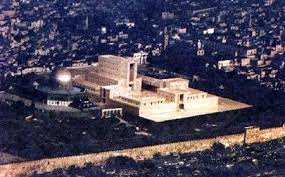
Israel is planning to build a new structure on the Temple Mount, adjacent to the Al-Aqsa Mosque, the Bethlehem-based Ma’an news agency reported on Saturday.
The report cited the Al-Aqsa Foundation for Endowment and Heritage, which claimed that a committee within the Israeli municipality of Jerusalem has submitted plans for the new structure.
According to the foundation, the 3,700-square-meter structure will be built near the Mughrabi Gate. It will consist of five floors, two of which will be underground.
The building will reportedly be designed to include a Jewish museum, lecture halls, exhibition halls, a library and archives center, and a center for information.
Ma’an quoted a statement by the Al-Aqsa Foundation, which claimed the structure would be built on Islamic and Arab ruins.
“The building will serve settlers and foreign tourists who visit the square,” the foundation said. “The Israeli archeology department has been digging and excavating for about five years demolishing structures that date back to different Arab and Islamic eras.”
Israel has not officially responded to the claims, a report on Israel’s Channel 2 Newson Saturday said.
Last week, the Al Aqsa Heritage Foundation’s website featured photos of IDF soldiers touring the Temple Mount. The foundation claimed that two photos are of a Jewish man urinating on a wall within the Temple Mount compound.
However, the website did not provide any evidence that the man is indeed Jewish or that he was indeed engaged in the act they claim he was engaged in. Nor is there any account or documentation that he was approached by anyone following his supposed act of sacrilege, as one would have expected to happen.
Arutz Sheva

