So Al-Qaeda, NATO and the United States agree on this....

Ayman al-Zawahri, global head of al-Qaeda since the death of Osama bin Laden last May, issued the call to arms in an eight-minute video posted on an Islamic website on Sunday entitled "Onwards, Lions of Syria".
Dressed entirely in white, with an assault rifle displayed by his side, Egyptian born al-Zawahri urged Muslim states including Iraq, Lebanon and Jordan to come to the aid of Syrian protesters and urged Syrian protesters not to ally themselves with the Western powers, including the US and the United Nations, or the Arab League.
"Our people in Syria, don't rely on the West or the United States or Arab governments and Turkey," Mr Zawahri said."You know better what they are planning against you. Our people in Syria don't depend on the Arab League and its corrupt governments supporting it."
The Arab League is expected to meet next week to discuss forming a joint UN-Arab mission to send to Syria following the recent failure of a team of UN monitors to quell the civil violence, now entering its eleventh month.
In Homs, activists say hundreds have been killed in a week of intense, renewed shelling by government forces.
"Wounded Syria still bleeds day after day, while the butcher, son of the butcher Bashar bin Hafiz (Hafez al-Assad), is not deterred to stop.
"But the resistance of our people in Syria despite all the pain, sacrifice and bloodshed escalates and grows," Mr Zawahri said, in his second video message to the Syrian people.
In June, the terrorist leader dismissed US support for Syria's pro-democracy activists as insincere and asked protesters to extend their opposition to Washington and Israel.
US officials claim the Iraqi branch of al-Qaeda is responsible for two recent explosions in the Syrian capital Damascus and was almost certainly behind last Friday's suicide blast in Aleppo, which killed 28 people. US intelligence reports suggest the bombings were carried out on the orders of Mr Zawahri, who they suspect is attempting to hijack the violent events in Syria and reassert al-Qaeda's presence in the region.
The Telegraph

UniCredit, Intesa Sanpaolo and Banca Monte dei Paschi di Siena were among 34 Italian financial firms downgraded by Standard & Poor’s on Friday after the credit ratings firm reduced the nation’s grade last month.
Long-term ratings on UniCredit, Italy’s biggest bank, and Intesa, its second largest, were lowered to BBB+ from A, S.& P. said in a statement. Monte dei Paschi, the No. 3 bank, was reduced to BBB from BBB+. All three have a negative outlook, the agency said.
Italy’s credit rating was cut two levels, to BBB+ from A on Jan. 13 after S.& P. said European leaders’ struggle to contain the region’s debt crisis would complicate the country’s efforts to finance borrowings. S.& P. revised its banking industry country risk assessment, known as Bicra, for Italy to Group 4 from Group 3, citing mounting risks.
“Italy’s vulnerability to external financing risks has increased, given its high external public debt, resulting in Italian banks’ significantly diminished ability to roll over their wholesale debt,” S.& P. said in a separate statement on the country’s financial industry. “We anticipate persistently weak profitability for Italian banks in the next few years.”
European nations are grappling with a debt crisis now in its third year as they seek to restore budget order and shore up the region’s financial industry. Spreads on some Italian banks are trading as if they were rated at the cusp of investment grade.
The extra yield investors demand to hold bonds of UniCredit and for Intesa rather than government debt was 508 basis points on Thursday, or 5.08 percentage points, compared with an average 306 basis points in the Bank of America Merrill Lynch Euro Corporates Banking Index. European BBB-ranked bonds are at 381 basis points and BB debt at 664, Bank of America Merrill Lynch index data show.
Fitch Ratings downgraded Intesa to A- from A, and Monte dei Paschi to BBB from BBB+ in a statement on Feb. 6. The credit ratings company affirmed its A- rating on UniCredit.
S.& P. downgrades linked to Europe’s debt crisis have not necessarily led to shifts in bond prices, as investors anticipated declines in creditworthiness. The French 10-year bond was little changed in the five days after S.& P. on Jan. 13 lowered the nation to AA+ from AAA.
UniCredit, Intesa and Monte dei Paschi did not respond to e-mails seeking comment.
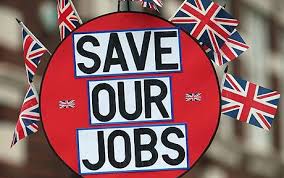
The Chartered Institute of Personnel and Development (CIPD) said businesses in the first three months of this year were planning to shed jobs at the fastest rate since spring 2009.
UK unemployment is likely to hit 2.85m by the end of 2012 according to the CIPD, as tough business conditions undermine the private sector's ability to absorb the thousands to be axed from the public sector.
The latest available data from the Office for National Statistics showed 2.68m people were unemployed in the three months to November.
The survey of more than 1,000 employers by YouGov for the CIPD found that worsening employment prospects were the result of a sharp fall in business confidence in the past three months.
“Whereas employers were in ‘wait and see’ mode three months ago, more private sector firms, particularly among private sector services firms, have decided to push the redundancy button in response to worsening economic news," said Gerwyn Davies, public policy adviser at the CIPD.
"This will exert yet more pressure on a jobs market that is buckling under the strains of contractions in economic growth and public sector employment."
The survey revealed a further widening of the north-south divide in job prospects, with the outlook improving modestly in the south of England but falling in the north.
“With redundancies looking set to be a feature in growing numbers of firms in the months to come, business leaders need to focus attention on communicating and consulting with staff to build trust and employee engagement in these uncertain times," said Mr Davies.
"Employees are likely to respond more positively to change, and even to the threat of redundancies, if they feel that they have a voice in the workplace and that senior leaders listen to their views before taking decisions.”
The Telegraph

