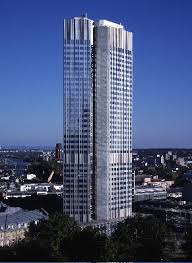
Use of the European Central Bank's three-year funding programme is expected to exceed €500bn in February when lenders are offered their second chance to access its new long-term refinancing operation (LTRO), according to Credit Suisse.
Last month, banks borrowed a total of €489bn using the LTRO, which has effectively seen the ECB take on the role of providing a large part of the funding required by several eurozone banks.
Analysts at Credit Suisse point out the ECB's willingness to provide an increasing proportion of the short and longer-term funding required by eurozone banks has led to a widening gap in the size of its balance sheet versus those of the Bank of England and the US Federal Reserve.
The ECB's balance sheet has risen in size to close to 30pc of eurozone GDP from just over 20pc before it launched the LTRO. By comparison, the Bank and Fed's balance sheets are both worth just under 20pc of domestic GDP.
The willingness of the ECB to provide more funding to eurozone banks is in stark contrast to the Bank of England's much tougher approach to major UK lenders. For instance, while eurozone banks can easily put up covered bonds as collateral against ECB loans, the Bank specifies what collateral is acceptable for each of its funding programmes and applies tighter criteria against their use.
While eurozone banks are allowed to issue covered bonds specifically for use as collateral to access ECB funding the Bank prohibits such behaviour. The disparity has led to what Credit Suisse describes as an "uneven playing field" between UK and eurozone banks.
Last week, the Bank's policy came in for criticism from the City. A report by UBS analysts claimed the Bank's actions meant British lenders were having to pay more to issue debt than their Continental rivals. UBS said the Bank's refusal to contemplate providing UK lenders with easier access to liquidity support risked creating problems.
Bank officials have been clear they do not think UK lenders require any new assistance and should not have access to cheaper funds.
Some British lenders, such as Barclays and HSBC, which operate major eurozone banking operations, should have access to the ECB funding programmes should they choose to use them.
The ECB's decision to increase its exposure to banks has effectively seen it provide the "bazooka" markets had been urging it to use to help stem the debt crisis.
Spanish banks that borrowed money using the LTRO are thought to have used most of it to buy Spanish government debt, leading to a lowering in yields.
The Telegraph

Jan. 14 (Bloomberg) -- Spain’s credit rating was cut two levels by Standard & Poor’s after Prime Minister Mariano Rajoy’s government said on Dec. 30 the nation’s budget deficit will overshoot its 2011 target by a third.
S&P yesterday cut Spain’s long-term rating on its debt to A from AA-, the second downgrade by the rating agency in three months and the fourth since January 2009. Spain’s outlook was lowered to negative, S&P said in a statement released in Frankfort, indicating “at least a one-in-three chance that the rating will be lowered in 2012 or 2013.”
Spain was joined by eight other European countries, including France, Italy and Portugal, in being downgraded, with France and Austria losing their top AAA credit ratings. S&P affirmed the long-term ratings of seven others, including the Netherlands, Belgium and Ireland, in a move that leaves Germany as the eurozone’s only stable AAA credit.
“Today’s rating actions are primarily driven by our assessment that the policy initiatives that have been taken by European policymakers in recent weeks may be insufficient to fully address ongoing systemic stresses in the eurozone,” S&P said. Spain’s downgrade “reflects our opinion of the impact of deepening political, financial and monetary problems within the European Economic and Monetary Union (eurozone), with which Spain is closely integrated.”
The downgrade comes as European leaders return to work from Christmas holidays seeking to buy time for the Spanish and Italian governments to wrest control over their debt and rescue the single currency from fragmentation as the region’s crisis enters a new year. Spain risks becoming the latest euro nation to be overwhelmed by the sovereign-debt turmoil as its economy contracts and after the government failed to tackle its budget deficit, the euro area’s third-largest in 2010.
Spending Cuts
Rajoy’s People’s Party government, which took over from the Socialists on Dec. 22, announced 14.9 billion euros ($19.3 billion) of spending cuts and tax increases on Dec. 30 as it estimated that the 2011 budget deficit will amount to 8 percent of gross domestic product instead of the previous government’s 6 percent target. The shortfall reached 9.3 percent in 2010.
The government will need to reduce by almost half this year’s budget gap to comply with its 2012 commitment and meet an election pledge of restoring Spain’s AAA rating lost in 2009.
Spain faces the task of funding more than 30 billion euros of maturing debt in the first quarter, according to data compiled by Bloomberg.
Comprehensive Solution
S&P put 15 euro nations, including Spain, on review for a downgrade on Dec. 5, linking the final decision to the outcome of a European Union summit that ended Dec. 9 in Brussels. EU leaders, in their fifth attempt to come up with a comprehensive solution to end the debt crisis, agreed to forge a tighter fiscal union, shore up its bailout funds and tighten rules to curb future debts.
Spanish Economy Minister Luis de Guindos said on Jan. 3 that measures to reduce the country’s “significant slippage” in its budget must be “complemented with reforms to increase the potential growth of the Spanish economy.” De Guindos said on Dec. 26 he expected two “tough quarters” ahead.
Businessweek

US President Barack Obama is busy aligning Middle East allies with the next US steps on Iran. Contributing to the mounting sense in Washington of an approaching US-Iranian confrontation, the Pentagon is substantially building up its combat power around Iran, stationing nearly 15,000 troops in Kuwait - two Army infantry brigades and a helicopter unit – and keeping two aircraft carriers the region. TheUSS Carl Vinson, the USS John Stennis which was to have returned to home base and their strike groups will stay in the Arabian Sea.
Iran is caught up in the same pre-war swirl of activity. Parliament Speaker Ali Larijani spent two days in Ankara this week. But Turkish leaders failed in their bid to sell their good offices as brokers for averting the expected collision between Tehran and the West. Before flying out of Ankara Friday, Jan. 13, Larijani commented: "We have different ways of doing things."
DEBKAfile's Iranian sources quote the Iranian official as telling his hosts that his country is prepared to take on any military aggressors. One of the responses weighed in Tehran to meet the rising military pressure might be an open declaration of Iran as a nuclear power. By accepting a visit by IAEA inspectors on Jan. 28 - to investigate charges that Iran is running a clandestine nuclear bomb program - Tehran may be moving toward that irreversible admission - or possibly its first nuclear test.
DEBKA-Net-Weekly 528 disclosed exclusively on Nov. 25, 2011 that Iran may soon publicize its attainment of a nuclear weapon, a step still being debated intensely at the highest levels of the Islamic regime in Tehran. Supreme Leader Ayatollah Ali Khamenei, who will make the ultimate decision, is very much in favor of facing the world as a nuclear-armed Islamic Republic. He calculates that this fait accompli has a good change of warding off a Western and/or Israeli military attack.
Thursday night, Jan. 12, President Obama put in a call to Israeli Prime Minister Benjamin Netanyahu to discuss coordinating US and Israeli moves for a military operation against Iran, which many US media believe to be imminent.
The New York Times wrote Friday under the caption: Dangerous Tension with Iran, "Many officials, experts and commentators increasingly expect some kind of military confrontation."
Obama had similar conversations with other Middle East leaders this week. The and Saudi and Qatari foreign ministers, Prince Saud al-Faisal and Sheikh Hamad al-Thani, spent two days on Jan. 10-11 in Washington talking to the US president. The contents of their talks were kept under tight wraps. Friday, British premier David Cameron suddenly turned up in Riyadh for talks with Saudi King Abdullah and Crown Prince Nayef.
Discussions on military preparations centering on Iran inevitably concern the need for urgent action to halt the unending carnage in Syria, Iran's close ally.
Thursday, the Russian National Security Adviser Nikolai Patrushev, one of Prime Minister Vladimir Putin's closest advisers, said ominously: "We are receiving information that NATO members and some Persian Gulf States working under the 'Libyan scenario' intend to move from indirect intervention in Syria to direct military intervention."
Moscow has consistently spoken out against any foreign intervention in the Syrian conflict – or even tough UN sanctions.
Russia's NATO ambassador Dmitry Rogozin has suggested more than once that the West would use a military adventure in Syria as the jumping-off point for an attack on Iran.
Another sign that Syria is under the military eye of the West came from an indiscreet comment Israel's Chief of Staff Lt. Gen. Benny Gantz made Tuesday, Jan. 10 in a briefing to a Knesset panel. Israel, he said, is preparing to absorb members of Bashar Assad's Alawite sect after his downfall.
He later detracted his words. DEBKAfile disclose that the context of the general's comment was Israeli preparations to establish a buffer zone on the Syrian side of the Golan border to shelter Alawites fleeing the vengeance of their compatriots.
Turkey too has gone back to talking about setting up in northern Syria a Turkish buffer zone for refugees and anti-Assad dissidents.
Further fueling the war scare, two helmeted bombers on a motorbike assassinated the Iranian nuclear scientist Mostafa Ahmadi-Roshan, deputy director of the Natanz uranium enrichment center, in central Tehran Wednesday. Friday, Ayatollah Khamenei accused the United States and Israel of a CIA-Mossad master plan, which Iranian sources claimed bore the title "Red Windows" and focused on training Iranian dissidents for hit and sabotage operations in Iran.
Amid a wave of criticism, Standard & Poor's defended its decision to downgrade nine European countries and insisted Saturday that the region's leaders aren't doing enough to solve their debt crises.
The prime minister of France, the biggest economy hit by the downgrade, vowed to press ahead with cost-cutting measures that opponents say will suffocate growth. The loss of its coveted AAA status wounded France's self-image and market credibility just as it's facing a new recession and presidential elections.
The move Friday night may make it more expensive for struggling countries to borrow money, reduce debts and sustain growth. It also came just as crucial negotiations between the Greek government and its private creditors appeared close to collapse.
Voices rose up Saturday against the power that ratings agencies wield. Critics of S&P have questioned its credibility and relevance before because it failed to foresee the collapse in the U.S. subprime mortgage market, which helped trigger the financial meltdown of 2008.
The latest downgrade brought a downbeat end to a mildly encouraging week for Europe's most debt-laden nations. It also served as a reminder that the 17-country eurozone faces what German Chancellor Angela Merkel called a “long road” ahead to win back investors' confidence.
Cyprus President Dimitris Christofias called the downgrade “unacceptable.”
“The latest downgrade is completely unfair and loaded with ulterior motives,” he told reporters. “Just when the Cyprus economy is breathing easier and showing signs of emerging from the crisis, and when our financing needs for 2012 and perhaps beyond 2012, have been covered, a (credit ratings) agency comes along to downgrade.”
Austria's chancellor criticized S&P's decision to strip his country of its AAA rating, and noted that his coalition government is working on an austerity package.
Werner Faymann wrote on his Facebook page that the decision showed “that Austria must become more independent from the financial markets.”
In Germany, whose AAA rating remained untouched, a senior lawmaker with Ms. Merkel's conservative party, Michael Meister, suggested action to reduce the significance of ratings. Ms. Merkel signaled her support.
Germany's foreign minister called for independent European ratings agencies instead of relying solely on the leading, U.S.-based agencies such as Standard & Poor's.
And Vice Chancellor Philipp Roesler, who is also the economy minister, was quoted as telling the weekly Der Spiegel, “It is apparent time and again that U.S. rating agencies pursue very much their own goals.”
It's unclear though whether a European agency would come to different conclusions or reduce what critics see as a disproportionate influence that ratings agencies have on markets and policymakers.
S&P spokesman Martin Winn dismissed suggestions that the agency's decisions were political and could further hurt indebted countries. “The track record of our sovereign ratings as indicators of default risk worldwide is very strong,” he told The Associated Press.
S&P analyst Moritz Kraemer said in a conference call Saturday that European government measures aren't sufficient to restore confidence.
“They have not achieved a solution that is sufficient in size or scope,” he said. He added that austerity measures require “huge sacrifices” of the public that might prompt a backlash.
In Romania on Saturday, residents staged a third day of protests against the government over cost-cutting and falling living standards.
In Paris, demonstrators chanted in front of the S&P French offices and castigated the government for paying so much heed to the ratings agencies.
“The French people know what their value is and we don't need ratings agencies to tell us what we are worth,” said Raquel Garrigo, spokesman for the Left Front political party.
Ms. Merkel and French Prime Minister Francois Fillon said the downgrades should push European countries to quickly implement a planned pact to strengthen budget discipline.
Germany and France have piloted rescue efforts for other eurozone countries as the continent has been swept up in crisis after crisis over the past two years. The downgrade, by pushing up France's borrowing costs, could make it harder for France to help others.
Ms. Merkel sought to allay concerns that the downgrade of France would complicate the work of the bloc's temporary rescue fund, the €440 billion ($560 billion U.S.) European Financial Stability Facility. However, she underlined the urgency of putting its permanent successor, the European Stability Mechanism, in place quickly.
Mr. Fillon said France's government wouldn't adjust this year's budget yet, because it had been devised with an assumption of higher borrowing costs. S&P had warned 15 European nations in December that they were at risk for a downgrade, and Moody's has France and other European governments on review.
Standard & Poor's stripped France of its coveted AAA status, knocking it down one notch to AA+, the level of U.S. long-term debt after S&P downgraded it last summer. It dropped Italy even lower. Germany retained its top-notch rating, but Portugal's debt was consigned to junk.
Stocks fell Friday as downgrade rumors reached trading floors, but the declines were nothing like the wrenching swings of last summer and fall.
The prime minister of Spain — also downgraded — promised to reduce the budget deficit by reining in public spending. In his first major speech to Popular Party members as premier and party leader, Mariano Rajoy described “living a difficult moment.”
France's presidential elections could complicate Europe's discussions. President Nicolas Sarkozy, who has been at the heart of the debate, is highly unpopular and far from certain of winning a second term.
The man who tops polls ahead of the April and May elections, Socialist Francois Hollande, said the downgrade was a punishment for conservative Sarkozy's policies.
The Globe and mail

France has lost its top AAA credit rating from Standard & Poor's and eight other eurozone governments have also been downgraded by the ratings agency.
Italy, Spain, Cyprus and Portugal were cut two notches, with the latter two given "junk" ratings. Germany kept its AAA rating, and with a stable outlook.
S&P blamed the failure of eurozone leaders to deal with the crisis, or even diagnose its causes correctly.
Rumours of S&P's move prompted stock markets to fall earlier in the day.Misdiagnosis
Austria, like France has lost its top AAA rating, and been downgraded to AA+. Its economy exports a lot to recession-struck Italy, while its banks are facing losses on subsidiaries they own in financially troubled Hungary.
S&P's rating of Italy - currently at the epicentre of the crisis - has been cut two notches from A to BBB+.
Spain was also cut two notches from AA- to A, as was Portugal, whose rating fell from BBB- to a "junk" rating of BB - indicating a very high level of risk for lenders.
“Start QuoteApart from Germany and lower-rated Slovakia, all the other countries being reveiwed were given a "negative outlook", meaning there is a 30% chance of a further downgrade.
The agency said the plan currently being discussed by eurozone leaders - to limit governments' future borrowing - was based on a misdiagnosis of the cause of the financial crisis.
"Today's rating actions are primarily driven by our assessment that the policy initiatives that have been taken by European policymakers in recent weeks may be insufficient to fully address ongoing systemic stresses in the eurozone," said S&P in its statement.
It said the crisis was more to do with trade deficits and a loss of competitiveness by "periphery" eurozone economies such as Italy and Spain, than excess borrowing by governments.
The agency also praised the ECB for taking action to stop a total collapse in market confidence in the eurozone late last year.
BBC
Russia has given Iran its bear hug and warns Israel and the West that an attack on Tehran would be considered an attack on Moscow. The threat heightens the prospect of World War III in the event of a military strike on Iran.
“Iran is our neighbor,” Russia's outgoing ambassador to NATO, Dmitry Rogozin, told reporters in Brussels. “And if Iran is involved in any military action, it’s a direct threat to our security.”
Kremlin Security Council head Nikolai Patrushev accused Israel of provoking the United States towards war against Iran, the Russian Interfax news agency reported Friday. “But at the same time, we believe that any country has the right to have what it needs to feel comfortable, including Iran," he added.
Rogozin warned on Friday that more attacks on Iran could cause "a scorching Arab Summer."
Russia also has come to the defense of Syrian President Bashar al-Assad, warning Western nations not to intervene in Syria with military forces. Russia is a major arms supplier to Syria and has a heavy investment in Iran’s nuclear facilities.
Japan also is drifting towards Iran, backtracking from its promise last week to back American sanctions aimed at persuading Iran to halt its unsupervised nuclear development.
Last week’s assassination of an Iranian nuclear scientist has aroused more “Death to America” and “Death to Israel” protest rallies in Iran, where the scientist was buried on Friday.
Iranian state radio said the 32-year-old scientist was involved with enriched uranium, a key ingredient for a nuclear weapon.
Arutz Sheva


