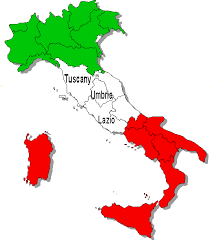
There is a "significant" chance that Italy will have its credit rating downgraded this month, an executive at the ratings agency Fitch has said.
David Riley, Fitch's head of global sovereign ratings, cited the lack of a plan to halt the eurozone crisis, coupled with Italy's high debts.
Fitch warned last month that Italy and five other eurozone countries were all at risk of downgrade.
Another Fitch spokesman said he did not foresee a downgrade of France in 2012.
In December the agency revised its outlook on France to "negative" from "stable", meaning a downgrade is possible in 12-18 months.'Front line'
Italy currently holds an A+ rating. But last month, along with Spain, Belgium, the Irish Republic, Slovenia and Cyprus, it was placed on "credit watch negative" by Fitch, which means it could face a downgrade within three months.
Mr Riley said the agency's reviews of the countries were due to be completed by 31 January.
He said that Italy, the third largest economy in the eurozone, was at the "front line" of Europe's debt crisis.
"The future of the euro will be decided at the gates of Rome," he told reporters in London.
"One thing which would also help Italy, which is outside of its immediate control, is to take out the liquidity crisis premium, which basically means you need to have a... firewall.
"At the moment we don't have that and that's a serious concern with regard to Italy. It's one of the reasons why we have Italy on [credit] watch negative, it's one of the reasons why when we conclude that review, there is a significant chance that that rating will fall."
BBC

PARIS – French savers are squirrelling away their spare cash at the fastest rate in nearly 30 years, putting a drag on consumer spending in the eurozone’s second-biggest economy while helping its banks’ balance-sheets.
Even in the best of times France is among the most thrifty nations in the developed world, but the threat of Europe’s debt crisis spreading to France has savers running for the perceived safety of bank accounts and becoming more wary of life insurance policies exposed to volatile markets.
“Luckily it’s not going under mattresses, it’s still going into bank accounts, thank God. But this is the first phase of a liquidity crisis,” said Cyril Blesson, a savings economist at consultancy Pair Conseil.
“People are preferring to put their money into cash or even non-interest bearing accounts while there is also a lot of money going into tax-free and taxable savings accounts.”
France’s economy, which many economists estimate to be in recession, is far more dependent on consumer demand to underpin its growth than its northern neighbour Germany, which can count on surging exports for its strength.
With unemployment claims at a 12-year high, French households are preparing for a rainy day despite a generous social safety system to provide for them when they retire or lose their jobs.
French savers have been piling into French banks just as professional investors have been pulling money out of their stocks on concerns about their exposure to troubled euro sovereign debtors and their reliance on wholesale funding.
In case of bankruptcy, bank deposits are guaranteed in France up to 100,000 euros by an industry body while life insurance policies are guaranteed up to 70,000 euros.
A NATION OF SAVERS
The household savings rate shot up during the 2008-09 financial crisis and is running at about 17 percent, the highest level since early 1983, according to Thomson Reuters Datastream.
Consumer spending has meanwhile been languishing, falling in November at the fastest 12-month rate since February 2009, which marked the trough of the 2008-2009 financial crisis.
However, with household indebtness among the lowest in Europe, Societe Generale’s chief economist for France, Michel Martinez, said there was scope for French savers to ease their savings from current highs.
“Everything suggests that they will lower their savings rate which would support spending,” he said.
But complicating the picture, President Nicolas Sarkozy’s conservative government has committed to pushing through a sales tax increase to finance companies’ welfare contributions, which risks further dampening spending and offsetting any positive impact from lower savings.
At least the high savings rate is proving to be a boon for France’s beleaguered banks, with surging deposits helping to ease the pressure of funding themselves on clogged interbank markets while helping to meet new Basel III capital adequacy ratios.
With interbank market rates at the highest levels since the 2008-2009 financial crisis, French banks have been borrowing heavily from the European Central Bank, accounting for about 27% of total ECB loans to banks, according to the balance sheets of the Bank of France and the ECB.
SAVINGS SAVING THE BANKS
With inflows of deposits helping to reduce French banks’ reliance on markets and the ECB, they are aggressively marketing tax-free and taxable savings accounts, steering their money away from life-insurance products, which traditionally have been the most popular form of savings in France.
“In their retail networks, their sales arguments have a significant impact on the way the French save,” Gildas Robert, an actuary and senior manager at consultancy Optimind.
The rate of growth in deposits in Livret A savings accounts, which are tax free and have a state-regulated interest rate of 2.25%, accelerated in September to 11% over 12 months, according to Bank of France data.
While that is nearly twice the 6% average rate of the last 10 years, it is a far cry from the 30% seen in March 2009, during the darkest days of the 2008-09 financial crisis.
Net flows into life insurance products fell for a third straight month in November, hitting a negative 3.2-billion euros, according to figures from the French Federation of Insurance Companies (FFSA).
Such outflows from France’s favourite savings product are rare and the rate of decline in November was on par with that seen just after Lehman Brothers went bankrupt in 2008 and savers buckled down for the worst.
Despite these recent outflows, the life insurance industry recorded net inflows of 14.4-billion euros in the first 11 months of 2011.
“In the current environment, savers are more hesitant than in normal times to make long-term investments,” said Philippe de Villeneuve, head of the FFSA’s life insurance committee.
“The banks clearly need resources. They push short-term products with interest rates set in advance, which is having the result that the French are more attracted by this sort of investment than in the past,” said de Villeneuve, also deputy chief executive of BNP Paribas Cardif, the French bank’s insurance arm.
The Financial Post

Three Federal Reserve policy makers said the U.S. government should try new ways to spur the housing market without agreeing about how much more the central bank needs to do to bring down interest rates.
New York Fed President William C. Dudley said in New Jersey yesterday that “additional housing policy interventions” can help boost growth, even as the Fed should consider further easing. Boston Fed President Eric Rosengren, speaking in Connecticut, took the more-aggressive position of supporting the purchase of mortgage-backed securities, while Fed Governor Elizabeth Duke said in Virginia that the central bank’s current monetary stance is “appropriate.”
The comments underscore concerns by Fed officials that they may be reaching the limits of their power to boost growth and lower unemployment through three years of near-zero interest rates and unconventional policy tools. Chairman Ben S. Bernanke this week urged lawmakers to do more to revive the housing market, calling it an impediment to the economic recovery. He delivered a 26-page staff report to Congress outlining possible solutions.
“Bernanke realizes that we need to boost housing and if housing does not recover, what the Fed does will be for naught,” said Sung Won Sohn, former chief economist at Wells Fargo & Co. who is now a professor at California State University-Channel Islands in Camarillo.
The chairman and his colleagues “are trying to jawbone” the Obama administration, Congress,Fannie Mae and Freddie Mac to support the housing recovery, Sohn said.
Jobless Rate Falls
Fed officials who spoke yesterday gave little indication that their monetary-policy views were swayed by yesterday’s Labor Department report showing that the jobless rate (USURTOT) fell to 8.5 percent in December, the lowest since February 2009. Payrolls rose by 200,000 workers, more than economists forecast.
The Standard and Poor’s 500 fell 0.3 percent to 1,277.81 in New York, while yields on 10-year Treasuries fell four basis points to 1.96 percent.
The central bank’s policy-setting Federal Open Market Committee meets Jan. 24-25 in Washington, where governors and regional-bank presidents will for the first time present projections for the benchmark federal funds rate. The Fed signaled this week in minutes of December’s session that it may alter language saying rates will probably stay near zero until at least mid-2013.
The central bank cut its main interest rate almost to zero in December 2008. Bernanke has said the Fed is considering additional actions, including a third round of large-scale asset purchases.
‘Frustratingly Slow’
Dudley, 59, a former Goldman Sachs Group Inc. (GS) economist who serves as FOMC vice chairman, said that while the housing market is “only one factor behind the frustratingly slow” recovery, it’s an “important one that deserves our attention.”
He detailed options designed to prevent foreclosures, ease refinancing of mortgages and get renters into lender-owned properties.
Even so, “because the outlook for unemployment is unacceptably high relative to our dual mandate and the outlook for inflation is moderate, I believe it is also appropriate to continue to evaluate whether we could provide additional accommodation in a manner that produces more benefits than costs, regardless of whether action in housing is undertaken or not,” Dudley said to a New Jersey Bankers Association economic forum in Iselin.
Rosengren, speaking in Hartford to the Connecticut Business & Industry Association and MetroHartford Alliance, said buying more MBS “would in my view help provide a more rapid recovery in housing, by reducing the costs of refinancing or purchasing new homes.”
More Effective
“Of course, these Fed actions would be even more effective if accompanied by fiscal policies designed to speed the recovery in housing,” said Rosengren, 54, who has previously supported additional action by the FOMC.
Duke, 59, said in Richmond that “forceful and effective housing policies have the potential to significantly influence the speed and strength of our economic recovery.”
Evidence including advertising and employer surveys “suggests that the job market is not poised for marked improvement,” Duke said. “While the trend in unemployment will be gradually lower, the path to get there might be choppy.” She didn’t voice support for additional monetary easing while reiterating the FOMC statement that policy makers “are prepared to employ our tools as appropriate to foster economic recovery in a context of price stability.”
‘Stubbornly High’
Fed Governor Sarah Bloom Raskin, the only official not to discuss housing in a speech yesterday, said the central bank is taking the right steps to lower borrowing costs and address “stubbornly high” unemployment.
“Although the pace of employment growth has picked up in recent months and the unemployment rate has fallen some, the labor market remains quite weak,” she said to bankers in Baltimore.
Raskin has a speech scheduled for tomorrow on the topic of mortgage servicing and foreclosure challenges, according to the Fed.
Home construction is running at about one-fourth of its peak last decade, and the number of mortgages becoming delinquent “remains very elevated” and rose in the third quarter, Dudley said. He cited data from the Mortgage Bankers Association of America showing that there were about 1.5 million first lien mortgages 90 or more days past due. Another 2 million were in “some stage of foreclosure,” Dudley said.
“There’s no question housing continues to be a very, very weak part of the economy,” said James Hamilton, an economics professor at the University of California, San Diego, and former Fed research adviser and visiting scholar. “The Fed is raising the possibility for Congress to consider legislation outside what monetary policy can do.”
Bloomberg

From Fars News Agency, Tehran
TEHRAN -- Iran and Russia have replaced the U.S. dollar with their own currencies in their trade ties, a senior Iranian diplomat announced on Saturday.
Speaking to FNA, Tehran's ambassador to Moscow, Seyed Reza Sajjadi said that the proposal for replacing the dollar with the ruble and rial was raised by Russian President Dmitry Medvedev in a meeting with his Iranian counterpart, Mahmoud Ahmadinejad, in Astana on the sidelines of the Shanghai Cooperation Organization meeting.
"Since then we have acted on this basis and a part of our interactions is done in ruble now," Sajjadi stated, adding that many Iranian traders are using the ruble for their trade deals.
"There is a similar interest in the Russian side," the envoy stated, adding that Moscow is against unilateral sanctions on Iran outside the U.N. Security Council, specially the recent sanctions against Iran's Central Bank.
Imposing sanctins on Iran's central bank "is unacceptable," Sajjadi said. "The Russians have clearly announced that they will not accept these sanctions and Iran's nuclear issue is resolvable just through negotiations."
Iranian President Mahmoud Ahmadinejad hit back at the United States after it introduced new sanctions against Iran's central bank.
President Ahmadinejad told an annual meeting of senior central bank officials that Iran's central bank would respond with "force" to the new U.S. sanctions intended to pressure Tehran to abandon its nuclear program.
He said the bank was strong enough to defeat "enemy plans."
The sanctions -- which cut off from the U.S. financial system foreign firms that do business with the central bank -- are part of a defense bill signed by President Barack Obama this month.
The extra U.S. sanctions aim to squeeze Iran's oil sales, most of which are processed by the central bank, although many people even in the West believe that the move would prove futile.
During the last two years Iran has been replacing the dollar with other currencies in its world trade.
Iran has replaced the dollar in its oil trade with India, China, and Japan. Late in November the Reserve Bank of India issued the needed permission to the Central Bank of Iran to open rupee accounts with two Indian banks, UCO and IDBI, as a long-lasting solution to the two countries' payment problems.
Both accounts were opened in the respective banks' Mumbai branches.
A top official of city-based UCO Bank said that while payments for his country's oil imports would initially be in rupees, it would be then converted into a separate currency, which was yet to be decided by the apex bank.
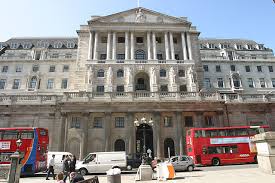
The Bank of England was today urged not to waste time in issuing
another dose of emergency medicine to help the ailing British economy.
The British Chambers of Commerce (BCC) said an announcement this week on an expansion of the Bank's quantitative easing (QE) programme would boost confidence and ease concerns around the fate of the eurozone.
Despite the BCC's message, most analysts expect the Bank's Monetary Policy Committee (MPC) to keep QE at £275 billion following Thursday's meeting, with next month seen as the more likely date for action.
Calling for an immediate £50 billion boost to the QE programme, David Kern, chief economist at the BCC, said: "The economic challenges facing the UK, and unresolved problems in the eurozone, highlight the importance of sustaining confidence within the business community.
"As the Government perseveres with its plan to reduce the deficit, it must make efforts to help the economy continue to grow."
Recent economic data has shown a higher-than-expected lift in economic growth in December, which may have surprised the MPC.
Growth in the powerhouse services sector, which makes up 75% of the UK economy, is likely to have saved the wider economy from contraction in the final quarter, while surveys reported growth in manufacturing and construction.
However, the crisis in the eurozone - which the Bank cited as one of the key threats to the UK recovery - continues to rumble on as EU leaders are yet to deliver a concrete plan to resolve the region's problems.
The minutes from the MPC's last meeting in December suggested a further cash injection to boost the economy was highly probable but not until at least February, as the committee completes the current round of QE announced in October.
Holding interest rates at 0.5% will be welcomed by borrowers, but the extended period of lower lending costs spells more misery for pensioners and savers, who will continue to suffer low returns on their money at a time when inflation is eroding the value of their deposits.
Victoria Cadman, an economist at Investec Securities, said the balance of risks still points to the UK economy re-entering recession in the first half of this year.
She said: "By February these fears, coupled with the continuing severe threat posed by the euro crisis alongside signs of inflation trending down, we think, will push the MPC into sanctioning further QE."
The Independent
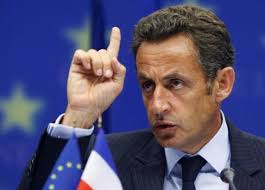
Nicolas Sarkozy fanned the flames of a lingering cross-Channel
row with David Cameron yesterday as he said a new "Tobin tax" on
financial transactions was "exactly what was needed".
The French President – who snubbed Mr Cameron over his veto of a new European treaty in December – is aggressively pushing for the new tax as he wages his campaign against "Anglo-Saxon capitalism". The City of London is deeply opposed to such a move.
Speaking at a joint press conference with the German Chancellor Angela Merkel after their first face-to-face talks of the new year, he pledged to push ahead with the tax unilaterally if other states dithered. He warned: "If we don't set the example, it will not be done. We have no doubt we are going to start a trend in the eurozone for everyone to adopt this tax, which is exactly what is needed."
Britain will veto such a tax at European Union level unless it is adopted on a global scale, fearful of its impact in the City. The issue look sets to catch fire again when EU leaders convene for their first summit of 2012 at the end of January.
Mrs Merkel also fired a warning shot to Greece as she said further aid to Athens under its second €130bn (£107bn) bailout would not be released without faster progress on the "voluntary" 50 per cent losses that private investors have agreed to take on their Greek debt. Banks, insurers and investment funds have been in talks with the Greek government for weeks, although there are suggestions that they may have to take a bigger hit.
The Independent

An agreement with Greek bondholders must come soon for Greece to receive a vital second bailout, Germany's Chancellor Angela Merkel says.
"The second Greek aid package, including this [debt] restructuring, must be in place quickly.
"Otherwise it won't be possible to pay out the next tranche for Greece," she told a news conference.
Greece needs a second EU-IMF rescue to avoid a default on its debts and possible exclusion from the eurozone.
The rescue, worth 130bn euros (£107bn), would include a voluntary restructuring of Greek debt - meaning bondholders would have to write off 50% of the Greek bonds' value.'Very tense' eurozone
Mrs Merkel called Greece "a special case" but insisted that "no country should be excluded from the eurozone".
She was speaking in Berlin at a joint news conference with France's President Nicolas Sarkozy, focused on the eurozone crisis.
Mr Sarkozy called the situation in the eurozone "very tense".
EU leaders are facing multiple pressures on the 17-nation eurozone in the run-up to a summit on 30 January.
Chancellor Merkel insists on tougher penalties for countries that violate eurozone budget rules.
Twenty-six of the EU's 27 members have agreed in principle to a new inter-governmental treaty - a "fiscal compact" - to stabilise the euro. The UK refused to sign.
Referring to the pact, Mr Sarkozy said "we want the negotiations to finish in the coming days, so that the treaty is signed on 1 March".
The compact will include automatic sanctions for budget rule-breakers - sanctions that can only be blocked if a majority of powerful eurozone members object.
A new 500bn-euro EU bailout fund - the European Stability Mechanism (ESM) - is to be launched in July, a year earlier than originally planned.
The existing temporary fund - the 440bn-euro European Financial Stability Facility (EFSF) - is considered too weak to rescue a major eurozone economy such as Italy or Spain.
Mr Sarkozy said he and Mrs Merkel had agreed to ask the European Central Bank to "do all it can to ensure the EFSF works more effectively".
The liquidity of European banks remains a big worry, as economic stagnation takes its toll on lending.
Economic data suggest that the eurozone is heading for recession in 2012. The German economy remains much healthier than the struggling eurozone periphery economies, especially Greece and Italy.
The need to revive growth and create jobs is high on the EU leaders' agenda, although many economists argue that the drive for austerity is stifling growth prospects.Controversial tax
Mr Sarkozy has suggested France could introduce a financial transaction tax as early as February, while Germany says such a tax must be EU-wide.
Nevertheless, Mrs Merkel praised the French initiative, saying "we've been fighting for years to get a financial transaction tax".
The UK government says it will only consider introducing such a tax if there is global agreement on it.
Mr Sarkozy is anxious for France to keep its cherished AAA credit rating as he campaigns for re-election in April.
He holds the banks largely responsible for the debt crisis and sees the financial transaction tax as a fair measure to ease the burden on taxpayers - a message that may appeal to voters.
Mrs Merkel will meet International Monetary Fund (IMF) chief Christine Lagarde in Berlin on Tuesday, to consider how to proceed with the rescues of debt-laden eurozone economies.
Besides Greece, Italy and Spain are also saddled with huge debts, which will have to be refinanced this year. Their borrowing costs remain unsustainably high.
Hungary - outside the eurozone but dependent on it - has seen its sovereign debt downgraded to junk status. It is seeking an IMF standby loan amid a row over its economic policies and weak investor confidence.
BBC


