
Franco-Belgian financial group Dexia called an emergency board meeting on Monday after concerns about its exposure to Greece and a Moody's warning about its liquidity position raised pressure on Belgium and France to act.
Dexia shares tumbled 10 per cent on Monday after Greece said its steps to avoid bankruptcy were falling short and credit agency Moody's raised concerns about the lender's access to funds.
Investors pegged losses among Wall Street banks overnight to the sharp falls in Dexia.
The bank summoned board members for a board meeting late on Monday, a source familiar with the matter told Reuters.
Belgian and French finance ministers were also meeting together with other euro zone leaders on Monday evening. Belgium's Didier Reynders said the two states, both Dexia shareholders, would do all that was required to support their banks.
"Whether it is Dexia or another, we are following the situation day-by-day," Reynders told reporters on arriving at the Eurogroup meeting in Luxembourg.
"To help the banks... the first thing to do is to help Greece. If you resolve the Greek problem you are a long way along the path," he continued, adding that Dexia was not among the most troubled banks in the continent.
The mid-tier bank has neverthelss one of the largest exposures to Greece among overseas lenders and has been at the centre of media speculation in recent weeks that it will split or needs another bailout, potentially from taxpayers.
According to a source familiar with the situation, Dexia's shareholders were keen to avoid a capital increase, but the group was likely to put a part of its French municipal lending unit Credit Local for sale.
Alex Koagne, analyst at Natixis in Paris said there could not be any demerger until capital was pumped in.
"An injection is needed so the bank can withstand losses on toxic assets," he said.
He estimated Dexia needed 5 billion euros in additional capital to have a 9 per cent common equity Tier 1 ratio under Basel III rules.
Dexia is not the only European bank facing a need for capital as regulations become tougher, profits sag and lenders face losses on sovereign bonds if the euro zone crisis is not resolved.
Banks face a 148 billion euro capital shortfall under a base case and a 227 billion shortfall under a stressed scenario, according to analysts at JPMorgan, who say Unicredit , Deutsche Bank , Lloyds , Societe Generale and Barclays each face a deficit of over 7 billion euros under its stressed scenario.
If banks are unable to raise the capital privately, government ownership of the sector could jump to 22 per cent from 7 per cent now, JPMorgan analyst Kian Abouhossein said in a note.
European bank stocks were down 2.6 per cent by 1056 GMT, with French banks BNP Paribas , Societe Generale and Credit Agricole , each down over 3 per cent.
Dexia, which received a 6 billion euro ($US8 billion) bailout from Belgium, France and other major shareholders at the height of the financial crisis in 2008, held 3.8 billion euros of Greek sovereign bonds at the end of June and had a credit risk exposure to the country of 4.8 billion euros.
Dexia's market capitalisation is only 2.5 billion euros, and its core capital is seen as insufficient to absorb big hits.
The company has taken a 338 million euro hit to cover a 21 per cent loss on Greek sovereign debt maturing by 2020, part of a plan agreed by private sector investors in July.
But with market prices indicating investors could suffer a loss of 50 per cent or more, Dexia's Greek bill could be more than 1 billion euros more.
Dexia Chairman Jean-Luc Dehaene said after a board meeting last week that neither Dexia nor its shareholders wanted the group to break apart and that it would continue to examine options to strengthen its balance sheet.
Dexia came unstuck when short-term credit dried up in the depths of the 2008 financial crisis, since a large proportion of its long-term lending to public authorities was financed by short-term borrowing.
Moody's said on Monday Dexia had experienced further tightening of its access to market funding.
Read more: http://www.smh.com.au/business/world-business/dexia-warning-spooks-global-investors-20111004-1l5vl.html#ixzz1ZpJKQo9c
hostgator coupon 2011
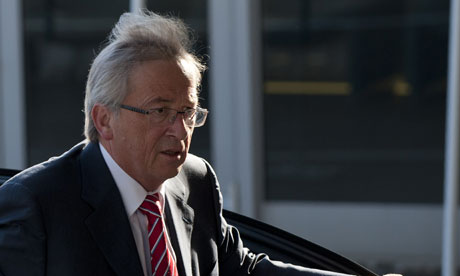
Eurozone finance ministers have put off until next month any decision to give the green light for a further €8bn bailout for Greece despite recognising that the Athens government had made some considerable progress in slashing the country's debts.
Jean-Claude Juncker, Eurogroup chairman, repeatedly made plain early on Tuesday that none of the eurozone countries was urging a Greek default and categorically denied that there was any question of Greece leaving the euro area.
In a move certain to disappoint markets, the 17 finance ministers sent signals they had no intention of agreeing to reboot the zone's rescue fund of €440bn closer to the €2tn or more demanded by leading investors and analysts. EU officials reiterated that there was "no Plan B".
But Juncker and Olli Rehn, the EU economic and monetary affairs commissioner, indicated that ministers had for the first time discussed measures to improve the bailout fund's efficiency and effectiveness in order to raise its firepower – code for raising the guarantees it needs for buying up more government bonds in the secondary market. Juncker said: "We consider that we should by no means increase the fund's financial volume."
He dropped a broad hint that private bondholders would be forced to pay more than the 21% "haircut" agreed at the 21 July meeting that increased the fund's volume and approved the second €109bn bailout for Greece – ascribing that to "technical" reasons.
Juncker and Rehn recognised Greece had made strides towards overcoming its debts and budget deficit but said that the Athens government had to be stricter about structural reforms and more ambitious in implementing privatisations.
It emerged that the ministers will be asked to approve the fresh €8bn aid as late as at a new meeting on 13 November once inspectors from the troika of European commission, European Central Bank and IMF have given their latest – and delayed – progress report on compliance. Juncker insisted that Greece could meet all its financial obligations – and suggested the new tranche of aid would be paid out in November.
After the Greek cabinet sent the euro and stock markets plunging on Monday by admitting on Sunday the country would not meet its target budget deficit this year or next, Evangelos Venizelos, had sought to win favours by insisting that the new budget was "very ambitious".
Entering Monday night's talks, he declared that the intention was to present "for the first time after many years" a primary surplus of €3.2bn next year compared with a deficit of €29bn only two years ago. He said the fiscal consolidation had been "very strong and very fast."
On Sunday Greece said its deficit would be 8.5% of GDP this year compared with a target of 7.6% and 6.8% in 2012 compared with a target of 6.5% but Venizelos insisted it had taken "all the necessary and difficult measures to fulfil its obligations".
He said: "Greece is a country with structural difficulties but Greece is not the scapegoat of the eurozone." Even so, anxieties about a Greek default sent the euro to a 10-year low against the yen and a nine-month low against the US dollar.
The French president, Nicolas Sarkozy, meanwhile said he would meet the German chancellor, Angela Merkel, in Berlin on Sunday for talks on "ways and means to accelerate the economic integration of the eurozone economy".
Ostensibly, the eurozone's two most powerful political figures are preparing the way for the crucial summit of the 17 member countries that will take place on 18 October or a day after a summit of all 27 EU countries, including the UK.
But the talks are bound to raise market hopes that the pair will come up with an outline plan for substantially increasing the scope of the European financial stability facility (EFSF) that can be put to the eurozone summit without necessarily boosting its funds. Slovakia assured ministers that its parliament would endorse the enhanced EFSF by 14 October.
Christian Noyer, Bank of France governor, indicated he was open to a scheme that would allow the EFSF to be leveraged – most likely by increasing the guarantees it can rely on to buy up more bonds and make bigger precautionary loans to countries suspected of being in trouble.
The Guardian
hostgator coupon 2011

American Airlines parent AMR Corp. tumbled the most since April 2009 on growing concern the U.S. is nearing a return to recession and that the carrier may be forced to seek bankruptcy protection.
Today’s slide pointed toward a fifth straight drop for Fort Worth, Texas-based AMR, the longest streak in more than two months, and marked its biggest intraday plunge since April 27, 2009. The shares fell 53 cents, or 18 percent, to $2.42 at 11:47 a.m. in New York Stock Exchange composite trading.
AMR has led declines this year among the largest U.S. airlines. It is headed toward a fourth consecutive annual loss, spurring bankruptcy speculation, as a slowing economy fuels investors’ belief that air travel will slump, said Ray Neidl, a Maxim Group LLC analyst in New York.
“The odds are better than 50-50 that we’re going into a recession,” Neidl said today in an interview. “If that’s the case, you’re going to start seeing some softness in demand come October, in the fourth quarter and next year.”
Investors are concerned that American, the third-biggest U.S. airline, will burn through its cash reserves without deeper cuts in costs and seating capacity, said Neidl, who doesn’t rate AMR. The shares touched the lowest price since March 6, 2009, and had fallen 62 percent this year before today.
A Chapter 11 filing “is certainly not our goal or our preference,” said Andy Backover, an American spokesman. “We know we need to improve our results, and we have a sense of urgency as we work to achieve that.”
The company doesn’t comment on its share price, he said.
AMR expected to end the third quarter with a cash and short-term investment balance of about $4.7 billion, including $475 million in restricted cash, according to a Sept. 21 regulatory filing
Financial Post
hostgator coupon 2011

The federal government can't even give money away to help the unemployed pay their mortgage.
A $1 billion program to assist the jobless will likely end up spending only half the funds, at most, because so few people met the strict criteria.
The Housing Department, which had to approve the applications for the Emergency Homeowners' Loan Program by Friday, expects that only 10,000 to 15,000 people will qualify. That's only a small sliver of the roughly 100,000 who applied.
"No one could have anticipated how difficult the statutory requirements make it to reach homeowners," said Lemar Wooley, a HUD spokesman.
Those who make the cut are expected to receive between $35,000 and $45,000 in aid, he said.
Many had high hopes for the loan program because it was targeting a segment of delinquent homeowners not being helped by other federal initiatives, such as mortgage modifications.
Passed last year as part of the Dodd-Frank Wall Street reform bill, it was modeled after a very successful program in Pennsylvania that has helped tens of thousands of residents since 1983.
The federal effort offered interest-free, forgivable loans to homeowners who lost at least 15% of their income because of the economy or their own medical condition. Applicants had to be at least 90 days delinquent, facing foreclosure and show that they could resume payments if they found a new job.
If they qualified, they could receive up to $50,000 or 24 months of assistance, whichever came first.
10 dirt-cheap housing markets
The initiative quickly became a quagmire of delays and requirements, however. The rollout was postponed for months, finally launching in late June. HUD originally gave people less than six weeks to apply, but then pushed back the deadline to mid-September.
But it was the income and delinquency guidelines that prevented many seemingly eligible people from getting assistance, housing counselors say. HUD used a complicated formula that took into account monthly payments, income and arrears.
Only 34 of the 174 homeowners who came to Tierra del Sol Housing Corp. in Las Cruces, N.M., met the criteria, said Rose Garcia, the agency's executive director. Some people were turned away because they were already too far behind in their payments or because their income fell because of a family member's illness.
"This program could have made a difference to save people from being homeless," she said. "But it doesn't meet people's needs."
In Philadelphia, Michelle Lewis is waiting to see how many of the 400 applications her Northwest Counseling Service received will be approved. She fears it will be few.
One problem she ran into was that many applicants lost their jobs more than a year ago. Under HUD's rules, the circumstance that caused the delinquency had to have occurred within the past 12 months.
The Pennsylvania loan program, which ended in June because of state budget cuts, allowed for many more hardship conditions so it was able to reach more people than the federal effort, she said.
"The [HUD] guidelines were so restrictive that it knocked out a lot of otherwise eligible and worthy consumers," said Lewis, the agency's chief executive.
CNN
hostgator coupon 2011
It has been five years since gave his controversial lectio about Islam at the German University of Regensburg. On September 12th, 2006, Joseph Ratzinger claimed that the god of the Muslims is both transcendental and unreasonable and he severely condemned jihad and the use of violence in the name of Koran. It was the only public event in which a Pope told the truth about some aspects of Islamic religion.
Benedict XVI made himself a central player in the post-9/11 era: His speech against the link between religion and violence, typical of Islam today, was not a mistake or a false step, as some observers wrote at that time. It was, rather, a vigorous attack against certain aspects of Islamic fanaticism.
The reaction to the Pope’s speech was a familiar spectacle: Threats, riots, and violence. From the religious leaders in Muslim majority countries to the New York Times, all demanded the Pope’s apologies. In the Palestinian areas, churches were attacked and Christians targeted. In the Somali capital, Mogadishu, an Italian nun was executed. In Iraq, Amer Iskander, a Syrian Orthodox priest, was beheaded and his arms mutilated.
In Islamic forums, Ratzinger was depicted like Dracula. He received many death threats: “Slaughter him”, “pig servant of the cross”, “odious evil”, “Allah curse him”, “vampire who sucks blood” and so on. The highest Islamic representative in Turkey, Ali Bardakoglu, declared that Ratzinger’s speech was “full of enmity and hatred.” The Egyptian Muslim Brotherhood pledged “reactions worst of those against the Danish cartoons”.

Pope Benedict XVI (Photo: AP)
Iran’s Supreme Ayatollah, Ali Khamenei, accused the Pope of being part of “the conspiracy of the Crusaders.” Under pressure, and aiming to stop any further violence, the Pope apologized.
Benedict XVI recently visited again his native Germany, but this time with a different agenda. Five years later, the Vatican adopted a pro-Islam course and has capitulated to fundamentalists. In a recent book written by German journalist Peter Sewald, Pope Ratzinger expressed “regrets” about the Regensburg lecture. The Vatican’s Secretary of State, Tarcisio Bertone, buried the Pope's lesson about Islam as “an archaeological relic.”
“The default positions vis-à-vis militant Islam are now unhappily reminiscent of Vatican diplomacy’s default positions vis-à-vis communism during the last 25 years of the Cold War,” writes George Weigel, a leading US writer about the Vatican. The Vatican’s new agenda seeks “to reach political accommodations with Islamic states and foreswear forceful public condemnation of Islamist and jihadist ideology.”
Appeasement agenda
After Regensburg, the Vatican adopted an appeasement agenda. Cardinal Jean-Louis Tauran, who is known for having a pro-Islam position, was appointed by the Pope as the head of the Pontifical Council for Interreligious Dialogue.
Indeed, Dialogue with Iran’s mullahs is pivotal in the new Vatican agenda. Recently, a delegation of clergy members of Iran’s Islamic Consultative Assembly visited the Vatican, meeting with top Catholic officials.
In June, the Vatican sent Archbishop Edmond Farhat, who is the official representative of Vatican politics, to Tehran to attend an “international conference on the global campaign against terrorism.” Last autumn, Vatican representatives met with Muslim leaders from around the world in Tehran for “a three-day interreligious dialogue.” In Tehran Cardinal Tauran praised Iran’s “spirit of cordiality” and “the friendly Ahmadinejad.”
Last month, the Vatican published a letter written by Tauran, addressing his “Dear Muslim friends.” In the letter, Tauran asked for Islamic help to form an alliance against atheism.
In 2008, the Vatican promoted “Love of God, Love of Neighbor,” the first three-day forum with Islamic leaders. The Pope agreed to meet one the most dangerous Islamist in the Western world, the grandson of Muslim Brotherhood founder Hassan al-Banna, Tariq Ramadan - the Swiss scholar who denies Israel’s right to life and who has been banned from entering the US because of his alleged association with extremists.

Pope meets Saudi King Abdullah (Photo: AP)
Last May, Bishop Mariano Crociata, secretary general of the Italian Episcopal Conference, announced that the Vatican is in favor of building new mosques in Europe. A month later the European Bishops met with European Muslims in Turin (Cardinal Tauran was also present) to proclaim the need for the “progressive enculturation of Islam in Europe.”
In Rimini, a seaside resort on the Adriatic coast, the Comunione e Liberazione movement, one of the most powerful in the Catholic Church, holds its massive annual “meeting” that usually draws some 700,000 people. The Catholic movement last month hosted the president of Al Azhar, the most important Islamic university in Cairo, and a senior leader of the Muslim Brotherhood, despite the fact that for the first time the US Commission on Religious Freedom recommended that Egypt be placed on a list of the “worst of the worst” countries for persecution of Christians.
Targeting Israel
The State of Israel is easily expendable in the new pro-Islam policy. In January 2009, thousands of Muslims marched in front of Milan’s Duomo to protest against Operation Cast Lead in Gaza. They burned Israeli flags and chanted anti-Jewish slogans. Joaquin Navarro-Valls, John Paul II’s spokesman for 22 years, defended the “freedom of expression” of the Muslims who burned the Star of David.
Months later, Pope Benedict visited Bethlehem, where the Christian population has dropped from a majority to less than 20%. Benedict delivered a message of solidarity to the 1.4 million Palestinians isolated in the Hamas-ruled Gaza Strip. He said nothing of the suffering of Gaza’s 3,000 Christians since Hamas took over that territory in 2007.
Benedict could have decried the bombings, shootings and other Islamist attacks against Gaza Christian establishments, the brutal murder of the only Bible-store owner of Gaza, or the regular intimidation and persecution of Christians there. Instead, the Pope stood beside Mahmoud Abbas as the Palestinian leader deceptively pointed to a concrete separation barrier in Bethlehem and blamed that barrier, as well as Israeli “occupation,” for the plight of Christians.
A few weeks later, the United Nations ran “Durban II” and on the first day of the conference, Mahmoud Ahmadinejad, the only head of state to attend, made a speech condemning Israel as “totally racist” and referred to the Holocaust as an "ambiguous and dubious question.” When Ahmadinejad began to speak against the Jews, all European Union delegates left the conference room. The Vatican delegation didn’t say a word.
To understand the new Vatican’s approach toward Islam, one should also read what happened in the historical synod on the Middle East hosted by the Pope last autumn. Nothing was said about Islamist persecution of Christians; indeed, every effort was made to show the Catholic Church’s sympathy to Muslim grievances, especially against “Zionism” – a word evoked as a symbol of evil.
Aside from Iraq, the only country singled out for criticism in the Middle East was Israel. Patriarch Antonios Naguib of the Egyptian Coptic church, who was the “relator,” or secretary, of the synod, expressed “solidarity with the Palestinian people, whose situation today is particularly conducive to the rise of fundamentalism.” The lesson was simple: Islamism is the consequence of Israeli policies. The synod was carefully prepared for a year, and it produced a rash of radical anti-Jewish statements on both political and theological issues.
Ethnic cleansing silenced
The rightful concern of the Vatican for co-religionists has also been silenced. Intimidation, thuggery and violence have succeeded in turning away criticism not only of Islam, but of violence committed in the name of Islam against Christians.
Over the past several years, Christians have endured bombings, murders, assassinations, torture, imprisonment and expulsions. The very roots of the Christian heritage in the Middle East are being extirpated. When last winter Christians were killed in Egypt, Cardinal Tauran and the Vatican foreign office requested to “avoid anger” and downplayed the Islamist role in the butchering.
In the summer of 2010, Bishop Luigi Padovese, Vatican vicar for Anatolia and president of the Catholic Episcopal conference of Turkey, was slaughtered by Islamic fanatics in Iskenderun on the eve of the Pope’s trip to Cyprus. Vatican diplomacy did its part to convince the Pope to immediately and preemptively rule out the idea that this was a “political or religious” murder.
Elsewhere, the number of Christians in Turkey declined from two million to 85,000; in Syria, from half the population they have been reduced to 4%; in Jordan, from 18% to 2%; nearly two-thirds of the 500,000 Christians in Baghdad have fled or been killed; in Lebanon, Christians have dwindled to a sectarian rump, menaced by surging Shiite and Sunni populations, and in Saudi Arabia Christians have been beaten or tortured by religious police.
Ynet
hostgator coupon 2011

Former European Central Bank chief economist Otmar Issing, one of the architects of the euro, said Greece’s exit from the 17-nation monetary union is inevitable.
“There is no other way,” Issing told Germany’s Stern in an interview, according to a transcript supplied by the magazine. With Greece’s debt forecast to reach 160% of gross domestic product next year, the country needs to renege on at least 50% of its obligations and “that can’t happen within the monetary union,” Issing is quoted as saying.
ECB President Jean-Claude Trichet has said the suggestion that a country could leave the euro is “absurd” and insisted that Greece can solve its problems through fiscal reforms. Issing said it’s “too late for that” now and that “the country won’t get back on its feet without a drastic debt restructuring.”
That can’t happen within the euro area because it would be “a license for Greece and other highly-indebted nations to dispose of their problems through a reduction of their debt levels” and result in “the end of the monetary union,” Issing said.
European leaders have struggled to allay investor concerns that a potential debt restructuring in Greece will plunge the region’s economy into a recession. Greek bonds have tumbled and insurance against default has soared as markets put the probability of insolvency at more than 90%. Such an event may require the recapitalization of banks across Europe as they incur losses on their Greek assets.
Greek ‘Precedent’
“Markets see Greece not as a special case but as a precedent,” said Christian Schulz, an economist at Joh. Berenberg Gossler & Co. “A Greek exit would increase the cost for the euro-zone rescue significantly.”
Greece, which is locked out of financial markets, is struggling to the meet the terms of its European Union-led bailout. It has pledged to reduce its general government deficit to about 7.5% of GDP this year from 10.5% in 2010.
“The bitter truth, unfortunately, is that the Greeks have lived beyond their means for years and will now be set back many years by their artificially inflated living standards,” Issing said.
Issing, 75, designed the ECB’s monetary policy strategy. He retired from the bank in 2006 and is currently president of the Center for Financial Studies in Frankfurt. He was unable to be reached for comment.
Financial Post
hostgator coupon 2011

