
Gold prices have soared by 32pc this year, as investors sought a safe haven from the global debt crisis. However, some argue that gold is in a bubble fuelled more by speculation than the fundamentals of supply and demand. In contrast, platinum prices have risen by just 5pc so far this year – and supply remains very tight indeed.
Last month gold prices charged ahead of platinum prices, creating what some analysts regard as a sign that gold is overvalued.
Nick Moore, a metals analyst at RBS, is clear that platinum currently looks a better investment bet. "Platinum is now very cheap relative to gold," Mr Moore says. "Over the past 10 years platinum has averaged $420/ounce higher than gold."
Spot gold is currently at $1,883 an ounce with platinum futures at $1,876 – a $7 premium. Indeed, last month gold managed to jump to a premium of about $50 an ounce. Standard Chartered also said last week that it thought platinum was likely to outperform gold over the next few weeks after investor demand for platinum picked up "sharply."
The market fundamentals of platinum are tight. According to Platinum 2011, released by Johnson Matthey earlier this year, the platinum market in 2010 showed a "very small" surplus of just 20,000 ounces.
Global supplies of platinum rose by just 35,000 ounces in 2010 to 6.06m ounces, while gross demand for platinum in autocatalysts, the main use of the metal, rose by 43pc to 3.13m ounces. Industrial demand for the metal jumped 48pc to 1.69m ounces.
"Continuing economic growth across the world is driving demand for platinum in industrial uses, particularly glass and chemical catalyst manufacture and in diesel autocatalysts; and for palladium in electronics manufacturing and in emissions control catalysts for gasoline vehicles, especially in China," Johnson Matthey said. "The growth of new consumer-driven technologies and applications such as LED backlit televisions is expected to result in acceleration of demand for the minor platinum group metals."
In the future, platinum could be in increasing demand for fuel cells and in "non-road" emissions control. Emission control from shipping could be a major driver of future demand.
However, latest data from the US regulators has shown that large investors have reduced their long positions in New York traded futures contracts. In the week to August 30, speculative long positions fell 6pc week-on-week, but still outnumbered short contracts by 26,576 contracts on the New York Mercantile Exchange.
Also, growth in vehicle sales in China is expected to slow to between 3pc and 5pc this year, according to Xu Changming, director of China's State Information Center. This follows a 32pc leap in sales during 2010. China overtook the US as the world's largest automobile manufacturer in 2009, after its sales jumped 46pc over the year.
At the end of last week, HSBC analysts in the US upped their price targets for platinum in 2012 and 2013 because of increased vehicle production and industrial demand was expected to increase at a faster rate than mine supply.
The analysts forecast that platinum prices would average $1,875 an ounce in 2012, up from its previous view of $1,750 an ounce. For 2013 it increased its 2013 platinum target to $1,825 an ounce from $1,650.
One thing that could support the price of the metal are rising costs. About 80pc of global reserves are in South Africa, where input and staffing costs are rising significantly. Miners in the country are also being hit by the relative strength of the rand against the dollar.
The case for platinum is clear. The metal is scarce, expensive to mine and is used in far more industrial applications than gold. Significantly, there are no large inventories of the metal held anywhere above ground – unlike gold.
However, the auto market is seeing a slowdown in China and India – and this could keep a cap on gains for now.
The Telegraph
hostgator coupon 2011

(Reuters) - The International Monetary Fund on Friday said it approved a $2.11 billion (1.30 billion pound) disbursement to help debt-stricken Ireland as part of a broader bailout package.
The lender said the Irish government has "maintained resolute implementation" of an austerity program aimed at getting its budget and banking crisis under control and urged it to continue to do so to avoid the risk of contagion.
So far, the IMF has disbursed $12.39 billion to Ireland under a bailout package also supported by the European Union through its European Financial Stability Facility and by bilateral loans from Britain, Sweden and Denmark.
The total bailout package for Ireland from all participants amounts to 85 billion euros or about $123 billion.
The Irish government has said it hopes to regain access to bond markets next year, so it can borrow money on its own and effectively regain its own sovereignty instead of relying on a bailout.
The IMF noted that the Irish government adopted a plan in March to reorganize and reduce debts of its domestic banks and said the strategy was "ahead of schedule in some areas."
While financial market conditions appeared to be improving, there still were risks from weaker growth in key trading partners' economies that mean Ireland must stick with a program of austerity to get its economy into better shape.
"Continued timely implementation of the program remains essential to support the ongoing recovery, limit contagion risks, and rebuild market confidence," the IMF said.
There were concerns in markets earlier this year that Ireland might have to extend its existing EU-IMF bailout or seek a second rescue if it couldn't successfully return to markets on its own.
On Thursday, however, Irish Finance Minister Michael Noonan said that shouldn't be the case.
"Any country that is fulfilling its program, if it still needs funds and can't access the markets, will get credit lines from the fund so that the question of Ireland having to reenter a second program is off the table," Noonan told a parliamentary financial committee.
The country is on a strict austerity budget to try to get its finances back in order and Noonan cautioned that turmoil in the global economy had increased risks to recovery efforts and would likely force the government to cut its growth forecasts for next year.
Still, Noonan said he expects the economy to expand in 2011, breaking a three-year cycle of shrinking economic output, and to meet a target of cutting cut the deficit to 10 percent of total national economic output this year.
Noonan added that the government would update its growth forecasts in October and would likely have to cut its 2.5 percent growth forecast for 2012.
Reuters
hostgator coupon 2011

Christine Lagarde, the IMF's managing-director, said the outlook had darkened suddenly over the summer.
"There has been a clear crisis of confidence that has seriously aggravated the situation. Measures need to be taken to ensure that this vicious circle is broken," she said.
"The spectrum of policies available is narrower because a lot of ammunition was used in 2009. But if governments, institutions and central banks work together, we'll avoid recession," she told Der Spiegel.
The comments come at the start of a dramatic week for the eurozone as Italy prepares to roll over record sums of debt and Germany's constitutional court issues its long-awaited verdict on the legality of the EU's bail-out machinery.
Markets are already tense after the EU-IMF 'Troika' withdrew abruptly from Athens on Friday, accusing the Greek government of failing to comply with rescue terms.
The Italian treasury must redeem €14.6bn of debts this week and €62bn by the end of September, the most ever in a single month.
"We are experiencing very demanding times," Jean-Claude Trichet, the European Central Bank's president, said over the weekend. The ECB has stabilised Italy's debt over the last four weeks, capping yields on 10-year bond yields near 5pc through purchases on the secondary market.
It is unclear how much longer the ECB can keep doing this after a string of top officials in Germany described the bank's actions as illegal.
"The ECB cannot substitute for governments," said Mr Trichet. He was speaking at the Ambrosetti Workshop at Lake Como, where he held a closed-door meeting to discuss the euro crisis with Bank of England Governor Sir Mervyn King.
The ECB has bought an estimated €35bn of Italian debt under an implicit accord that Rome will deliver on austerity promises.
Premier Silvio Berlusconi has come close to breaching the terms by backsliding on a wealth tax and pension reform.
Emma Marcegaglia, head of Italy's Confindustria business lobby, said the austerity measures were "unjust, iniquitous, and inadequate", and undermine the credibility of the country.
Leading Italian economists have begun to question whether EMU itself is workable.
"It's clear that the euro has virtually failed over the last ten years, even if you are not supposed to say that. We pretended to be Germans, but it was an illusion," said Professor Giacomo Vaciago from Milan's Catholic University.
Mrs Lagarde said the US has scope to "abandon short-term austerity and introduce some measures to drive growth" provided the country lays out a credible debt strategy over the medium term.
She said Europe needs to take its foot off the fiscal brake and shift to "growth-intensive measures" until the danger has passed, insisting that Germany has leeway to "stimulate demand".
The comments are certain to cause fury in Berlin, where the IMF is viewed as an agent of Keynesians and French mischief. Mrs Lagarde was French finance minister until two months ago.
Separately, Germany's constitutional court is expected to rule on Wednesday that Berlin's participation in EU bail-outs is allowable so long as the Bundestag is given a veto over future payments. However, there is an outside risk that it will go further, concluding that the nexus of rescue policies subvert EU Treaty law and German fiscal sovereignty and must therefore be curbed. This would amount to a "sudden stop" for EMU debt markets.
The judges are aware of these risks, yet they ruled two years on the Lisbon Treaty that German democracy is "inviolable" and that Berlin is duty bound "to refuse further participation in the European Union" if the constitutional order is threatened.
German patience with Athens is already near exhaustion. Prince Hermann Otto zu Solms-Hohensolms-Lich, the Bundestag's deputy president, said Greece cannot bring its debts under control.
"We must consider whether it would not be better for the currency union and for Greece itself to go for debt restructuring and an exit from the euro," he told the Frankfurter Allgemeine.
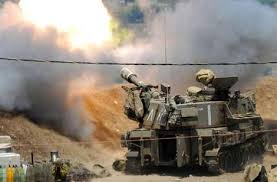
JERUSALEM — Israel's top military chief has warned Gaza militants not to "test" Israel's strength as troops and police remained on high alert on Wednesday over warnings of a planned attack from Sinai.
"Hamas and other terrorist organisations in Gaza must know that they are wrong to test our strength and that any attempt to harm the citizens of Israel will result in a severe response," chief of staff Benny Gantz said in remarks released by the army.
The military two days earlier raised the level of alert on the Israel-Egypt border and around Gaza following specific intelligence warnings that militants were planning a fresh attack on south Israel along the lines of a series of deadly ambushes on August 18.
"The defence establishment has received a warning that a terror cell in Sinai, comprised of more than 10 terrorists, is going to try and carry out an attack," Home Front Defence Minister Matan Vilnai told Israeli reporters on Tuesday, indicating Islamic Jihad was involved.
Avi Dichter, an Israeli MP and former head of the Shin Bet internal security service, said attacking Israel from Sinai was a way for Gaza militants to hide their involvement in attacks which could complicate the Palestinian bid to seek UN membership next month.
"The moment the terror organisations in the strip understood that direct terror from Gaza makes the campaign they're planning in September at UN very difficult, the alternative is a bypass... from Gaza to Sinai and from Sinai into Israel," he told Israeli public radio.
The Palestinians are to formally submit their request for membership on September 20 when world leaders begin gathering in New York for the 66th session of the General Assembly.
Although Gaza's Hamas rulers are not involved in the bid, they are keen to see it succeed and unlikely to engage in any overt attack on Israel that would harm the initiative, he said.
On August 18, a group of gunmen crossed the Egyptian border and killed eight Israelis on a desert road which flanks the frontier just north of the Red Sea resort town of Eilat.
Israel blamed the Gaza-based Popular Resistance Committees and hit back at them, sparking a week of air strikes and retaliatory cross-border rocket attacks which left 27 Palestinians and an Israeli dead.
A truce agreement signed at the end of last week appears to be holding, but Israeli press reports speculated that Gazan groups were planning fresh attacks to avenge the deaths of those killed in the Israeli strikes.
Two roads which skirt the Egyptian border have been closed to all civilian traffic, and the military was also preparing for the possibility of rocket fire from Sinai towards the Red Sea resort of Eilat, Haaretz newspaper reported.
In a separate development, the navy on Tuesday deployed two missile boats just outside Eilat in what the military said was part of a "routine exercise."
Israeli press reports said it was unlikely the boats' deployment was linked to the high state of alert in the south.
But it came as Tehran's top naval commander said Iran had dispatched a submarine and a warship to the Red Sea on a "patrol mission," state television reported.
AFP
hostgator coupon 2011

Turkey is downgrading diplomatic relations with Israel after Israel refused to meet an ultimatum for an apology for the Marmara incident.
2 September 11 15:36, Globes correspondent
Relations between Israel and Turkey have deteriorated to an all-time low. Turkish Minister of Foreign Affairs Ahmet Davutoğlu called a press conference this afternoon, at which he announced the steps Turkey was taking following Israel's refusal to issue an official apology for the events aboard the Mavi Marmara in May last year. Eight Turkish citizens and one Turkish American were killed in that incident by Israeli commandos who boarded the vessel that was aiming to break the Israeli blockade of the Gaza Strip.
"Turkey will reduce its level of diplomatic representation in Israel to that of second secretary," Davutoğlu said. This mean that Turkey is recalling its ambassador to Ankara, and is not even replacing him with a consul, but with a second secretary, a lower diplomatic rank. Israel's ambassador to Turkey will be required to return home. The Turkish foreign minister further announced that all military agreements between Israel and Turkey were suspended. "Israel is the side responsible for the situation," he continued. "Turkey will not back down until Israel agrees to all our demands."
Today, the Palmer report on the Marmara incident, drawn up by a UN commission headed by former New Zealand prime minister Geoffrey Palmer, is due to be published. Last night, Turkey said that its demand for an apology from Israel remained in force, despite the leaking of the Palmer report in the "New York Times". Davutoğlu sharply criticized the leaking of the report before its official release date.
US Secretary of State Hilary Clinton met Davutoğlu in Paris at The International Conference in Support of the New Libya. Clinton asked Davutoğlu not weaken his country's fragile relations with Israel further in the wake of the publication of the Palmer report. According to Turkish daily "Hurriyet", Davutoğlu told Clinton that Turkey would not retreat from its demand for an apology from Israel, and for payment of compensation to the families of those killed on the Marmara as called for by the Palmer report.

