We will have a mirror site at http://nunezreport.wordpress.com in case we are censored, Please save the link

Thursday, February 16, 2017

EU ministers want to enforce laws on machines to guarantee safety


Image result for humanoid

With the robotics industry rapidly growing, MEPs have warned that rules are needed to 'guarantee a standard level of safety and security.'

In a resolution voted today, MEPs are asking the EU Commission to enforce regulatory standards for robotics, and have stressed that the key issue lies with self-driving cars.

They have suggested that a European agency for robotics and artificial intelligence should be set up, to supply public authorities with technical, ethical and regulatory expertise.

They also asked for specific legal status for robots as 'electronic persons' in the long run, in order to establish who is liable if they cause damage.

Scroll down for video


MEPs have warned that robots need to be fitted with 'kill switches' to prevent a Terminator-style uprising against humans

Regulatory standards for robots are already being planned in several countries, including the US.

And MEPs think that the EU should be taking the lead in setting these standards, so as not to be forced to follow those set by third countries.

Mady Delvaux, a Socialist MEP from Luxembourg, led the campaign and warned that Europe is passively standing by as robots take an increasingly powerful role that will turn even stronger with the emergence of driverless cars.

A statement published by the European Parliament said: 'MEPs stress that draft legislation is urgently needed to clarify liability issues, especially for self-driving cars.'

Auto builders want to see robotic cars on the roads by 2020, but difficult questions remain on who would be legally liable in the case of a car crash.

'If all decisions of a machine are no longer directly attributable to the actions of a person, it must be clarified who is liable if something goes wrong,' said Greens MEP Julia Reda, who backed the report.


Credit to Dailymail.co.uk
Read more: http://www.dailymail.co.uk/sciencetech/article-4231972/Will-robots-given-LEGAL-STATUS.html#ixzz4Ysm19U5m


This Is One Of The Big Reasons Why So Many Families Are Feeling Extreme Financial Stress in the U.S.

Inflation Blackboard - Public DomainWhen the cost of living rises faster than paychecks do year after year, eventually that becomes a very big problem.  For quite some time I have been writing about the shrinking middle class, and one of the biggest culprits is inflation.  Every month, tens of millions of American families struggle to pay the bills, and most of them don’t even understand the economic forces that are putting so much pressure on them.  The United States never had a persistent, ongoing problem with inflation until the debt-based Federal Reserve system was introduced in 1913.  Since that time, we have had non-stop inflation and the U.S. dollar has lost more than 98 percent of its value.  If our paychecks were increasing faster than inflation this wouldn’t be a problem, but in recent years this has definitely not been the case for most Americans.
And unfortunately inflation is starting to accelerate once again.  In fact, it is being reported that inflation rose at the fastest pace in four years in January…
The prices Americans pay for goods and services surged in January by the largest amount in four years, mostly reflecting a rebound in the cost of gasoline that’s taking a bigger chunk out of household incomes.
The consumer price index, or cost of living, rose by a seasonally adjusted 0.6% in January, the government said Wednesday.
Meanwhile, our incomes have been incredibly stagnant.   In fact, we just learned that median household income did not go up at all during 2016.
This is one of the reasons why we consistently see families fall out of the middle class month after month.  Even if you keep the same job year after year, your standard of living is going to steadily go down unless your pay goes up.
The things that we all spend money on month after month just keep going up in price.  I am talking about food, housing, medical care and other essentials.  If there is one thing that we can always count on, it is the fact that things are going to cost more tomorrow than they do today.
Let’s talk about food for a moment.  Whenever I go to the grocery store, I am almost always shocked.  I still remember a time when I could get everything that I needed for an entire week for about 20 bucks, but these days you can’t even fill up one cart for 100 dollars.
That is because food prices have been rising aggressively for many years.  The following is a list that was posted on The Economic Policy Journal that shows how much some food and grocery items have increased over the past decade…
1. Tobacco and smoking products
-Price increase: 90.4%
2. Margarine
-Price increase: 63.6%
3. Uncooked ground beef
-Price increase: 46.3%
4. Shelf stable fish and seafood
-Price increase: 45.0%
5. Prescription drugs
-Price increase: 43.5%
6. Rice, pasta, cornmeal
-Price increase: 40.3%
7. Bread
-Price increase: 38.9%
8. Snacks
-Price increase: 38.4%
9. Miscellaneous poultry including turkey
-Price increase: 37.0%
10. Apples
-Price increase: 36.6%
11. Frankfurters
-Price increase: 35.8%
12. Canned vegetables
-Price increase: 35.3%
13. Salt and other seasonings and spices
-Price increase: 34.0%
14. Miscellaneous fats and oils including peanut butter
-Price increase: 34.0%
15. Miscellaneous processed fruits and vegetables including dried
-Price increase: 33.7%
16. Bacon and related products
-Price increase: 33.2%
17. Fresh whole chicken
-Price increase: 32.5%
18. Cakes, cupcakes, and cookies
-Price increase: 32.1%
19. Flour and prepared flour mixes
-Price increase: 32.1%
20. Canned fruits
-Price increase: 32.0%
And thanks to out of control government spending and reckless manipulation by the Federal Reserve, we have come to a time when inflation is starting to accelerate once again.
According to John Williams of shadowstats.com, if honest numbers were being used the government would be telling us that inflation is rising at a 6 percent annual rate for the first time since 2011.
At the same time, evidence is mounting that U.S. consumers are simply tapped out.  Previously, I have explained that interest rates are going up, consumer bankruptcies are rising, and lending standards for consumers are really tightening up.
All of those are things we would expect to see if a new recession was starting.
And today we learned that the number of Americans refinancing their homes has fallen to the lowest level that we have seen since 2009…
A slowdown in refinancing pulled down the total mortgage application volume last week as changes to certain government-loan programs made refinances less lucrative. Refinance volume now stands at its lowest level since June 2009.
If you will remember, we also saw a slowdown in mortgage refinancing just before the great financial crisis of 2008.
For mortgage applications overall, they are now down almost 31 percent from where they were a year ago…
Total mortgage application volume fell 3.7 percent on a seasonally adjusted basis last week from the previous week, and are nearly 31 percent lower than the same week a year ago, according to the Mortgage Bankers Association.
A 31 percent decline in a single year is catastrophic.
If this continues, it won’t be too long before everyone is talking about a new housing crash.
And we also learned this week that FHA mortgage delinquencies increased during the fourth quarter “for the first time since 2006″…
Federal Housing Administration mortgage delinquencies jumped in the fourth quarter for the first time since 2006, the Mortgage Bankers Association reported Wednesday. The FHA insures low down-payment loans and is a favorite among first-time homebuyers.
The seasonally adjusted FHA delinquency rate increased to 9.02 percent in the fourth quarter from 8.3 percent in the third quarter, MBA data show.
So many things are happening right now that we have not seen happen in many years, but most people are choosing not to see the red flags that are popping up all around us.
None of our long-term economic problems have been fixed.  And even though Donald Trump won the election, the truth is that our economy is in the worst shape it has been since the last financial crisis.  I continue to encourage all of my readers to get prepared for very hard times, but just like back in 2007 we are experiencing a wave of tremendous optimism right now and most people think that the party can somehow continue indefinitely.
Whether Donald Trump won the election or not, the truth is that a major economic downturn was going to come anyway.  You see, Donald Trump is not some magician that can just wave a wand and somehow make the consequences of decades of very foolish decisions instantly disappear.
We have been on the biggest debt binge in human history, and there is going to be a great price to pay when this immense debt bubble finally bursts.
Unfortunately, most people are not going to acknowledge the truth until it is too late.
Credit to Economic Collapse


Pentagon Chief Rejects Military Cooperation With Russia


One day after Defense Secretary Jim Mattis told US NATO allies they will have to pay up and meet their mandatory quota of 2% of GDP (which only 5 nations currently satisfy, among them the US and Greece), on Thursday the Pentagon's new chief also had some bad news for Russia when he rejected any kind of military collaboration with Russia, despite previous calls by Putin for the West to work with his country on Syria and other issues. 
Quoted by the WSJ, Mattis said at NATO's Brussels headquarters that “We are not in a position right now to collaborate on a military level” adding that  “our political leaders will engage and try to find common ground or a way forward where Russia, living up to its commitments, will return to a partnership of sorts, here with NATO.” Prior to the meeting, Russian Defense Minister Sergei Shoigu expressed hope for cooperation but warned that “attempts to build a dialogue from a position of strength with regard to Russia are hopeless.” 
Mattis’s remarks came after Mr. Putin made a plea for the alliance and other nations to cooperate with Russia. “It’s in everyone’s interest to resume dialogue between the intelligence agencies of the United States and other members of NATO,” said Mr. Putin, addressing Russia’s Federal Security Service (FSB) on Thursday.
The sudden chill in US-Russian relations is understandable: the Trump administration remains in turmoil over questions about the extent of Trump administration contacts with Russia, and tensions have been rising.
Elsewhere, as reported previously, the top US general, Joseph Dunford, chairman of the Joint Chiefs of Staff, is scheduled to meet his Russian counterpart, Gen. Valery Gerasimov, in Baku, Azerbaijan. The meeting will mark the highest-level military contact between Washington and Moscow since 2014. Shoigu added that the Russians “await clarification of the position of the Pentagon” at the Baku meeting. 
Of particular interest will be any discussion between the US and Russia on the topic of NATO expansion. 
NATO has been pursuing a multinational force on its eastern flank as a deterrent over Moscow’s aggression in the region. Secretary-General Jens Stoltenberg said the allies didn’t want to isolate Russia but still wanted “a firm predictable approach, including credible deterrence.” 

He announced that alliance defense ministers had approved a plan to bolster its naval forces in the Black Sea, which is bordered by Russia, Ukraine, Turkey and other countries, and would improve military intelligence in the area. 

Mr. Stoltenberg said the alliance’s standing maritime fleets would make more frequent visits to the Black Sea and step up military exercises. “It will be measured, it will be defensive and it will be no way aim at provoking a conflict or escalating tensions,” Mr. Stoltenberg said.
Understandably, Russia has taken frequent issue with operations in the Black Sea by naval vessels from nations that don’t border it. 
Also of note, Russia’s military intervention in Syria on behalf of President Bashar al-Assad in late 2015 also caused friction between the U.S. and Russia, although both sides agreed to establish military communication to reduce the risk of incidents in the skies over Syria. As the WSJ further adds, "The meeting in Baku is expected to focus on a proposal pushed by senior uniformed officers at the Pentagon to improve that system. Gen. Dunford has pushed the plan, which would elevate the military contacts to a the three-star general level. Currently, the two militaries communicate by phone at the colonels’ level to share information about where each is operating. 
The plan has been floated for months, but went nowhere under Defense Secretary Ash Carter, who was wary of higher level coordination with the Russian military. The proposal wouldn't likely mean the U.S. and Russian militaries would coordinate with each other or share intelligence. The system is thought to have worked well, but has had some problems. The U.S. mistakenly hit Syrian forces in Deir Ezzour rather than Islamic State targets after a Russian colonel couldn't immediately locate his American counterpart on the phone.
With US-Russian relations about to be scrutinized in the US, keep a close eye on the diplomatic exchanges between the two countries for hints on whether another chill is about to fall between D.C. and Moscow.
Credit to Zero Hedge


Gene Editing Technology Set To EXPLODE This Year, Era of Human-Animal Hybrids Begins

Cholesterol drugs cause rapid aging, brain damage and diabetes


Image result for statins dementia

Statins, the widely prescribed class of drugs said to lower "bad" cholesterol and reduce the risk of heart problems, has recently come under fire after a study revealed that they destroy human health more than they work to improve it.

Sadly, many people take statin drugs, which are commonly known by brand names including Lipitor, Crestor and Zocor. Prescription drug spending in the U.S. shot up to about $374 billion in 2014, representing the highest level of spending since 2001. Statins undoubtedly made up a significant portion of this spending, and now consumers who take such drugs have much more to worry about than the dent it's making in their wallets.

The study, which was published in the American Journal of Physiology, states that statins' "...impact on other biologic properties of stem cells provides a novel explanation for their adverse clinical effects." Specifically, the study states that such adverse effects include advancing the "process of aging" and also notes that "...long-term use of statins has been associated with adverse effects including myopathy, neurological side effects and an increased risk of diabetes." Myopathy refers to skeletal muscle weakness.

Statins make cells unable to repair properly, create nerve problems and destroy memory

Experts involved in the study suggest that the health problems associated with statins have likely been downplayed through the years. In reality, those taking such cholesterol-lowering drugs have been experiencing cataracts, fatigue, liver problems, muscle pain and memory loss. Simply put, the drugs have been found to tamper with cells in such a way that their primary purpose of reproducing and helping the body repair is thwarted. With that comes the onset of terrible health issues or the worsening of existing ones.

Professor Reza Izadpanah, a stem cell biologist and lead author of the published study, says, "Our study shows statins may speed up the ageing process. People who use statins as a preventative medicine for [health] should think again as our research shows they may have general unwanted effects on the body which could include muscle pain, nerve problems and joint problems."

Despite health problems linked to statin drugs, FDA says people shouldn't be scared of them

While the FDA notes on its web site that "Cognitive (brain-related) impairment, such as memory loss, forgetfulness and confusion, has been reported by some statin users" and that "People being treated with statins may have an increased risk of raised blood sugar levels and the development of Type 2 diabetes," they also maintain its safety and effectiveness. The site directs people's attention to the advice of Amy G. Egan, M.D., M.P.H., who is the deputy director for safety in the FDA's Division of Metabolism and Endocrinology Products (DMEP). She says, "This new information should not scare people off statins. Their benefit is indisputable, but they need to be taken with care and knowledge of their side effects."
Image result for mercury on vaccines

Robert De Niro, Robert Kennedy Launch Campaign Against Big Pharma

Robert F. Kennedy, Jr. and Robert De Niro held a joint press conference at the National Press Club on Wednesday to launch a campaign with the World Mercury Project against big pharma and the use of mercury in vaccines.

The focus of their effort is to “find a missing piece of research associated with mercury,” by offering a $100,000 reward for “any journalist or anybody else, who can point to a single existing study that says that it is safe to inject mercury into little babies or pregnant women at the levels that we are currently injecting them with the flu vaccine,” Kennedy announced.

“De Niro supports the mission of the World Mercury Project (WMP), a nonprofit public advocacy organization in which Kennedy serves as Chairman,” a press release from the WMP stated. “The WMP envisions a world where mercury is no longer a threat to the health of our planet and people.”

The group has long argued that mercury in vaccines causes autism — a theory that has been debunked in Studies conducted by the Centers for Disease Control and Prevention, the World Health Organization, the National Academies of Sciences, Engineering and Medicine, the American Academy of Pediatrics and others. De Niro has a child with autism and rejects the scientific studies.

In January, Kennedy began pushing for President Donald Trump to let him lead a commission on vaccines.

Last year, De Niro attempted to screen “Vaxxed: From Cover-up to Catastrophe,” at the Tribeca Film Festival, but it was pulled from the lineup.

During the news conference, the group explained that they are pro-vaccine, but anti-mercury.

Credit to Natural News and Sputnik


EU Steps Up The Pace For Cashless Society In 2017/18


Image result for rfid implanted payment


On the 23rd January 2017 the EU Commission issued the “Commission Initiative Roadmap” for 2018 regarding the step up fight against the financing of terrorism, also known as its ‘Payments Restriction Initiative’ or as we are reading more often, the cashless society. This document is an extension of the communication document dated February 2016 (COM-2016/50) and updated to include new regulations for member countries to implement and future intentions by the Commission.

The policy looks to the “Regulation on the controls of cash entering or leaving the Community and relevance of potential upper limits to cash payments.” The Action Plan states that “Payments in cash are widely used in the financing of terrorist activities.” In its conclusions on the fight against terrorism, the Economic and Financial Affairs Council of 12 February 2016 called on the Commission

“to explore the need for appropriate restrictions on cash payments exceeding certain thresholds. In particular the Proposal for an amendment of the Anti-Money Laundering Directive2 (COM (2016) 450), which introduced stricter transparency rules and other measures targeted specifically at terrorism financing. Furthermore, the initiative should be seen in conjunction with the ECB’s decision of 4 May (20163) to discontinue the production of the EUR 500 banknote and stop the issuance of this denomination by around 2018 to address concerns that these notes could be used in financing illicit activities.”

The report goes on to advise that “any measure restricting cash payments would be complementary to the specific actions addressed by the review” and to include “virtual currencies (such as BitCoin) and prepaid instruments (such as pre-paid credit cards) when they are used anonymously.”

New anti-money laundering rules will cover high value goods such as works of art, precious stones or auctioneers, which requires that they apply customer due diligence measures, full identification of customers and keeping records of transactions when receiving cash payments of €15,000 or more.

This latest document extends the cash payments rule by reducing the €15,000 limit on transactions to €10,000 by June 2017.
Unbelievably, the EU Commission is using the logic of banning cash by stating their “remains the lack of readily available and solid evidence on legitimate vs illegitimate cash transactions.” They maintain that “It is difficult to quantify the legitimate or illegitimate use of cash.”

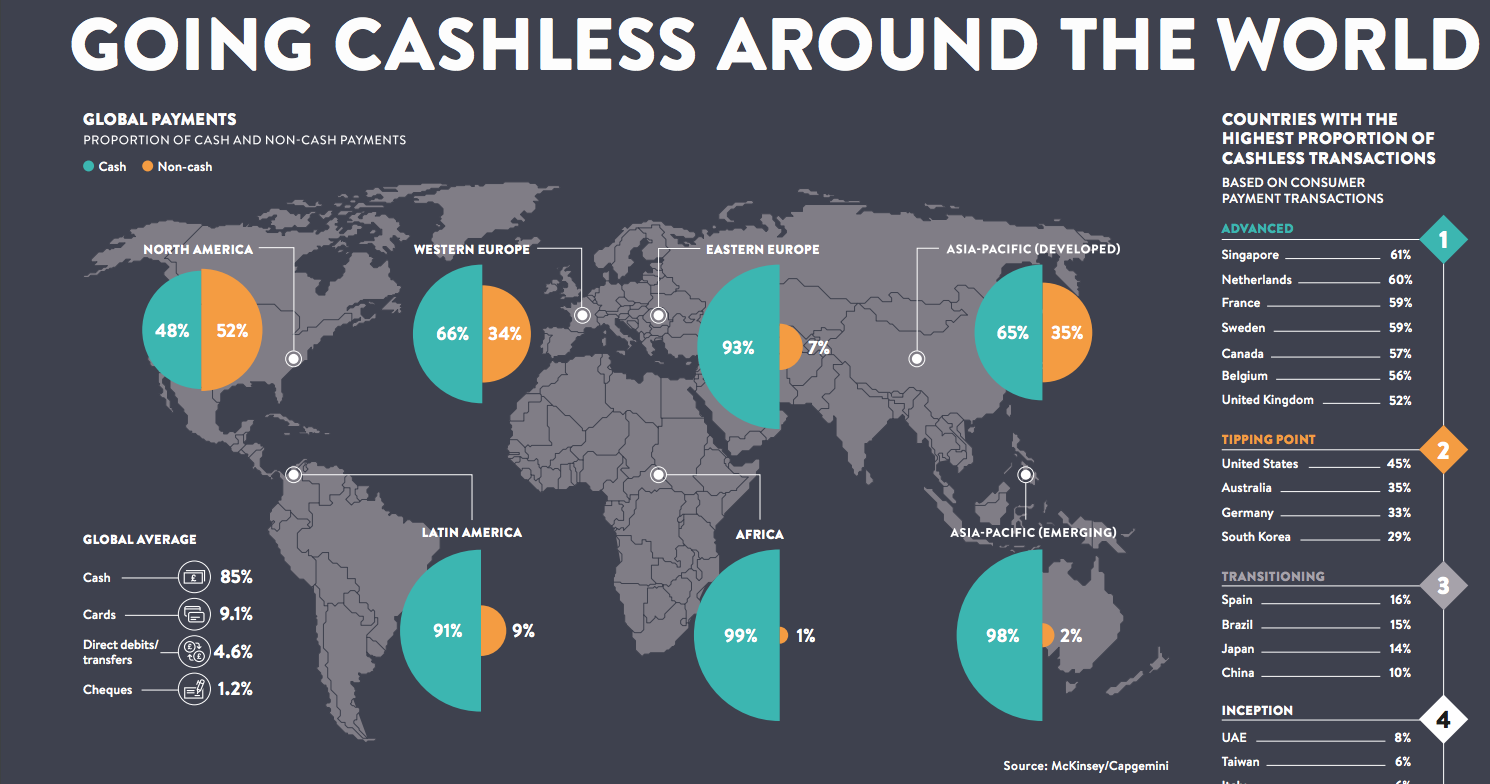
These statements are clearly untrue. Evidence on the amount of cash and how it is used in any given economy is widely known and many government’s even publish it quarterly or annually. For instance, on average, wallets in Germany hold nearly twice as much cash—about $123 worth—as those in Australia, the US, France and Holland, according to a recent Federal Reserve report on how consumers paid for things in seven countries. Roughly 80% of all transactions in Germany are conducted in cash. (In the US, it’s less than 50%.) And cash is the dominant form of payment there even for large transactions.


In Britain, cash payments have fallen to 48% of all transactions – but that is still 18 billion individual transactions made up of £250billion annually. Within those numbers, 10% of all payments were direct debits, like paying for rent, mortgages, utilities and loans. In all countries, estimates of corrupt cash payments are published. Several EU countries, Britain included, even adds illicit transactions such as drugs and prostitution to GDP in an effort to boost published economic performance data.

The EU Commission continues its misinformation campaign by stating that

“Cash has the important feature of offering anonymity to transactions. But, such anonymity can also be misused for money laundering and terrorist financing purposes. The possibility to conduct large cash payments facilitates money laundering and terrorist financing activities because of the difficulty to control cash payment transactions.”

It also does nothing to stop terror-financing and money-laundering, as by far the biggest launderers globally is the Western banking system itself, the EU banks included.

For instance – HSBC admitted to openly laundering billions of dollars for Colombian and Mexican drug cartels and in so doing violated a host of banking laws such as the Bank Secrecy Act to the Trading With the Enemy Act. The USA spent $35 billion in 2015 alone fighting a drugs war only to witness over 9o% of the proceeds of the crimes it was attempting to stop laundered through banks. The fine HSBC received of $1.9 billion, which as one analyst noted is about five weeks of income for the bank is no deterrent. There was so much cash to be laundered that drug dealers specifically designed boxes to fit through the bank’s teller windows and the bank knew where the money was coming from and what accounts to apply it to. The money is then distributed over tax havens and filtered into legal operations the world over. One should note that it is estimated 120,000 have been killed in this drugs war and nearly 30,000 more are missing.


The shift to a cashless society continues to snowball

If the EU Commission wants to stop finance terrorism and money laundering – they need not look further than the Western banking system and its network of tax havens that launders trillions of dollars every single year, as evidenced by this article; Enemies of the State: How The Financial Services Industry Is Destroying Democracy.

Some EU countries are using terrorism as cover for the implementation of its cashless society initiative and already imposed maximum bank withdrawals. Some larger transactions in cash or moving cash from one EU country to another already require the state to be informed. Cash payments for goods and services in France and Italy have been limited to a maximum of €1,000. In Spain the maximum cash transaction is €2500 and no transactions in cash over €15,000 are allowed. The EU is now considering the banning of lower denomination notes than the €500.

“The ECB has already decided to progressively phase out the €500 banknote. But as long as cash exists, large payments will remain possible even with lower denomination banknotes. Therefore there is an option to extend the restrictions to cash payments to all (including crypto) payments.”

The EU Commission is also looking at its legal position that might be, or at least should be challenged. However, the work-around is explained thus:

“While being allowed to pay in cash does not constitute a fundamental right, the objective of the initiative, which is to prevent the anonymity that cash payments allow, might be viewed as an infringement of the right to privacy enshrined in Article 7 of the EU Charter of Fundamental Rights. However, as complemented by article 52 of the Charter, limitations may be made subject to the principle of proportionality if they are necessary and genuinely meet objectives of general interest recognised by the Union or the need to protect the rights and freedoms of others. The objectives of potential restrictions to cash payments could fit such description. It should also be observed that national restrictions to cash payments were never successfully challenged based on an infringement to fundamental rights.”

One point that the EU Commission do not focus on is cybercrime. Europol set up the European Cybercrime Centre (EC3) in 2013 to strengthen the law enforcement response to cybercrime in the EU and thus to help protect European citizens, businesses and governments from online crime. Cybercrime costs EU Member States EUR 265 billion a year. And that’s just the financial side. There is no contingent for a financial cyber-attack from say Russia, the latest arch enemy that seems able, according to the CIA and FBI, to decide who gets into office in Washington DC. If a foreign enemy state was indeed able to successfully launch such an attack it would bring any country to its knees within days if there was no cash moving around the economy as society would be entirely dependent on an electronic payments system.

The document ends with the observation that depending on the complexity of the final proposal and the legal instrument used, an implementation plan is not just feasible it might well be established quite quickly. The EU’s war on cash and desire to control citizens through a cashless-society model is snowballing without a real open debate with its people.

The original source of this article is True Publica
Copyright © Graham Vanbergen, True Publica, 2017
Credit to globalresearch.ca
http://www.globalresearch.ca/eu-steps-up-the-pace-for-cashless-society-in-201718/5573210

Roger Stone Panicked Left Launching Civil War in the U.S.