We will have a mirror site at http://nunezreport.wordpress.com in case we are censored, Please save the link

Wednesday, July 5, 2017

Italy Furious After Austria Deploys Troops, Armored Vehicles To Border


An angry Italy summoned Austria's ambassador after the government in Vienna announced it was ready to re-introduce border controls and deploy troops and armored vehicles along the border to block any migrant influx out of Italy. Austrian Defence Minister Hans Peter Doskozil told Kronen Zeitung daily that troops could go to the Brenner Pass and that four Pandur armoured personnel carriers had been sent to the Tyrol region with 750 troops were on standby.

“We need to prepare for the migration development in Italy, and I expect very promptly that border controls will have to be activated and assistance requested,” Hans Peter Doskozil told the online edition of the Krone daily, adding that a military deployment at the busy Alpine pass would be "indispensable if the influx into Italy [across the Mediterranean] does not diminish". While Austria has border checks with Hungary and Slovenia, elsewhere - such as on the border with Italy - it adheres to the EU open borders system.
Doskozil explained that “these are not battle tanks. These are armored vehicles without weapons which could block roads. These were already used during the refugee crisis 201/16 at the Spielfeld border crossing [with Slovenia],” just in case Italy got the impression that its northern neighbor was preparing to invade.


Credit to Zero Hedge


Tuesday, July 4, 2017

PLANET X IS NOW BETWEEN SATURN AND THE EARTH JULY 3RD 2017

Major Catholic Website Says Vatican Is Investigating Catholic Group After Their Discussions With Satan Helped Them Determine That Petrus Romanus “Is In League With The Devil”


The leader of a Brazilian traditionalist movement that was praised in the past two pontificates has resigned, and a video has subsequently emerged of the leader relaying bizarre claims by one of his priests regarding Pope Francis. Mgr João Scognamiglio Clá Dias, the founder and now ex-leader of the Heralds of the Gospel, can be seen in the video saying that the devil had told the Heralds priest that Francis was “my man”. 

Satan said Francis is “stupid” and does “everything I want”, Clá Dias says. But speaking to The Tablet, Fr Angel Veiga, a Rome-based leader of the order, said the video has been
“taken out of context”, and what was said in it does not equate to the position of the Heralds. They were simply relaying Satan’s message. 


“It’s the Devil, no? The Devil is the father of lies,” Fr Veiga explained, adding that the video showed “a private, intimate conversation between our founder [Clá Dias] and various priests.” The video, first reported by respected Vatican journalist Andrea Tornielli, shows around 60 priests listening to Mgr Clá Dias relaying what the priest said to him. The things had been said – the priest believed by the devil – when the priest was carrying out an exorcism.

 Credit to  Skywatchtv.com


The Saudi-Qatar Rift Has Elements Of World War Potential


The First and the Second World War were the culmination of rivalries that go as far back as over a thousand years, when Charlemagne subjugated the Saxon tribes inhabiting modern Germany, and creating the Carolingian Empire. The political successors of Franks, France, and Saxons, the latter morphing into the Holy Roman Empire, then Prussia, then Germany, would continue to fight border wars until the bloodiest of them all, World War 2, inflicted enough destruction to both to force them to give up military means for the reciprocal arrangements.
ADVERTISING
The First World War was triggered by a regional episode, the assassination of the Archduke of Austria, Franz Ferdinand, by Serb nationalists that put in motion the alliance of the German world, Austria and Prussia against the British, French and Russian one.
Just like the two world wars in Europe were triggered by a single event, so can long standing, unresolved rivalries for power and influence over the Middle East result in the mother of all wars.
Qatar and Saudi Arabia have collaborated in the recent years to overthrow the Assad presidency in Syria and replace it with a Sunni Muslim leader that would allow the creation of a pipeline from Qatar to Europe, for the benefit of the Gulf countries.
The failure of the American-Saudi-Qatari coalition however re-opened old wounds. In the recent weeks, the Saudi-led bloc, including Jordan, Egypt and Bahrain has broken all ties with Qatar, accusing it of working with terrorist groups and having too close ties with Iran. Since then, having cashed in on the support of US President Trump, Saudis have given a list of 13 demands to Qatar, which the latter has no intention to comply with.
In the meanwhile, very much like WW1 preparations, the game of alliances has started: Qatar, having lost the protection of the Arab world, sought it elsewhere, and found in Turkey.
As for now the Iranian bloc, Iran itself, Iraq and Syria, is standing on the sidelines, and watching the developments.
Iranians, Turks and Arabs are the three peoples who have been contesting each other’s dominance over the Middle East for the past 1400 years, and are now moving towards the next chapter of their confrontations.

The historical background

The first Iranian-Arab conflict is as old as the history of Islam itself. By 632 AD, then Zoroastrian Persia (the Western name of Iran) had undergone a 30 year-long nonstop conflict with the other regional mammoth, the Eastern Roman Empire. When the Muslim forces under Mohammad and then the Caliphs launched their attacks, Persia, weakened additionally with an ongoing civil war for the Sassanid throne, could barely mount any resistance.
Iranians converted to Islam, but it soon became evident that their culture was significantly more sophisticated than that of their rulers. By 850 AD, Iranian dynasties broke free from the leadership of the Arab Caliph in Baghdad and went on to restore the Iranian language, costume and political institutions in what is known by historians as “Iranian intermezzo’’ They eventually ousted the Caliph from his capital.
Arab dominance over Iran lasted only two centuries, but a new player would soon arrive on the scene. From the steppes of Central Asia, broadly known as Turkestan, in the 11th century, nomad Turkish tribes under Seljuk and his successors broke into Persia and quickly subjugated it, creating the Great Seljuk Empire, which would quickly expand to include the Arabic peninsula, Mesopotamia, Syria, and would then wrestle from the Eastern Roman Empire Armenia and Anatolia, while converting to Sunni Islam.
Even the Arab Caliph of the Abbasid dynasty, who returned to Baghdad, would become a vassal of the Turks. While the ruling dynasty among Turks would switch from Seljuks to Ottomans after the Mongol invasions, the Arab world would essentially remain under Turkish rule until the end of the First World War, save for the brief period of the Ayyubids of Kurdish descent, followed by Mamelukes. Ottoman dominance can be even further exemplified by the abolition of the institution of the caliphate by Ottoman rulers.
Even after the dissolution of the Ottoman Empire, the Arab world has failed to unite again, divided by the Sunni-Shia schism and local dynasties.
The Persian world on the other side, just like it managed to break free from Arab rulers, would break free from the Turkish Seljuks as well, becoming once again its own master under the Khwarezmian dynasty. Very much like in the previous time, it would be short lived, due to the invasion of another nomadic people of the steppe, the Mongols; and just like in the previous times, Iranians would manage to oust foreign rulers and reorganize themselves under the Safavids. To signify their independence, Safavids adopted the Shia version of Islam, a choice that still lasts today, as a breakaway from the Sunni Arabs and Turks.
Safavids and the successive dynasties ruling Iran would remain the main opponent of the Ottoman Empire’s rule of the Middle East until the first half of the 20th century.

Back to the present

Since then, Iranians have switched from a monarchy to a theocratic republic, Turks have switched from a monarchy to a secular republic, while Arabs are still struggling to find a uniting leader: the Arab nationalist movement (Baath) under Saddam Hussein that waged war against Iran, echoing the Muslim invasion of Persia, ultimately failed. Saudis, who have quickly amassed enormous wealth thanks to oil revenues, are now ambitiously and aggressively trying to assert their dominance over their neighours. Battle lines are being drawn: Turkey and Qatar on one side, Saudi Arabia, Egypt, Jordan and Bahrain on another and the Shia bloc of Iran, Iraq and Syria for a three-way dance that might have been ignited by the Qatari-Saudi rift.
Over a thousand of years ethnic and religious rivalries are readying to culminate in what, thanks to technological development, could easily be the bloodiest chapter of them all. 

Credit to Zero Hedge

“taken out of context”, and what was said in it does not equate to the position of the Heralds. They were simply relaying Satan’s message. “It’s the Devil, no? The Devil is the father of lies,” Fr Veiga explained, adding that the video showed “a private, intimate conversation between our founder [Clá Dias] and various priests.” The video, first reported by respected Vatican journalist Andrea Tornielli, shows around 60 priests listening to Mgr Clá Dias relaying what the priest said to him. The things had been said – the priest believed by the devil – when the priest was carrying out an exorcism.

Supernatural Visitation of Jesus & Given Powerful Word Of Warning!

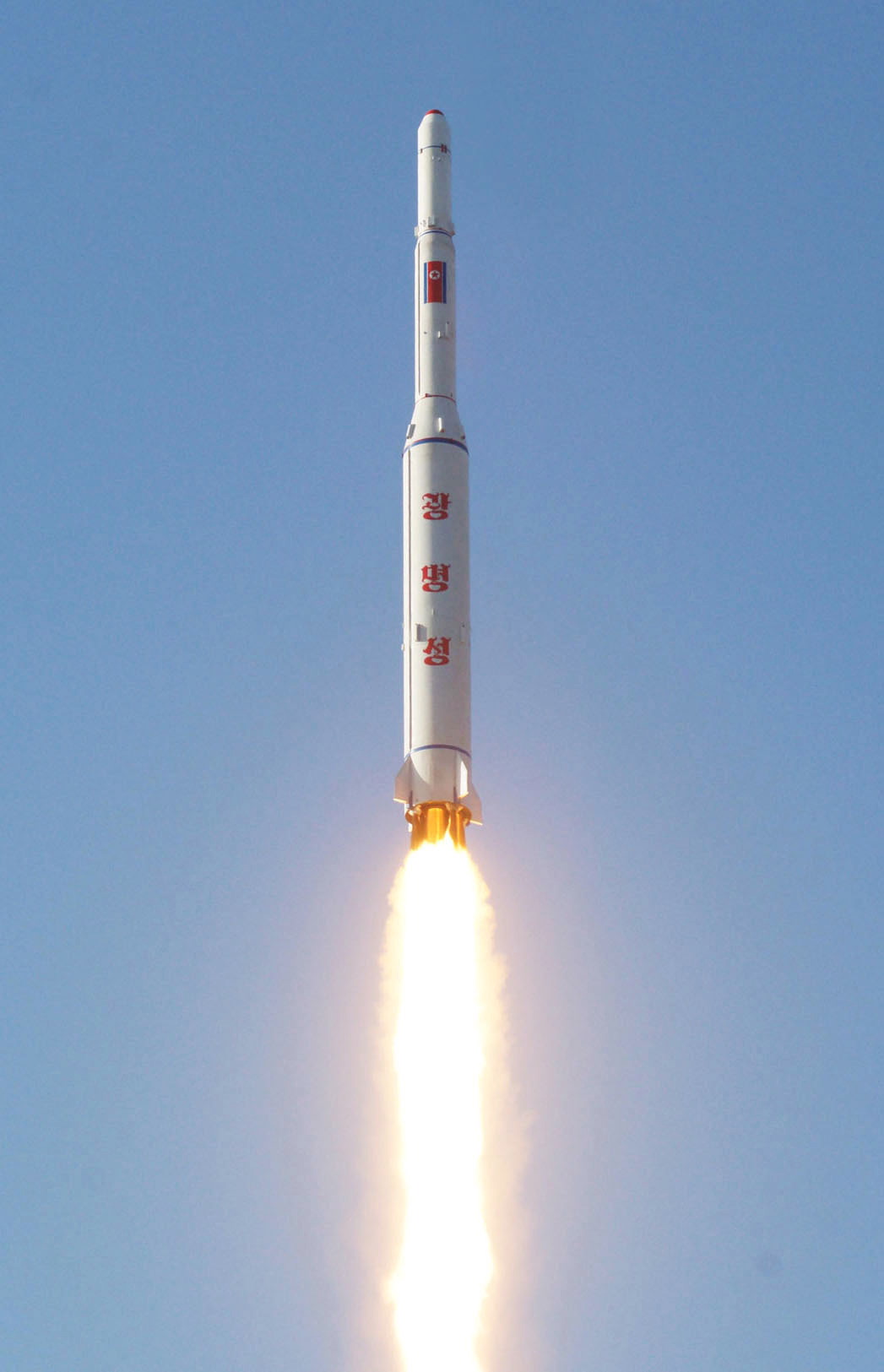
North Korea fires a ballistic missile off the coast of Korean Peninsula


North Korea has reportedly fired a ballistic missile into waters east of the Korean Peninsula, according to South Korea, Fox News reported Tuesday night.

The Yonhap News Agency reported that the missile launched near the border North Korea shares with China, Fox reported.

“North Korea fired an unidentified ballistic missile into the East Sea from the vicinity of Banghyon, North Pyongan Province, at around 9:40 a.m. [local time],” the South Korean Joint Chiefs of Staff said in a statement, Fox reported.

The missile might have landed in Japan’s Exclusive Economic Zone, about 200 nautical miles from its coast, according to Takahiro Hirano, Public Affairs Officer from Japan’s Ministry of Defense, who spoke to CNN.

 Credit to http://americanmilitarynews.com