We will have a mirror site at http://nunezreport.wordpress.com in case we are censored, Please save the link

Monday, December 29, 2014

ISIS Closing in on Israel from the North and the South


The war against ISIS is taking a dangerous, perhaps inevitable turn. The terror organization has been keen to expand to southern Syria and the Syrian capital of Damascus. Now it says it has recruited three Syrian rebel groups operating in the south of the country in an area bordering the Israeli occupied Golan Heights — that have switched their loyalties to ISIS.

This switch means that Israel, the U.S.’s closest ally in the Middle East, could be threatened from the southwest by the Egyptian ISIS group of Ansar Bait al-Maqdis in Sinai and by ISIS in southern Syria.

The ISIS war is not going well at all for the US-led alliance in Syria. ISIS and al-Nusra Front, al-Qaeda’s branch in Syria, are still the dominant rebel groups in the country. The U.S.-backed Free Syrian Army is still not a reliable fighting force.

The three rebel groups that just joined ISIS could make that situation even worse. Two of the groups are small in number, but the Yarmouk Martyrs Brigade has hundreds of fighters. The Yarmouk Brigades has been at odds with al-Nusra Front and switched now to join what leaders of all thrwee groups believe is the future of Islam.

“If Israel was attacked by ISIS, America would expect a proportionate response by Israel, which is militarily capable of defending itself,” said Geoffrey Levin, a professor at New York University. “America would counsel against sustained Israeli involvement because it could threaten the tacit alliance between America, Iran, Turkey, and several Arab states against ISIS.”

“More recent reports indicated a closer alliance with [the Islamic State] due to tensions with JN [al-Nusra Front],” said Jasmine Opperman, a researcher at Terrorism Research & Analysis Consortium (TRAC). She said al-Nusra attacked the headquarters of the Yarmouk Brigade in southern Syria in early December 2014 following clashes between the two groups.

Al-Yarmuk Martyrs Brigade controlled an area near the Jordan-Israel border in March 2013. That same month, the brigade took as hostages some of the United Nations peacekeeping mission soldiers. Even so, Israel reportedly allowed the brigade to have its wounded fighters treated in Israeli hospitals.

ISIS has been known for launching surprise attacks and opening new battlefronts when it seems to be losing. ISIS also has been criticized by many Arabs and Muslims for not taking its fight to Israel and instead fighting fellow Arabs and Muslims. An attack aimed at Israel may boost ISIS’s popularity in the Arab world and refresh its recruitment and funding efforts.

On the other hand, some of ISIS’s top military commanders were former officers in Saddam Hussein’s army, and they may resort to what Saddam did in the 1991 Gulf War when he attacked Israel with mid-range rockets, hoping to drag the Israelis into a conflict that he was losing.

An Israeli retaliation in 1991 could have jeopardized the U.S-led coalition that then included Arab countries like Egypt, Syria and Saudi Arabia. The same is true now.

“It would be more likely a sign of desperation, as were Saddam's attempts to lure Israel into the 1991 war as a way of breaking the Arab coalition against him,” said NYU’s Levin. At that time, continuous pressure from the first Bush administration and the installation of the Patriot anti-rocket system convinced the Israelis torefrain from reacting to Saddam’s attack.

Israel could launch a preemptive attack to destroy or significantly damage these ISIS-affiliated units whether by air or by ground forces. Israel used its advanced air force tolaunch attacks in Syria several times since the beginning of Syrian civil war in 2011.

Meanwhile, Israel has recently boosted its defenses in the Golan Heights, saying its main concern was to prevent any major weapon transfer from Syria to Hezbollah, the Lebanese guerrilla organization that has engaged in several rounds of war with the Israelis since the 1980s.

Credit to Yahoo

Only War, Inflation And Financial Collapse Can End The Global "Plutonomy", According To Citi


The last time the market was as euphoric and as complacent as it is now, was in the happy go lucky days of 2006 when every day stocks surged without a care in the world, when Lehman bankers were looking to a comfortable retirement after cashing out their stock (then trading north of $70), when the only question was which mega M&A and supermega LBO will hit next, and when the then-brand new Fed chairman Ben Bernanke said there is nothing to worry about because subprime was contained and because home prices in the US just can not possibly drop. 
Not surprisingly, late 2006 was also when Citigroup held its first and only Plutonomy symposium: a joyous celebration of the 0.001%, or as Citi called them, "The Uber-rich, the plutonomists who are likely to see net worth-income ratios surge, driving luxury consumption", adding "Time to re-commit to plutonomy stocks – Binge on Bling. Equity multiples appear too low, the profit share of GDP is high and likely going higher, stocks look likely to beat housing, and we are bullish on equities."
Wait what? Was there really a time 8 years before the French economist Piketty bashed (and made millions in the process) class and wealth inequality, when one of the world's soon to be most insolvent banks had a symposium in which the bank pulled a page right out of pre-revolutionary France and celebrated the world's mega rich?
Yes, and that's not all.
In a trilogy of reports authored by Citi's then head of global srategy, Ajay Kapur (who subsequently quit Citi, tried his hand at running a hedge fund, failed, went to Deutsche Bank to head the bank's Asian equity strategy, failed, and has for the past year been working at Bank of America in that pluotcracy mecca, Hong Kong), couldn't find enough words of praise to explain just how great the brave new world is, one in which the 0.1% control about half of the world's financial assets, and said, on September 29, 2006, that "we think the balance sheets of the rich are in great shape, and are likely to continue to improve."
In retrospect we now know he couldn't be more wrong, and as events just two years later proved, it required a coordinated, global multi-trilion bailout of the entire financial system (which is still ongoing), to avoid the total collapse of the balance sheets of the rich.
However, the flip side of this ongoing intervention by central banks has meant that the (merely) uber rich in 2006 have since become uberest rich, and the nascent Plutonomy of the mid 2000s has morphed into a giant monster unseen at any time before in history.
And since the class divide of society has only gotten worse, here are some of Citi's observations on Plutonomy back then, which are even more applicable now.
From Citi's September 29, 2006 report:
Plutonomy – the story so far...

Over the last 20 years or so, in certain countries, the rich have been getting substantially richer. The share of the top 1% of the population of income has grown substantially in countries such as the US, UK and Canada. The countries, which apparently tolerate income inequality, are what we call plutonomy countries – economies powered by a relatively small number of rich people.

...

What has driven this? We see three drivers. Firstly, the bull market in financial assets – particularly equities – as inflation has fallen, has benefited those whose assets have been invested, particularly in equities as the disinflation was also accompanied by strong earnings growth as margins rose.
The current analog: the Fed-induces record breaking rally since the 666 lows hit in early 2009
Secondly, the rise of managerial capitalism, with CEO remuneration increasingly tied into EPS growth and equity performance.
Which should explain the record surge in corporate stock buyabcks. After all, yield-squeezed bondholders have to pay to make management (and activist shareholders) wealthier than ever before.
Finally, as with previous waves of plutonomy – such as sixteenth century Spain, seventeenth century Holland, Industrial Revolution Britain, the Gilded Age and the Roaring Twenties in the US – the ongoing technological revolution has generated a new wave of ultra-high net worth individuals.
... Such as a ludicrous $40 billion valuation of a taxi-alternative service or a several hundred billion market cap for yet another "cool, hip du jour" social network, all perfectly rational and which clearly have nothing to do with the endless pool of zero-cost money that VCs can recycle into perpetually unprofitable projects
To be sure, being uber-wealthy is not without its drawback. As Citi explained back in 2005, there is inflation, and then there is "inflation for the uber rich":
It's Never Been More Expensive To Be Rich...

Another new data point we have is the CLEW (Cost of Living ExtremelyWell) Index from Forbes Magazine for 2005 (in our original Plutonomy note back in October, we didn’t have the latest data point for the year 2005).

CLEWI is an inflation index of the cost of luxury goods. It measures such things as the cost of suite at the Four Seasons in New York (up 15% year on year) and a kilo of Imperial Beluga caviar (at US$6840, up 40% year on year). In 2005, the CLEWIndex rose 4%, while US CPI rose at 3.6%. Luxury goods still have relative pricing power. The 0.4% gap might not sound all that impressive, but bear in mind that a stronger US dollar, probably helped check this inflation rate (many luxury goods come from Europe, but the CLEWI is a measure in dollars). At any rate, the year to year fortunes of the CLEWI versus the CPI are less relevant. The long-term chart says it all (Figure 4). The most recent data point just confirms that in the search for pricing power, we’d rather be in luxury goods, than low end consumer businesses.

Surely everyone feels the pain resulting from the rising costs of living for the uber wealthy.
Sarcasm aside, the biggest question on everyone's mind is how does the current episode of peak-Plutocracy end. Back in 2005/2006 Citi saw nothing but bright skies ahead for the world's mega rich, and yet there already were ripples forming...
The risks to plutonomy

Our thesis is that the plutonomists are likely to get even richer over the coming years. This could mean global imbalances get even larger, without the planet getting knocked of its axis and sucked into the cosmos.

But this thesis is not without its risks. Plutonomies have existed before and they have come to an end. To this end we see four primary risks.
  • The first, war and/or inflation.
  • Secondly, financial collapse.
  • Three, the end of the technological revolution.
  • Finally, political pressure to end the increase in income and wealth inequality.
Looking back over time, wars have been pretty bad times for wealth. Both because of the destruction of physical assets, and/or confiscation of wealth... Global conflict/revolution on a scale that could destroy the wealth of the plutonomy countries looks to us unlikely in the short term.

Secondly, financial collapse. As much of the wealth of the plutonomists is held in one shape or other in financial wealth (as opposed to land or property), the state of the financial system is important. Financial collapse, as in the Great Depression in the US, would be a serious challenge to the plutonomists. While we have worried periodically about systemic financial risk, say in the aftermath of the LTCM debacle, it is beyond us to speculate about financial collapse. This would however be a serious issue for the rich.

A third challenge would be the end of the wave of technological revolution. The great plutonomy waves of previous centuries, such as the Gilded Age, the Industrial Revolution in Britain, the era of Dutch supremacy, were often associated with technological and financial progress. Economies advanced through progress, with the gains in the first instance disproportionately going to the innovator and risk takers. Were the technology revolution to dissipate, it is likely that the income gains would channel less to the top. Furthermore, technology waves are usually associated with productivity gains, which in turn tend to help keep inflation low and profit growth high. This in turn being a major source of financial wealth creation. So an end of this positive spur would be unhelpful to plutonomy. We see the current internet and communications revolution as being far from dead.

Perhaps the most immediate challenge to Plutonomy comes from the political process. Ultimately, the rise in income and wealth inequality to some extent is an economic disenfranchisement of the masses to the benefit of the few. However in democracies this is rarely tolerated forever.

One of the key forces helping plutonomists over the last 20 years has been the rise in the profit share – the flip side of the fall in the wage share in GDP. As plutonomists or capitalists tend to be long the profit share, they have benefited from trends like globalization and the productivity revolution, disproportionately. However, labor has, relatively speaking, lost out.

We see the biggest threat to plutonomy as coming from a rise in political demands to reduce income inequality, spread the wealth more evenly, and challenge forces such as globalization which have benefited profit and wealth growth.

Globalization has come in for its fair share of attack of late. And political attention on immigration and protectionism is never far from the surface. As we suggested in our note in October last year, reactionary political forces are likely to rise as globalization persists and the losers in developed economies gain in numbers. To an extent we see this happening in Europe, for example, where the rise in the profit share (fall in the wage share) has come at the same time as the rise of right-wing, generally anti-immigration parties.

On the other hand, ageing populations in countries where there are developed and well-financed pension schemes, and a big equity component in these, are probably more tolerant of a rising profit share. As individuals move from being workers to retirees, their incomes shift from being earned as wages, to dividends and savings, which are more linked to profits. This would suggest that in the UK and US for example, demographics might support – politically – a higher profit share, though this might not hold true, for example, in a country like France.

So, is plutonomy under threat politically? We are keeping an eye on this one. At the moment, it is too early to make this call. Calls for protectionism and an end to immigration grow louder by the day, but they are difficult to measure. But a substantial percentage of Americans are in favor of repealing the estate tax (though only 2%, roughly, will ever pay it), which does not resonate as a population determined to destroy wealth inequality. The political process is the greatest threat to plutonomy. We don’t see it as a threat today in most countries. But we are alert to changes here.
Back in 2006 Citi ultimately ended up being very, very wrong, however in a way that ultimately made the rich whose financial paper wealth was about to disappear even richer, courtesy of the biggest taxpayer-funded wealth transfer in history. As a result those who were merely uber rich a decade ago have been wealthier (if only on paper).
Our own view is that the rich are likely to keep getting even richer, and enjoy an even greater share of the wealth pie over the coming years. We think rising profit margins will keep profit growth strong, and equities are at any rate undervalued. And the rich tend to be disproportionately exposed to the equity markets. While there are challenges to this, not least through populations/the political process demanding a more “equitable” share of the wealth, in the short term we think the trend of the rich  getting richer is likely to persist. Plutonomy related stocks should, we think, continue to see strong demand and inflation-beating pricing power.
Here, Citi was absolutely spot-on accurate. However, the question now stands: since there is a finite amount of wealth that can be transferred from the expiring global middle class, and since everything above that is merely dilution from excess printing of fiat money, inquiring minds want to know: is the world financial system due for another massive collapse, one which will even further accelerate the wealth redistribution, or is the world's population so zombified that nothing can ever possibly tips the scales ever again, and the lesson from the French revolution, when an unprecedented amount of wealth and power was held by a precious few, have been forever lost on the world and its citizens?

Credit to Zero Hedge

Russian Nuclear Bombers Again Buzz Guam


Russian strategic bombers conducted a third circumnavigation of the U.S. Pacific island of Guam last week as other bombers flew close to Alaska and Europe, defense officials said.

Two Tu-95 Bear H bombers made the flight around Guam, a key U.S. military hub in the western Pacific, on Dec. 13. No U.S. interceptor jets were dispatched to shadow the bombers.

Separately, two Canadian F-18s intercepted two Bear bombers that intruded into the Alaska air defense identification zone on Dec. 8 that a military spokesman called “unwanted, provocative, and potentially destabilizing.”

Around the same time in Europe, NATO jets intercepted Russian Tu-95 and Tu-22 Backfire bombers also conducting provocative flights.

Russian warplanes, including four Bear Hs and two Tu-22M Backfire bombers were shadowed as they flew simulated bombing runs from bases in Russia to the Baltic Sea enclave of Kaliningrad for four days beginning on Dec. 7.

Regarding the Guam air defense zone incursions, “U.S. Pacific Command can confirm that two aircraft entered Guam’s outer air defense identification zone on Dec. 13,” said Maj. Dave Washburn, a command spokesman.

“The aircraft were flying safely in international airspace and in accordance with international norms; as such, the decision was made to not intercept them.”

It was the second time in a month that nuclear-capable Russian bombers buzzed the island in what U.S. officials have said is nuclear saber-rattling by Russia under its strongman Vladimir Putin.

Earlier Russian bomber flights around the 36-mile-long island took place in November and on Feb. 12, 2013. During the 2013 incursion, F-15 jets were scrambled to intercept the part of bombers.

Both earlier flights were timed to political events, including President Obama’s meeting with Putin in Australia and the president’s state of the union message in 2013.

The latest bomber flights near Guam appear timed to the Obama administration’s plan for imposing additional economic sanctions on Russia for its military annexation of Ukraine’s Crimea and continuing destabilization operations in eastern Ukraine.

Russian Foreign Minister Sergei Lavrov told Secretary of State John Kerry during a phone call Friday that new U.S. sanctions will damage U.S.-Russia relations.

In the Alaska incident, two bombers were flying northwest of Anchorage and into the Beaufort Sea off of the Canadian coast, said Navy Capt. Jeff A. Davis, a spokesman for the North American Aerospace Defense Command and U.S. Northern Command.

Davis said the Russian bombers entered both the Alaska air defense identification zone and the Canadian air defense identification zone, but did not enter sovereign U.S. or Canadian airspace.

“While we recognize the need for routine military training activity, we have noticed an increase in the number of these flights near North America in recent months since Russia’s incursion into Ukraine and Crimea,” Davis said.

Foreign aircraft are not required to file flight plans in advance of flights through defense zone, however, “such unannounced operations by strategic bombers near the U.S. and Canada are unwanted, provocative, and potentially destabilizing,” he stated.

Davis said Russian long-range bomber flights around North America “largely ceased” after the collapse of the Soviet Union in 1991.

“But they restarted in 2007,” he said. “Since 2007, Norad fighters have conducted intercepts about five times per year of Russian long-range bombers in the U.S. or Canadian air defense identification zones.”

Shirley A. Kan, a Congressional Research Service analyst, stated in a report made public Nov. 27 that Guam is a key element in the Obama administration’s shift to Asia.

“Guam is critical to enhancing the forward presence, strengthening alliances, and shaping China’s rise,” Kan stated.

The U.S. territory is about 3,800 miles west of Hawaii and includes 160,000 people including 6,000 military personnel.

The Pacific Command beginning in 2000 started “to build up air and naval forces on Guam to boost U.S. deterrence and power projection in Asia,” Kan said.

The U.S. Army deployed its newest missile defenses to Guam last year. The terminal high-altitude area defense battery, or THAAD, is based on Andersen Air Force Base.

The Navy also has deployed three attack submarines on Guam.

The island is also a major electronic intelligence-gathering base.

Deputy Defense Secretary Bob Work said during a visit to the island in August that “Guam has always been a central part of our plans” for shifting military forces to the region.

The Air Force frequently deploys both B-2 and B-52 strategic bombers and fighter aircraft, along with long-range Global Hawk drones.

Around 5,000 Marines now based on Okinawa are slated to be moved to Guam.

THAAD is a land-based element that can shoot down a ballistic missile inside and just outside the atmosphere. It uses hit-to-kill technology: Kinetic rather than explosive energy destroys the incoming warhead.

Bear H bombers are relatively old aircraft. They carry Kh-55SM cruise missiles armed with nuclear or conventional warheads. The missile has a range of up to 1,800 miles.

The Russian flights over the Baltic “represented a significant level of activity by Russia,” NATO Spokeswoman Oana Lungescu told Agence France Presse.

“Such activity can be destabilizing and potentially dangerous, if international norms are not respected,” Lungescu said.

NATO Secretary General Jens Stoltenberg has said alliance jets conducted about 400 intercepts of Russian aircraft this year, a 50 percent increase over last year.

Credit toWashington Free Beacon

Terror fears push Queen's guards behind security fences


London: Royal guards have been moved from their traditional posts outside the England's palaces amid fears that Islamist fanatics may target them.

The instantly recognisable Queen's Guards have been withdrawn from their sentry boxes in front of Buckingham Palace, Clarence House, St James's Palace and Windsor Castle to positions behind locked gates or fences.

The decision was taken by Buckingham Palace and police due to fears that "lone wolf" attackers inspired by the Islamic State group might see them as a high-profile target.

Although the ceremonial guards carry rifles fitted with a bayonet, the firearms are not loaded.
Advertisement

Armed police already provide additional security for the soldiers, after the murder of a soldier on ceremonial duty at Canada's national war memorial in a suspected terror attack in October and the killing of Drummer Lee Rigby outside Woolwich barracks last year.

Guards have also been told not to take sentry duty alone, for the first time since the height of the IRA threat.

Some former guards said the "retreat" in the face of terrorism was disappointing. Retired Major Iain Dalzel-Job of the Scots Guards said: "I think this is a big shame. The reason people know we're around is because they can see us. But I suppose the changes are necessary as there is a significant threat."

However, Terry O'Shea, a former Welsh Guardsman, said: "Moving the guardsmen back to a more secure area seems an honourable retreat given the danger posed by the terrorists.

"You could argue that there should be a defiant stand, but how do you protect the soldiers on parade in a bright suit, shiny boots and a furry hat?"

Scotland Yard and Buckingham Palace declined to comment on security issues.

Credit to The Age World

Gerald Celente-Very Serious Economic and Geopolitical Changer in 2015

Al-Qaeda urges ‘lone wolf’ attacks on airliners


Al l-Qaeda has called for “lone-wolf” terror attacks against a number of major airlines.

The winter issue of Inspire, an English-language online magazine edited by the jihadist group, urges that bombs be detonated on the planes of several preeminent US commercial airline companies — American Airlines, Delta, United and Continental — in an effort to gain publicity and “crush the enemy’s economy,” according to a report published Saturday by The Guardian, a British newspaper.


The issue, the 13th released by the group responsible for the 9/11 attacks, also advised rogue terrorists as to the prime altitude for detonating explosives; and encouraged them to blow up commercial aircraft above land, causing additional damage to civilian populations below.

In cases where an attack upon a US airline is not achievable, the magazine suggests British or French alternatives such as British Airways, easyJet or Air France or KLM — a Dutch airline that merged with Air France in 2003, according to a blog operated by the Anti-Defamation League, a US-based racism watchdog group.

“The first priority and the main focus should be on America, then the United Kingdom, then France… This goes on with the NATO countries as per the known order,” the magazine read.

The publication went on to praise lone-wolf terrorists because of their ability to stay undetected: “[They are] hard to uncover, because none knows him but Allah. He has no relationship with any group or any individuals.”

Zale Thompson, an ex-US Navy serviceman, was heralded as a “splendid” example of a lone wolf after the reclusive Muslim convert attacked a group of New York City police officers in October with an axe, injuring one seriously before being shot to death.


Zale Thompson shown in surveillance footage wielding a hatchet before attacking police in New York. (screen capture: YouTube)

Authorities confirmed that attack was an act of terror, although Thompson was not known to be affiliated with any organized terror groups.

The magazine also commended the April 2013 Boston Marathon bombing, as well as Umar Farouk Abdulmutallab, a Nigerian jihadist who was given a life sentence after attempting to blow up Northwest Airlines Flight 253 from Amsterdam to Detroit in December 2009 with an explosive device hidden in his underwear.

Inspire is published by al-Qaeda in the Arabian Peninsula, a group that actively engages in “open source jihad” by recruiting operatives on the Internet.

The magazine was founded by Samir Khan, a Saudi-born Pakistani-American who grew up in New York State. Khan, a US citizen, was killed in 2011 by a US drone strike in Yemen along with ranking al-Qaeda member Anwar al-Awlaki, a fellow US citizen from New Mexico.

Read more: Al-Qaeda urges 'lone wolf' attacks on airliners | The Times of Israel http://www.timesofisrael.com/al-qaeda-urges-lone-wolf-attacks-on-airliners/#ixzz3NI1RVeno

Sunday, December 28, 2014

How Vulnerable Is America to Mass Starvation?

starvation


depression starvation 1depression starvation 2
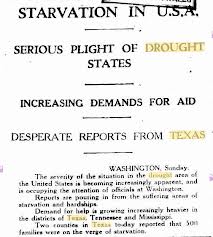
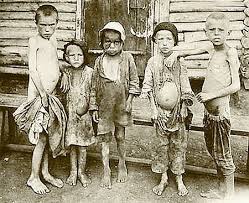
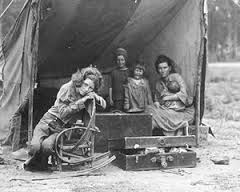
An estimated seven million people starved to death during the Great Depression. And amazingly, these people had food preparation skills that are basically a lost art in America today (e.g. canning).
With a staggering debt looming over the country, how vulnerable are Americans to starvation if and when an economic collapse takes down our economy?
It is not a secret that the world is in a desperate situation when it comes to overall world hunger. The World Bank cites the disturbing fact that there have been 51 food riots in 37 countries in recent memory due to high food prices and the further escalation of food prices has no end in sight. The World Bank further speculates that the present state of food prices could lead to political instability and this is the kind of stuff that wars are made of. And what is the number one cause of rising food prices according to the World Bank? It is the increasing demand (see attached PDF)  for food from a growing population inside of China. The future military implications should be self-evident. But what about the United States? How vulnerable are Americans to the possibility of mass starvation?

A Snapshot of America’s Food Vulnerability

cbs reports on hunger in america
starvation in modern americastarvation please helpAlmost beyond belief, a full 79 percent of the people that use food banks purchase typically buy cheap, unhealthy food and still just have enough to feed their children.  The price of food continues to quickly out-pace the paychecks of most middle class families.  For example, the average price of ground beef has just hit a brand new all-time record high of $3.88 per pound! There are nearly 50 million Americans that are dealing with food insecurity in various degrees of distress. Just over one out of seven Americans rely on obtaining food from various banks at one point or another and these food banks are beginning to experience record shortages.
In a case of “defend the nation and starve”, military families are feeling even more stress  from not being able to obtain sufficient quantities of food as 25% of America military families require outside assistance in getting enough to eat. What does this say about an administration which uses our soldiers to defend the nation and then kicks them to the curb by denying their VA  health benefits as the government also starves their families because they cannot survive on what we pay our soldiers? This is disgraceful, but it is the Obama fundamental transformation of American way!

 America Has No Way to Keep Up with Food Inflation

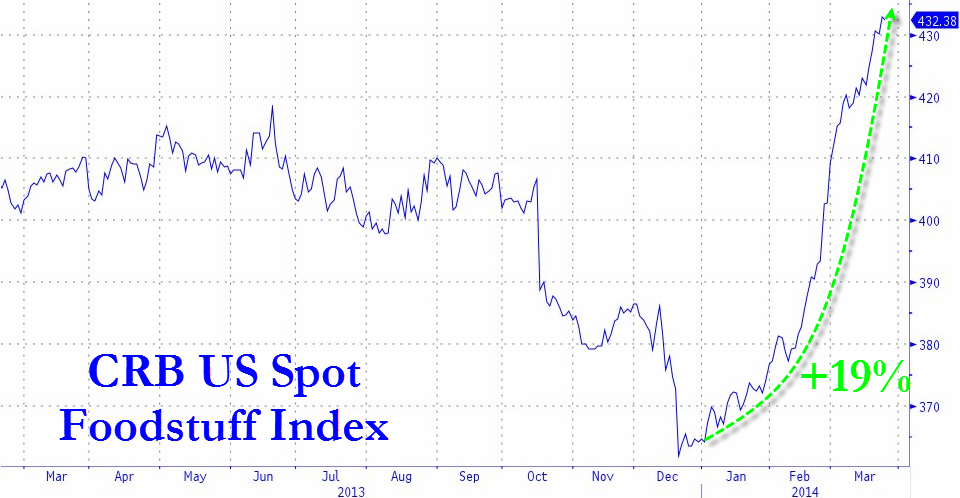
In calculating the overall inflation rate, the government does not count the price of food. However, there are several reliable food inflation figures and the food inflation rate is estimated to be between 19% to 22%.

food inflation
In the article, “Food Price Inflation Scares the Fed” the commodity food costs were exploding on the upside. Calculation of the food inflation rate, given the lag in commodity costs impacting prices on grocery store shelves, we find that the annual U.S. food inflation rate is now running at a staggering +22% and the rate is increasing with no end in sight to the escalation.

The real and specific cause for food inflation is the low-end $940 billion of additional monetary stimulus from the United States Federal Reserve’s quantitative (bail out) easing over the last 18 months. No economy can sustain the value of its money, when currency floods the market like it has during the present administration. The net effect is that the value of your money has been seriously eroded thanks to such misguided practices as the bail-outs.

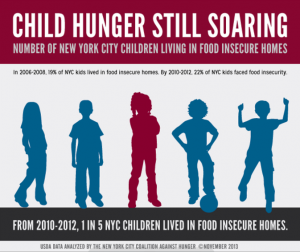
adams homeless foodstarvation child hungerAccording to the New York Times, the typical American family is now worth 36% less than it was worth only 10 years ago!

Shockingly, one out of every six men, ranging in ages from 25 to 54, are not employed. Median family income in the United States is 7% lower than it was in 2000. The United States is now in 19th place in the world and falling. There is no way that the majority of American families can keep pace with food inflation as the wages of Americans are now inversely correlated with the rising food prices. This is a prescription for disaster. The most vulnerable to starvation within the present economic climate are the children as an amazing twenty six percent of all children are living below the poverty level. And we certainly cannot ignore the fact that 50 million Americans are on some form of Federal Food Stamps. With these kind of distressing statistics, a significant number of Americans are vulnerable to politically motivated “food blackmail” in these  times of economic distress.
Just how many Americans are vulnerable to “blackmail by starvation”? Nobody can be totally accurate in the estimation, however, the numbers listed in the above paragraphs provide a good starting point from which to estimate the risk.

Disruption to Transportation Would Prove Catastrophic

The critical element which could most impact the number of Americans who would vulnerable to starvation has to do with disruptions in our transportation system. For the purpose of efficiency and to maximize profits “Just in time (JIT)” food deliveries take place at grocery outlets several times per day. Without these JIT deliveries, we would see immediate shortages occurring on day one of any disruption to the delivery of our food to its final destination.
Although, about 10% of all Americans live near substantial food supplies, my previous investigations have revealed the fact that transportation disruption would be life-threatening to most Americans and the effects would be realized within two days. Most Americans are, at most, nine meals away starvation, which is the amount of food that the average person has stored according to FEMA.

Threats to Transportation

There are many threats to transportation, but some of the more dramatic threats are as follows:
1. An EMP attack upon America would immediately and almost completely stop any food delivery. The effects of the resulting food shortages would be felt almost immediately and would be the second leading cause of death in this scenario which would kill an estimated 90% of all Americans within two years (Naval War College estimate).
2. A nuclear attack upon the United States. Such an attack would also contain an EMP component to it which is a significant byproduct of a nuclear attack.
3. The spread of a pandemic, such as Ebola, would created a shortage of food deliveries caused by the fear that people would have about going out in public. One word to the wise, only report to a public facility as a last resort to obtain food.
soylent green 2Undoubtedly, there would be some public centers set up to distribute food. What would happen should the facility (e.g. sports stadium, shopping mall or FEMA camp runs out of food? How would they replenish their supplies? Do you think that once the food ran out, that the prevailing authority would open the gates and allow the hungry masses to run through the streets desperately looking for their next meal? Or, is it more likely that these centers could become what we came to know as soylent green centers in the 1973 classic move by the same name? Is it really so unimaginable?

The Government Threat

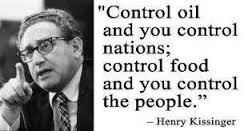
And of course, Henry Kissinger was only kidding when he stated the following:
kissinger useless eaters

Although it would not take much to push America over the edge with regard to mass starvation, there is  a precedent that the United States government would use food as a weapon against its own people if necessary.
In December, 1974, National Security Council directed by Henry Kissinger completed a classified study entitled, National Security Study Memorandum 200: Implications of Worldwide Population Growth for U.S. Security and Overseas Interests.” The study was based upon the unproven claims that population growth in Lesser Developed Countries (LDC) constituted a serious risk to America’s national security.
In November 1975 President Ford, based upon the tenets of NSSM 200 outlined a classified plan to forcibly reduce population growth in LDC countries through birth control, war and famine. Ford’s new national security adviser, Brent Scowcroft, in conjunction with then CIA  Director, George H. W. Bush, were tasked with implementing the plan and the secretaries of state, treasury, defense, and agriculture assisted in the implementation of these insane genocidal plans.
NSSM 200 formally raised the question, “Would food be considered an instrument of national power? Is the U.S. prepared to accept food rationing to help people who can’t/won’t control their population growth?” Would this be done inside of America? Kissinger has answered these questions when he stated that he was predicting a series of contrived famines, created by mandatory programs and this would make exclusive reliance on birth control programs unnecessary in this modern day application of eugenics in a scheme that would allow Henry to have his cake and eat it too in that the world would finally be rid of what Henry Kissinger referred to as the “useless eaters!”
Third world population control, using food as one of the primary weapons, has long been a matter of official covert national policy and a portion of President Obama’s Executive Order 13603 (EO), National Defense Resources Preparedness is a continuation of that policy. Only now, the intended targets are not the LDC’s, but are instead, the American people and after Obama declares martial law, food will undoubtedly be used to subjugate the more resistant regions of our country.

Conclusion

America is already on the edge with regard to a starvation crisis due to economic conditions alone. An economic collapse, or no shortage of any other kind of disaster, would plunge this country into the depths of unimaginable horrors associated with extreme food shortages.
Some people are shocked and refuse to consider what many feel is the unthinkable. When an economic collapse comes to America, coupled with the nation’s extreme food vulnerability, just how desperate will people become?What have you done to prepare?
Credit to Common Sense