


We will have a mirror site at http://nunezreport.wordpress.com in case we are censored, Please save the link

Tuesday, September 30, 2014

ISIS FALSE FLAG COMING SOON?

Alex Jones breaks down all the possible ways the globalists may use ISIS to further destroy freedom.

False Flag Events, Martial law, WW III and Transhumanism

In the 1990’s, I was a Maricopa County volunteer first responder. This meant that if there was a pandemic or a chemical/biological attack, I would be expected to help dispense treatment. This also meant that my family would be first in line for any treatments. The program was eventually absorbed by FEMA. From the absorption, I began a friendship with a FEMA employee, his expertise was bioterrorism based pandemics.
In the fall of 2012, he “early” retired as did many of his colleagues. Unbeknown to me, he and several of his colleagues had been preparing a “bug out” location in a remote area. He was one of the people that I wrote about in the last article who went into hiding to avoid what they believe is coming.
My friendship with this person became a part of my awakening process. In the course of the last couple of decades, I learned, firsthand, how many of our alphabet soup agencies are not about protecting the public interest. In effect, they are fascist in nature and serve to protect the interests of Big Pharma, other major corporations and the eventual imposition of martial law. Today, this is not a stunning revelation. Nearly 20 years ago, these notions were considered to be on the extreme fringe.
From several intense conversations I had with this individual, I can now clearly see the unfolding of the collapse of this nation, step by step. In the following paragraphs, I will detail how various false flag attacks will fit together like the pieces of a jigsaw puzzle in order to achieve this aim.

False Flag Events Before the Imposition of Martial Law

false flag goering
Any discussion, except for the fact that false flag events are coming, is supposition to some degree. However, there is enough historical precedent in this area, to accurately determine that these coming events will follow a very narrow path of possibilities. What was once the great unknown is now a predictable set of events with very clear goals. Based upon what I have learned from all of my sources, the following events represent my choices as the most likely candidates for the coming false flag attacks which will be employed as a prelude to martial law. And the imposition of martial law will spell the end of America as we know it.

A Nuclear “Terrorist” Attack

nuclear bombAt one time, this kind of event would have been high up on my list. However, the military is not in support of this and have worked to keep nuclear weapons out of the control of this administration which partially explains why over 260 senior military command officers have been fired by Obama including the entire leadership of the nuclear weapons program. Although this event remains a possibility, this event seems less likely as time goes on because a nuclear attack is a single point in time and a single location event. If the intent of a false flag event is to paralyze a society, a nuclear event will not accomplish this goal. A nuclear attack would be an excellent attention getter, but the probability of this being a pervasive debilitating event is limited. Therefore, I cast this as a low probability event.My FEMA source does not think this lies in our future.

EMP Attack

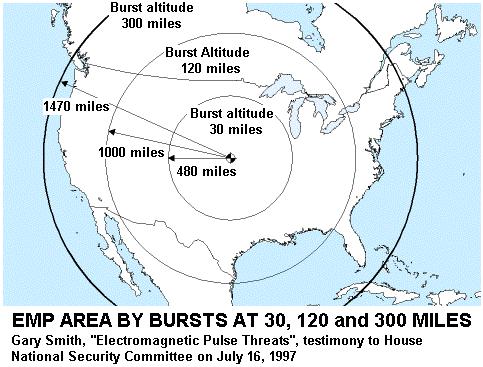
emp burstTaking down the power grid, according to both Congressman Trent Franks and the Naval War College would result in 90% of the country being dead within 24 months with 60% of the population dying off  within a year. An EMP attack would completely subjugate the country, but at what cost? The infrastructure would be destroyed and it would take years to rebuild. An EMP attack upon the power grid would be the act of an extreme psychopathic mind. However, the major drawback to this event would be that if the intent was to create martial law as a prelude to World War III a destroyed infrastructure does not lend itself to a sustained war effort. However, a limited EMP attack, practiced for in the Grid EX II drill of November 13-14, 2013, was foretold by my FEMA source over a year in advance of the Grid EX II drill. A limited EMP attack, say on Wall Street, would destroy banking, currency, the Stock Market and the housing market would follow. My FEMA source said a limited and strategically placed EMP attack was in our future and he said you will see preparation for this event as he foretold the Grid EX II drill.

Currency, Banking, Stock Market and Housing Collapse by a Cyber-Attack

Last fall, DHS and FEMA participated in a series of cyber security drills in which the banks fell victim to a cyber-attack and all banking records were destroyed. If you cannot prove how many computer digits you have in the bank, then you will own none of the computer digits. Americans will try to present paper records to prove their case, but the banks and the government will dismiss your paperwork as a fraud or lacking proof that you did not spend your money in between the time of your written bank statement and the cyber attack. In short, if you have your money in the bank, at the time of the collapse, you will effectively own nothing. You will have no way to pay your rent, mortgage and buy food. You will be at the complete mercy of the state.
Famine will be the quick result of this kind of false flag attack. Hordes of looters will go house to house and neighborhood to neighborhood seeking life-sustaining resources. The need for martial law will be immediate. If you want to eat, you will go to a “community center” where you will be promised “three hots and a cot”. This represents how some  people could be rounded up. A currency collapse set into motion by a cyber-attack upon the banks, although it would paralyze the economy, could bring about martial law, would not be totally debilitating. Yes, there would be some famine and civil unrest. However, this is not a near extinction level event as the bulk of the country could survive through means such as bartering and trading. In terms of moving the country into martial law, this is a high probability event in narrow, not a broad sense.

Chemical and/or Biological Attack

ebola burying dead bodies
This mode of attack fits the desired requirements for a martial law takeover. The results are devastating, the event is longstanding, the event can multiply on its own, the event leaves the basic infrastructure in place and the event could be halted with the right antidote.
A series of chemical and/or biological attacks at select places around the country would leave the country debilitated and the misery could keep spreading from community to community. However, like a neutron bomb,  which kills its intended targets while leaving structures undamaged, the infrastructure would be largely left in place. The perpetrators would have to have already developed an antidote to survive. Although the following statement is speculation, I believe that has already been done.
In a previous article, I documented that an Ebola vaccine was developed in 2004 by Crucell, in conjunction with the CDC, the National Institute of Health (NIH), the Army Infectious Disease and Virus unit at Ft. Dietrich and an infusion of cash from Bill Gates. The only results that are published about the Crucell vaccine consist of a statement that the vaccine was not contraindicated for use on humans. No published results for the 32 humans that were tested, were  ever published. I strongly suspect that with the Army’s involvement, the results are classified and I further suspect that the second vaccine being developed by Monsanto and GSK is only meant for you and me. It is not much of a leap in logic to conclude that of the two vaccines, one is going to be a lot more effective than the other. Care to take a guess on which vaccine we are going to be forced to take?
These beliefs are supported by the notion that my FEMA contact stated that  whatever is released upon the people, there will be a pre-existing antidote.
One other item should be mentioned. I was further told that the Army was in possession of a series of  bioweapons that the “world had no idea” of what we possessed. The weapons are exotic and dangerous. Most were of the pandemic variety and all had been weaponized. Among the leading contenders for release is Ebola and he stated that multiple strains will be released thus, making it more difficult to identify and to treat.
Certainly, Ebola is not the only designer virus that we have to be concerned about, but given the present climate, it is the most likely.

The Endgame

Many now expect that brutal martial law will be ushered in through the use of a series of false flag cocktails, with each event designed to peel back the onion that was once the United States.
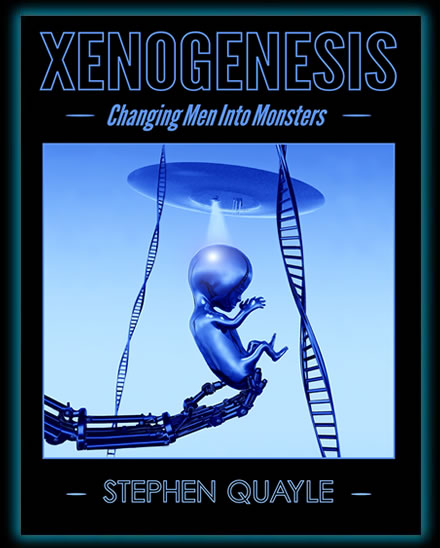
Although this is a different topic for a different article, if one wonders what life will be like for those who survive the imposition of martial law and the coming World War III , I would suggest reading everything you can get your hands on with regard to Agenda 21, for phase one, and transhumanism, for phase two of the New World Order which could be only a matter of years away. A good place to start reading  is Steve Quayle’s work entitled Xenogensis. This book writes the ending of where this entire scenario is ultimately headed.
The end of humanity as we know it.


Credit to Common Sense

U.S. Congressman Linked To Muslim Terrorist Organization

A Muslim woman who has been recognized by the White House in the past as a ‘Champion of Change’ took to twitter recently to thank Rep. Jim Moran (D-VA) for his “generous contribution” to a Hamas-linked, Muslim Brotherhood front group in the U.S. Linda Sarsour – the woman who sent out several tweets about the event Congressman Moran attended – has a bit of controversial past herself.
Sarsour did not say how much money the Democrat donated.
Moran is a Democrat who represents the Alexandria district in northern Virginia. He’s not running for reelection in 2014.
The Islamic group also gave the Democrat a “Lifetime Achievement Award” during the fundraising event, which provided CAIR with at least $350,000.
Critics say the Democrat has repeatedly suggested that Jews are responsible for starting various wars in the Arab countries.
As for Sarsour, in addition to being championed by the Obama administration, she opposed the ‘Honor Diaries’, a documentary designed to draw attention to the war on women in the Muslim world. She also was part of Occupy Wall Street in 2011 as Shoebat.com reported.
Moran began establishing his bonafides as a complicit actor with Muslim Brotherhood individuals and front groups years ago. Consider this undated photo circa the late 1990’s / 2000:
Alamoudi (back left), Moran, Estwani, and Saffuri.
Seen in the photo with Moran is Abdurahman Alamoudi, Bassam Estwani, and Khaled Saffuri (other man unidentified). In 2003, Alamoudi was arrested on charges related to terrorism and was ultimately convicted to 23 years in prison one year later. Estwani is the former chairman of the highly suspect Dar al-Hijrah mosque, which has been home to and visited by multiple terrorists, to include three 9/11 hijackers. Anwar al-Awlaki was the imam there. Saffuri was once considered to be Alamoudi’s deputy, who along with Grover Norquist founded the Islamic Institute.
In 1999, Alamoudi cut two separate checks – each in the amount of $10,000 to the Islamic Institute – one a loan and one an apparent gift – that served to help Norquist establish the Institute with Saffuri.
Checks written to Norquist's Institute.
Checks written to Grover Norquist’s Islamic Institute (photo via Sperry files)
What does all of this have to do with Rep. Moran?
Well more than a decade after he befriended individuals connected to the Muslim Brotherhood, he’s still doing it.
For some contrast, watch how Moran treated conservative journalist Jason Mattera back in 2010 when Mattera asked the Congressman legitimate questions about government stimulus money going to a district that doesn’t exist. Moran wanted to fight him. With Moran’s past, it’s understandable why he might be a little touchy when confronted with something he can’t explain.
As an aside, is anyone else curious about the men surrounding Moran in this video?
Credit to Walid Shoebat

Evidence That The New York Fed Serves The Interests Of Goldman Sachs

Goldman Sachs And The New York Fed - Public Domain
For years, many people have suspected that the New York Fed is more or less controlled by the "too big to fail" banks.  Well, now we have smoking gun evidence that this is indeed the case.  A very brave lawyer named Carmen Segarra made a series of audio recordings while she was working for the New York Fed.  The 46 hours of meetings and conversations that she recorded are being called "the Ray Rice video for the financial sector" because of the explosive content that they contain.  What these recordings reveal are regulators that are deeply afraid to do anything that may harm or embarrass Goldman Sachs.  And it is quite understandable why Segarra's colleagues at the New York Fed would feel this way.  As a recent Bloomberg article explained, it has become "common practice" for regulators to leave "their government jobs for much higher paying jobs at the very banks they were once meant to regulate."  If you think that there is going to be a cushy, high paying banking job for you at the end of the rainbow, you are unlikely to do anything that will mess that up.
To say that the culture at the New York Fed is "deferential" to big banks such as Goldman Sachs would be a massive understatement.
When Carmen Segarra was first embedded at Goldman Sachs, she was absolutely horrified by what she was seeing and hearing.  But her superiors were so obsessed with covering up for Goldman that they actually pressured her to alter the notes that she took during meetings...
The job right from the start seems to have been different from what she had imagined: In meetings, Fed employees would defer to the Goldman people; if one of the Goldman people said something revealing or even alarming, the other Fed employees in the meeting would either ignore or downplay it. For instance, in one meeting a Goldman employee expressed the view that "once clients are wealthy enough certain consumer laws don't apply to them." After that meeting, Segarra turned to a fellow Fed regulator and said how surprised she was by that statement -- to which the regulator replied, "You didn't hear that."
This sort of thing occurred often enough -- Fed regulators denying what had been said in meetings, Fed managers asking her to alter minutes of meetings after the fact -- that Segarra decided she needed to record what actually had been said.
Needless to say, someone like Segarra that did not "go along with the program" was not going to last long at the New York Fed.
After only seven months, she was fired...
In 2012, Goldman was rebuked by a Delaware judge for its behaviour during a corporate acquisition. Goldman had advised one energy company, El Paso Corp., as it sold itself to another energy company, Kinder Morgan, in which Goldman actually owned a $4-billion stake. Segarrra asked questions and was told by a Goldman executive that the bank did not have a conflict of interest policy. The Fed found some divisions of the bank did have a policy, though not a comprehensive one. The Fed pressured Segarra not to mention the inadequate conflict of interest policy at Goldman in her reports and, she alleges, fired her after she refused to recant.
If Segarra had not made the recordings that she did, we would have probably never heard much from her ever again.
After all, who is going to believe her over Goldman Sachs and the New York Fed?  A minority would, of course, but the general public would have probably dismissed her accusations as the bitter ramblings of an ex-employee.
But she did make those recordings, and they are causing chaos on Wall Street right now.
The following is how Michael Lewis summarized the importance of this audio...
But once you have listened to it -- as when you were faced with the newly unignorable truth of what actually happened to that NFL running back's fiancee in that elevator -- consider the following:
1. You sort of knew that the regulators were more or less controlled by the banks. Now you know.
2. The only reason you know is that one woman, Carmen Segarra, has been brave enough to fight the system. She has paid a great price to inform us all of the obvious. She has lost her job, undermined her career, and will no doubt also endure a lifetime of lawsuits and slander.
The New York Fed says that it "categorically rejects" all of the allegations made by Carmen Segarra.
Of course they do.
But what is there to deny?  The evidence is right there in the audio recordings.
The New York Fed has been caught red-handed serving the interests of Goldman Sachs, and no number of strongly-worded denials is going to change that.
Sadly, this is not likely to change any time soon.  Employees of the New York Fed are going to continue to want to get hired by the big banks, and the big banks are going to continue to hire them.  So the incestuous relationship between the New York Fed and Goldman Sachs is probably not going to change in any meaningful way despite this bad publicity.
What this means is that Goldman Sachs is going to continue to do pretty much whatever it wants to do, and nobody is going to stop them.
But someone should be doing something.
As I wrote about the other day, Goldman Sachs has less than a trillion dollars in total assets, but it has more than 54 trillion dollars in exposure to derivatives.
When the derivatives crisis strikes, some of these "too big to fail" banks are going to go down very hard.
Goldman might be one of them.
And when Wall Street starts collapsing, it is going to plunge the entire U.S. economy into a complete and utter nightmare.
Much of this could have been avoided if we had good rules in place and we had regulators that were honestly trying to enforce those good rules.
But instead, the wolves are guarding the hen house and the big banks are going absolutely wild.
Ultimately, this is all going to end very, very badly.
Credit to Economic Collapse

International crowdfunding campaign to build Third Temple raises over $100,000


A 60-day international crowdfunding campaign to finance the construction of a modern Third Temple on the Temple Mount garnered $105,000 worth of donations from over 900 donors around the globe by Rosh Hashana, the Temple Institute said Sunday.

According to a statement from the right-wing organization – dedicated to educating world Jewry about the centrality of the Temple Mount to Jewish life and “recreating every aspect of the Holy Temple” – its crowdfunding campaign received the donations from 30 countries.

“The funds raised from the campaign will be used to continue the research of the Institute and to commission additional architectural plans,” the statement said. “The architects will fuse Jewish law with modern technology to prepare for a fully modern Third Temple, Kosher to the letter of the law...”

Featuring a website with a three-minute promotional video depicting a digital incarnation of the planned Third Temple, the institute said the site was viewed by over 160,000 people and received over 10,000 shares on Facebook.

Rabbi Chaim Richman, the international director of the institute, said the organization utilized the crowdfunding campaign after initially finding success with YouTube, Facebook and Twitter.

“We are constantly looking for ways to include as many people as possible in our mission to rebuild the Holy Temple,” said Richman. “This is not about one group or organization – it’s about bringing about a spiritual reunification of mankind. Today, with the help of the Internet, our message is resonating across the globe.”

Richman said the Temple Institute’s plan to design, fund and build a new temple began three years ago.


Credit to Jerusalem Post

Apocalypse soon: the scientists preparing for the end times


The men were too absorbed in their work to notice my arrival at first. Three walls of the conference room held whiteboards densely filled with algebra and scribbled diagrams. One man jumped up to sketch another graph, and three colleagues crowded around to examine it more closely. Their urgency surprised me, though it probably shouldn’t have. These academics were debating what they believe could be one of the greatest threats to mankind – could superintelligent computers wipe us all out?

I was visiting the Future of Humanity Institute, a research department at Oxford University founded in 2005 to study the “big-picture questions” of human life. One of its main areas of research is existential risk. The physicists, philosophers, biologists, economists, computer scientists and mathematicians of the institute are students of the apocalypse.

Predictions of the end of history are as old as history itself, but the 21st century poses new threats. The development of nuclear weapons marked the first time that we had the technology to end all human life. Since then, advances in synthetic biology and nanotechnology have increased the potential for human beings to do catastrophic harm by accident or through deliberate, criminal intent.

In July this year, long-forgotten vials of smallpox – a virus believed to be “dead” – were discovered at a research centre near Washington, DC. Now imagine some similar incident in the future, but involving an artificially generated killer virus or nanoweapons. Some of these dangers are closer than we might care to imagine. When Syrian hackers sent a message from the Associated Press Twitter account that there had been an attack on the White House, the Standard & Poor’s 500 stock market briefly fell by $136bn. What unthinkable chaos would be unleashed if someone found a way to empty people’s bank accounts?

While previous doomsayers have relied on religion or superstition, the researchers at the Future of Humanity Institute want to apply scientific rigour to understanding apocalyptic outcomes. How likely are they? Can the risks be mitigated? And how should we weigh up the needs of future generations against our own?

The FHI was founded nine years ago by Nick Bostrom, a Swedish philosopher, when he was 32. Bostrom is one of the leading figures in this small but expanding field of study. It was the first organisation of its kind in the UK, and Bostrom is also an adviser on the country’s second: the Centre for the Study of Existential Risk at Cambridge University, which was launched in 2012. There are a few similar research bodies in the US, too: in May, the Future of Life Institute opened in Boston at MIT, joining the Machine Intelligence Research Institute in Berkeley, California.

“We’re getting these more and more powerful technologies that we can use to have more and more wide-ranging impacts on the world and ourselves, and our level of wisdom seems to be growing more slowly. It’s a bit like a child who’s getting their hands on a loaded pistol – they should be playing with rattles or toy soldiers,” Bostrom tells me when we meet in his sunlit office at the FHI, surrounded by yet more whiteboards. “As a species, we’re giving ourselves access to technologies that should really have a higher maturity level. We don’t have an option – we’re going to get these technologies. So we just have to mature more rapidly.”

I’d first met Bostrom in London a month earlier, at the launch of his most recent book, Superintelligence: Paths, Dangers, Strategies. He had arrived late. “Our speaker on superintelligence has got lost,” the chair joked. It was a Thursday lunchtime but the auditorium at the RSA on the Strand was full. I was sitting next to a man in his early twenties with a thick beard who had lent in to ask, “Have you seen him argue that we’re almost certainly brains in vats? It sounds so out-there, but when he does it it’s so cool!” He looked star-struck when Bostrom eventually bounded on stage.

Dressed in a checked shirt, stripy socks and tortoiseshell glasses, Bostrom rushed through his presentation, guided by some incongruously retro-looking PowerPoint slides. The consensus among experts in artificial intelligence (AI) is that they will develop a computer with human-level intelligence in the next 50 years, he said. Once they have succeeded in doing this, it might not take so long to develop machines smarter than we are. This new superintelligence would be extremely powerful, and may be hard to control. It would, for instance, be better at computer programming than human beings, and so could improve its own capabilities faster than scientists could. We may witness a “superintelligence explosion”
as computers begin improving themselves at an alarming rate.

If we handle it well, the development of superintelligence might be one of the best things ever to happen to humanity. These smart machines could tackle all the problems we are too stupid to solve. But it could also go horribly wrong. Computers may not share our values and social understanding. Few human beings set out to harm gorillas deliberately, Bostrom pointed out, but because we are cleverer, society is organised around our needs, not those of gorillas. In a future controlled by ultra-smart machines, we could well be the gorillas.

After the book launch, the publishers invited me to join them and Bostrom for a drink. We drank white wine, and Bostrom asked for green tea. Over a bowl of wasabi peanuts, he mentioned casually that he likes to download lectures and listen to them at three times the normal speed while he exercises. “I have an app that adjusts the pitch so it’s not like a Mickey Mouse voice,” he explained, assuming perhaps that this was the reason for my surprised expression. I sensed that he was quite keen to leave us to our wine. “Nick is the most focused person I know,” a colleague later told me.

****

Bostrom hated school when he was growing up in Helsingborg, a coastal town in Sweden. Then, when he was 15, he stumbled on the philosophy section of his local library and began reading the great German philosophers: Nietzsche, Schopenhauer, Kant. “I discovered there was this wider life of the mind I had been oblivious to before then, and those big gates flung open and I had this sense of having lost time, because I had lost the first 15 years of my life,” he told me. “I had this sense of urgency that meant I knew I couldn’t lose more years, or it could be too late to amount to anything.”

There was no real “concept” of existential risk when Bostrom was a graduate student in London in the mid-1990s. He completed a PhD in philosophy at the London School of Economics while also studying computational neuroscience and astrophysics at King’s College London. “People were talking about human extinction but not about ways of thinking about permanently destroying our future,” he says.

Yet he began to meet people through the mailing lists of early websites who were also drawn to the ideas that were increasingly preoccupying him. They often called themselves “transhumanists” – referring to an intellectual movement interested in the transformation of the human condition through technology – and they were, he concedes, “mainly crackpots”.

In 2000 he became a lecturer in philosophy at Yale and then, two years later, he returned to the UK as a postdoctoral fellow at the British Academy. He planned to pursue his study of existential risk in tandem with a philosophy teaching post, until he met the futurologist and multibillionaire computer scientist James Martin, who was interested in his work. In 2005 Martin donated $150m to the University of Oxford to set up the Oxford Martin School, and the FHI was one of the first research bodies to receive funding through the school. It can be a challenge to be taken seriously in a field that brushes so close to science fiction. “The danger is it can deter serious researchers from the field for fear of being mistaken or associated with crackpots,” Bostrom explained. A “univer­sity with a more marginal reputation” might have been less confident about funding such radical work.

Nevertheless, the FHI has expanded since then to include 18 full-time research staff, drawn from a wide range of disciplines. I spoke to Daniel Dewey, a 27-year-old who last year left his job as a software engineer at Google to join the FHI as a research fellow studying machine superintelligence. A few of his colleagues at Google had introduced him to research on the emerging risks of AI, and he began reading about the subject in his spare time. He came across a problem related to the safety of AIs that he couldn’t solve, and it became the hook. “I was thinking about it all the time,” Dewey recalled.

One of the concerns expressed by those studying artificial intelligence is that machines – because they lack our cultural, emotional and social intuition – might adopt dangerous methods to pursue their goals. Bostrom sometimes uses the example of a superintelligent paper-clip maker which works out that it could create more paper clips by extracting carbon atoms from human bodies. “You at least want to be able to say, ‘I want you to achieve this simple goal and not do anything else that would have a dramatic impact on the world,’ ” Dewey explained.

Unfortunately, it turns out that it is very difficult to meet this simple request in practice. Dewey emailed Toby Ord, an Australian philosopher who also works at the FHI, who replied that he didn’t know the answer, either, but if Dewey came to Oxford they could discuss it. He did, and he soon decided that he might be able to “make a difference” at the institute. So he quit Google.

Many of the FHI researchers seem motivated by a strong sense of moral purpose. Ord is also a founder of Giving What We Can, an organisation whose members pledge 10 per cent of their income to help tackle poverty. Ord gives more than this: anything he earns above £20,000, he donates to charity. Despite his modest salary, he plans to give away £1m over his lifetime.

Ord lives in Oxford with his wife, a medical doctor who has also signed up to the giving pledge, and baby daughter. “I’m living off the median income in the UK, so I can’t complain,” he told me, but they live frugally. The couple dine out no more than once a month, and he treats himself to one coffee a week. Ord sees a natural connection between this and his work at the FHI. “I was focusing on how to think carefully and apply academic scholarship to how I give in my life and helping others to give, too. So when it comes to existential risk I’m interested in the idea that another way of helping people is to figure out how to help future generations,” he said.

Ord is working on a report for the government’s chief scientific adviser on risk and emerging technology. Most researchers at the FHI and at the Centre for the Study of Existential Risk hope that such analysis will gradually be integrated into national policymaking. But, for now, both institutions are surviving on donations from individual philanthropists.

****

One of the most generous donors to scientists working in the discipline is Jaan Tallinn, the 42-year-old Estonian computer whizz and co-founder of Skype and Kazaa, a file-sharing program. He estimates that he has donated “a couple of million dollars” to five research groups in the US and three in the UK (the FHI, the CSER and 80,000 Hours, an organisation promoting effective philanthropy, which also has a close interest in existential risk). This year he has given away $800,000 (£480,000).

His involvement in the founding of the CSER came after a chance encounter in a taxi in Copenhagen with Huw Price, professor of philosophy at Cambridge. Tallinn told Price that he thought the chances of him dying in an artificial-intelligence-related disaster were higher than those of him dying of cancer or a heart attack. Tallinn has since said that he was feeling particularly pessimistic that day, but Price was nevertheless intrigued. The computer whizz reminded him of another professional pessimist: Martin Rees, the Astronomer Royal.

In 2003, Rees published Our Final Century, in which he outlined his view that mankind has only a 50/50 chance of surviving to 2100. (In the US the book was published as Our Final Hour – because, Rees likes to joke, “Americans like instant gratification”.) A Ted talk that Rees gave on the same subject in July 2005 has been viewed almost 1.6 million times online. In it, he appears hunched over his lectern, but when he begins to speak, his fluency and energy are electrifying. “If you take 10,000 people at random, 9,999 have something in common: their business and interests lie on or near the earth’s surface. The odd one out is an astronomer and I am one of that strange breed,” he begins.

Studying the distant reaches of the universe has not only given Rees an appreciation of humanity’s precious, fleeting existence – if you imagine Planet Earth’s lifetime as a single year, the 21st century would be a quarter of a second, he says – but also allowed him an insight into the “extreme future”. In six billion years the sun will run out of fuel. “There’s an unthinking tendency to imagine that humans will be there, experiencing the sun’s demise, but any life and intelligence that exists then will be as different from us as we are from bacteria.”

Even when you consider these vast timescales and events that have changed the earth dramatically, such as asteroid impacts and huge volcanic eruptions, something extraordinary has happened in recent decades. Never before have human beings been so able to alter our surroundings – through global warming or nuclear war – or to alter ourselves, as advances in biology and computer science open up possibilities of transforming the way we think and live. So it is understandable that Price immediately saw a connection with Tallinn’s interests.

Price invited him to Cambridge and took Tallinn on a tour of what he describes as the “two birthplaces of existential risk”. First they went for dinner at King’s College, where the pioneering computer scientist Alan Turing was a fellow from 1935 to 1945. Then they went for drinks at the Eagle pub, where in 1953 Francis Crick and James Watson announced that they had cracked the double-helix structure of DNA. When I came to the city to interview Price, he took me on a mini-existential risk tour to echo Tallinn’s, inviting me for a pint of DNA ale one evening with a few CSER researchers. For the second time in several weeks I found myself drinking with people I sensed would rather be in the library.

Tallinn’s first trip to Cambridge was successful. With Price and Rees, he co-founded the CSER, providing the seed funding. The centre already has several high-profile advisers, including the physicist Stephen Hawking, Elon Musk (the multibillionaire behind PayPal and SpaceX) and the ethicist Peter Singer. They are hoping to find funding for a couple of postdoctoral positions in the next year or so. “I see it as part of our role to act as a kind of virus, spreading interest and concern about this issue [existential risk] into other academic disciplines,” Price explained. He hopes that eventually institutions studying potentially dangerous fields will develop a risk-awareness culture. Tallinn is trying to change mindsets in other ways, too. He says he sometimes invests in tech companies as an excuse to “hang around in the kitchen, just so I get a feel of what they are doing and can try and influence the culture”.

I met Price and Tallinn for a coffee in the senior common room at Trinity College. At one point a man ran up to us to slap Tallinn on the back and say: “Hey, Jaan. Remember me? Remember our crazy Caribbean days?”

Tallinn looked confused, and the man seemed to sway from side to side, as if dancing with an imaginary hula girl. It turned out they had met at a conference in 2013 and the dancer was a renowned mathematician (I will spare him any blushes). Price said that when he first arrived at Cambridge Tallinn was a minor celebrity; several dons approached him to thank him for making it easier to speak to their children and grandchildren overseas.

Most of the large donors funding existen­tial risk research work in finance or technology. Neither the CSER nor the FHI publishes details of individual donors, but the Machine Intelligence Research Institute (Miri) in Berkeley does. The three biggest donors to Miri are Peter Thiel of PayPal ($1.38m), the founder of Mt Gox (once the main exchange platform for bitcoins), Jed McCaleb ($631,137) and Tallinn. Tech billionaires, like bankers, are more likely to have money to spare – but are they also more acutely aware of the dangers emerging in their industry? Tallinn speaks of Silicon Valley’s “culture of heroism”. “The traditional way of having a big impact in the world is taking something that the public thinks is big and trying to back it, like space travel or eradicating diseases,” he said. “Because I don’t have nearly enough resources for backing something like that, I’ve taken an area that’s massively underappreciated and not that well understood by the public.”

I wondered, when I spoke to Price and Tallinn, how big a difference they believed their work can make. It would be naive to imagine that one could ever convince scientists to stop working in a specific field – whether artificial intelligence or the mani­pulation of viruses – simply because it is dangerous. The best you could hope for would be a greater awareness of the risks posed by new technologies, and improved safety measures. You might want to control access to technology (just as we try to limit access to the enriched uranium needed to make nuclear bombs), but couldn’t this turn science into an increasingly elite occupation? Besides, it is hard to control access to technology for ever, and we know that in the modern, interconnected world small hacks can have catastrophic effects. So how great an impact can a few dozen passionate researchers make, spread across a handful of organisations?

“I’m not supremely confident it’s going to make a big difference, but I’m very confident it will make a small difference,” Price said. “And, given that we’re dealing with huge potential costs, I think it’s worth making a small difference because it’s like putting on a seat belt: it’s worth making a small effort because there’s a lot at stake.”

Tallinn was more upbeat. “There’s a saying in the community: ‘Shut up and multiply’ – just do the calculations,” he said. “Sometimes I joke when there’s particularly good news in this ecosystem, like when I’ve had a good phone call with someone, that ‘OK, that’s another billion saved’.

“Being born into a moment when the fate of the universe is at stake is a lot of fun.”

Sophie McBain is an assistant editor of the New Statesman
Credit to Newstatesman.com

Monday, September 29, 2014

Turkish Flotilla “Peace Activist” Killed in US Airstrike in Syria

“They have healed also the hurt of My people lightly, saying: ‘Peace, peace’, when there is no peace.” (Jeremiah 6:14)


The MV Mavi Marmara (Photo: Wiki Commons)


A Turkish participant in the infamous 2010 flotilla to Gaza was killed in a US airstrike on an ISIS target in Syria, Turkish news outlets have reported. 40-year-old Yakup Bulent Alniak, who was aboard the Mavi Marmara when passengers attacked Israeli naval commandos enforcing a blockade on Gaza, was killed in Idlib, Syria over the weekend.

According to the Turkish World Bulletin, Alniak was in Syria doing charity work ahead of the Islamic holiday of Eid el-Adha, but other sources, including Turkey’s T24, claim he was in fact fighting alongside al-Qaeda splinter group the Al-Nusra Front. Although at odds with IS, Nusra Front is also vehemently anti-West, and both are considered extremely dangerous.

The Turkish humanitarian group behind the 2010 flotilla, the Humanitarian Relief Foundation (IHH), has been investigated for ties to both Hamas and al-Qaeda. “Recent reports of the Turkish military intercepting an alleged IHH weapons truck on the Syrian border was an indication that the flotilla charity was being targeted,” Jonathan Schanzer, vice president for research at the Foundation for Defense of Democracies, told The Jerusalem Post in January, when 23 people were arrested by Turkish police.

“There has long been ample reason to believe the group was tied to Hamas, al-Qaeda, and other terror groups in Syria,” he said.

In 2010, 87 US senators asked President Barack Obama to designate IHH as a terrorist organization, but that did not happen, despite US court documents tying the group to al-Qaeda.Mavi Marmara Activists Prepare to Attack IDF Soldiers. (Photo: IDF)

The Mavi Marmara was only one of six ships in the flotilla, and the only one aboard which violence broke out. Israeli naval commandos were enforcing a blockade on Gaza to stem the flow of weapons to Hamas, something the UN determined was legitimate and legal.

Nine activists were killed in the incident, and a tenth succumbed this year to wounds suffered at the time. Alniak escaped unharmed from the incident.

The airstrike which killed Alniak was one of several aimed at pushing back Islamic forces from the Kurdish town of Kobani, Syria, near the border with Turkey. Some 15,000 Kurds have fled to Turkey as a result of the ISIS siege on the town.

Credit to Breakingisraelnews.com

Read more at http://www.breakingisraelnews.com/22177/turkish-flotilla-peace-activist-killed-us-airstrike-syria/#ufTWeJsafxCHjDW5.99