
Maybe this picture located near baggage claim at Denver International Airport will make a little more sense after reading this article.
As you read the following paragraphs, please keep in mind that the United States is already in a state of national emergency declared by President George W. Bush on September 14, 2001 and this was extended last year by President Obama. As the reader will clearly see in this article, this means that the United States is now in a state of martial law.
Executive Order 13603 Declares de facto Martial Law
“Papers please,” was a phrase that Americans used to utter in sarcastic tones in order to cast a negative light upon the totalitarianism of first Hitler and then later, Stalin. In the present era, Obama has issued a similar edict and your papers have been issued to each and every one of us and those papers say that we are literal slaves to the state. Yes, under Obama’s Executive Order (EO) 13603, all Americans are now slaves to the whim of the state under both emergency and non-emergency conditions. Legal scholars agree, we are under martial law and it is totally unconstitutional and illegal.
The Legitimate Authority for Government Comes from the Constitution
Article I, Section 1 of the U.S. Constitution states: “All legislative Powers herein granted shall be vested in a Congress of the United States.” The key phrase here is: herein granted. Those powers granted to Congress by the States and the People are delineated in Article I, and primarily in Section 8 of the same. Nowhere does the Constitution say that federal agencies can “allocate” all food, energy, water, food and all labor. However, this is precisely what EO 13603 calls for. This EO would be concerning enough. However, this EO turns every American into a slave through the stroke of Obama’s pen.
Loving Your Enslavement
According to EO 13603, the President, or the head of any federal agency that he shall designate, can conscript “persons of outstanding experience and ability without compensation,” in both “peacetime and times of national emergency.” I can hear the Obama supporters now as they will write to me and say, “Obama would never do that, you are drinking from the Kool-Aid”. Well, here it is, you can read it for yourself.
Sec. 502. Consultants. The head of each agency otherwise delegated functions under this order is delegated the authority of the President under sections 710(b) and (c) of the Act, 50 U.S.C. App. 2160(b), (c), to employ persons of outstanding experience and ability without compensation and to employ experts, consultants, or organizations. The authority delegated by this section may not be redelegated.
This means that Obama, and his fellow communists, can seize any resource, property, or person at any time for any reason, including being able to force that person to perform assigned labor without being paid.
There is only ONE word for forced, “uncompensated employment”. That would is slavery. Congratulations President Obama, you have effectively repealed the 13th Amendment to the Constitution.
Section 601 of the act specifies, in part, how far the government can go in terms of making you their slave.
Sec. 601. Secretary of Labor. (a) The Secretary of Labor, in coordinationwith the Secretary of Defense and the heads of other agencies, as deemedappropriate by the Secretary of Labor, shall:(1) collect and maintain data necessary to make a continuing appraisalof the Nation’s workforce needs for purposes of national defense;(2) upon request by the Director of Selective Service, and in coordinationwith the Secretary of Defense, assist the Director of Selective Servicein development of policies regulating the induction and deferment ofpersons for duty in the armed services;(3) upon request from the head of an agency with authority under thisorder, consult with that agency with respect to: (i) the effect of contemplatedactions on labor demand and utilization; (ii) the relation oflabor demand to materials and facilities requirements; and (iii) such othermatters as will assist in making the exercise of priority and allocationsfunctions consistent with effective utilization and distribution of labor;(4) upon request from the head of an agency with authority under thisorder: (i) formulate plans, programs, and policies for meeting the laborrequirements of actions to be taken for national defense purposes; and(ii) estimate training needs to help address national defense requirementsand promote necessary and appropriate training programs
If the above section was merely going to be a military draft, then the Secretary of Labor would not have to be involved. However, as you will note the “Secretary of Labor, in coordination with the Secretary of Defense and heads of other agencies, as deemed appropriate by the Secretary of Labor, shall: …assist in the development of policies regulating the induction and deferment of persons for duty in the armed services;… formulate plans, programs, and policies for meeting the labor requirements of actions to be taken for national defense purposes; and (ii) estimate training needs to help address national defense requirements and promote necessary and appropriate training programs…”. Refer back to section 502 of sections 710(b) and (c) of the Act, 50 U.S.C. App. 2160(b), (c); these are the people that the Secretary of the Labor will conscript in order “to employ persons of outstanding experience and ability without compensation and to employ experts, consultants, or organizations”.
This, my fellow Americans, is a civilian conscription and this is why the Secretary of Labor is in charge instead of the head of the Selective Service! Under these provisions, the government believes that they can send you anywhere, to work on anything of their choosing.
The Other Shoe Has Already Dropped
This is not some futuristic drama in which we are awaiting for the other shoe to drop. These policies are underway right here, right now. Consider the questionnaire which has been given to all employees by the Arizona Department of Education in which education employees are required to fill out the following assessment of job skills as the government begins to inventory job skills on behalf of FEMA and DHS.
FEMA has published a training manual which serves as the rough draft model for school safety to be enacted by all 50 versions of the State Department of Education, in times of an emergency. Of particular importance and relevance is a document from the Arizona Department of Education entitled “Staff Skills Survey and Inventory“, which is located on page 76 of their school safety manual.
The following is a verbatim copy and paste of the referenced document.
Arizona Department of Education
STAFF SKILLS SURVEY & INVENTORY
YOUR NAME ______________________________
SCHOOL _______________________________
ROOM _______________________________
During any disaster situation, it is important to be able to draw from all available resources. The special skills, training and capabilities of the staff will play a vital role in coping with the effects of any disaster incident. These will be of paramount importance during and after a major or catastrophic disaster. The purpose of this survey/inventory is to pinpoint those staff members with equipment and the special skills that may be needed. Please indicate the areas that apply to you and return this survey to your administrator.
Please check, circle, or add expertise or training that you may have.
First Aid (yes/no)current card CPR (yes/no current) Triage Construction Shelter Management Camping Emergency Management Structural Engineering Running/Jogging Firefighting Survival Training & Techniques CB Radio Law Enforcement Search & Rescue Food Preparation Mechanical Ability(electrical, plumbing, carpentry, etc.) Bus/Truck Driver(yes/no, Class 1 or 2 license,) Recreational Leader Nurse Journalism Other: EMT or Paramedic Waste Disposal Ham Radio Operator Multi-lingual (yes / no, what language (s)
STAFF SKILLS SURVEY & INVENTORY continued
DO YOU KEEP A PERSONAL EMERGENCY KIT? _____________ in your car? _______ in your room? _______DO YOU HAVE MATERIALS IN YOUR ROOM THAT WOULD BE OF USE DURING AN EMERGENCY?(i.e., athletic bibs, traffic cones, carpet squares) _________ Yes _________ NoDO YOU HAVE EQUIPMENT OR ACCESS TO EQUIPMENT OR MATERIALS AT YOUR SCHOOL SITE THAT COULD BE USED AN IN EMERGENCY? _________ YES _______ NOPlease list equipment and materials.____________________________________________________________________________________________________________________________________________________________WHAT WOULD MAKE YOU FEEL MORE PREPARED SHOULD A DISASTER STRIKE WHILE YOU WERE AT SCHOOL?____________________________________________________________________________________________________________________________________________________________ADDITIONAL COMMENTS:___________________________________________________________
Where Will Obama’s Minions Send You?
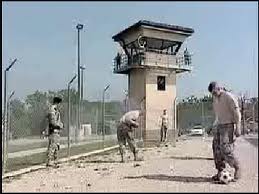
Is this where we will be working at some future date?
Will the Obama administration, or some future administration, send you to a detention camp to work? Will you be transported overseas to work? It is obvious that families will be separated. If the parents are split up to different locations, what happens to the children? Will CPS raise your children in your absence? With legislation this broad, anything is possible.
Since we know that the administration will be controlling all food, will we all be systematically starved to death as we complete our work for the state? There is historical precedent for this statement.
I can only speak for myself, I will not submit to this tyranny. I would rather be dead than live under these types of conditions. If this does not motivate you to stand up to this tyranny, then nothing will.
Congratulations my fellow Americans, you are the property of the state. Now, what are we going to do about this latest brand of tyranny?
Appendix
Presidential Documents
16651
Federal Register
Vol. 77, No. 56
Thursday, March 22, 2012
Title 3—
The President
Executive Order 13603 of March 16, 2012
National Defense Resources Preparedness
By the authority vested in me as President by the Constitution and the
laws of the United States of America, including the Defense Production
Act of 1950, as amended (50 U.S.C. App. 2061 et seq.), and section 301
of title 3, United States Code, and as Commander in Chief of the Armed
Forces of the United States, it is hereby ordered as follows:
PART I—PURPOSE, POLICY, AND IMPLEMENTATION
Section 101. Purpose. This order delegates authorities and addresses national
defense resource policies and programs under the Defense Production Act
of 1950, as amended (the ‘‘Act’’).
Sec. 102. Policy. The United States must have an industrial and technological
base capable of meeting national defense requirements and capable of contributing
to the technological superiority of its national defense equipment
in peacetime and in times of national emergency. The domestic industrial
and technological base is the foundation for national defense preparedness.
The authorities provided in the Act shall be used to strengthen this base
and to ensure it is capable of responding to the national defense needs
of the United States.
Sec. 103. General Functions. Executive departments and agencies (agencies)
responsible for plans and programs relating to national defense (as defined
in section 801(j) of this order), or for resources and services needed to
support such plans and programs, shall:
(a) identify requirements for the full spectrum of emergencies, including
essential military and civilian demand;
(b) assess on an ongoing basis the capability of the domestic industrial
and technological base to satisfy requirements in peacetime and times of
national emergency, specifically evaluating the availability of the most critical
resource and production sources, including subcontractors and suppliers,
materials, skilled labor, and professional and technical personnel;
(c) be prepared, in the event of a potential threat to the security of
the United States, to take actions necessary to ensure the availability of
adequate resources and production capability, including services and critical
technology, for national defense requirements;
(d) improve the efficiency and responsiveness of the domestic industrial
base to support national defense requirements; and
(e) foster cooperation between the defense and commercial sectors for
research and development and for acquisition of materials, services, components,
and equipment to enhance industrial base efficiency and responsiveness.
Sec. 104. Implementation. (a) The National Security Council and Homeland
Security Council, in conjunction with the National Economic Council, shall
serve as the integrated policymaking forum for consideration and formulation
of national defense resource preparedness policy and shall make recommendations
to the President on the use of authorities under the Act.
(b) The Secretary of Homeland Security shall:
(1) advise the President on issues of national defense resource preparedness
and on the use of the authorities and functions delegated by this order;
VerDate Mar<15>2010 17:10 Mar 21, 2012 Jkt 226001 PO 00000 Frm 00001 Fmt 4705 Sfmt 4790 E:\FR\FM\22MRE0.SGM 22MRE0 mstockstill on DSK4VPTVN1PROD with PREDOCE0
16652 Federal Register / Vol. 77, No. 56 / Thursday, March 22, 2012 / Presidential Documents
(2) provide for the central coordination of the plans and programs incident
to authorities and functions delegated under this order, and provide guidance
to agencies assigned functions under this order, developed in consultation
with such agencies; and
(3) report to the President periodically concerning all program activities
conducted pursuant to this order.
(c) The Defense Production Act Committee, described in section 701 of
this order, shall:
(1) in a manner consistent with section 2(b) of the Act, 50 U.S.C. App.
2062(b), advise the President through the Assistant to the President and
National Security Advisor, the Assistant to the President for Homeland
Security and Counterterrorism, and the Assistant to the President for Economic
Policy on the effective use of the authorities under the Act; and
(2) prepare and coordinate an annual report to the Congress pursuant
to section 722(d) of the Act, 50 U.S.C. App. 2171(d).
(d) The Secretary of Commerce, in cooperation with the Secretary of
Defense, the Secretary of Homeland Security, and other agencies, shall:
(1) analyze potential effects of national emergencies on actual production
capability, taking into account the entire production system, including
shortages of resources, and develop recommended preparedness measures
to strengthen capabilities for production increases in national emergencies;
and
(2) perform industry analyses to assess capabilities of the industrial base
to support the national defense, and develop policy recommendations
to improve the international competitiveness of specific domestic industries
and their abilities to meet national defense program needs.
PART II—PRIORITIES AND ALLOCATIONS
Sec. 201. Priorities and Allocations Authorities. (a) The authority of the
President conferred by section 101 of the Act, 50 U.S.C. App. 2071, to
require acceptance and priority performance of contracts or orders (other
than contracts of employment) to promote the national defense over performance
of any other contracts or orders, and to allocate materials, services,
and facilities as deemed necessary or appropriate to promote the national
defense, is delegated to the following agency heads:
(1) the Secretary of Agriculture with respect to food resources, food resource
facilities, livestock resources, veterinary resources, plant health
resources, and the domestic distribution of farm equipment and commercial
fertilizer;
(2) the Secretary of Energy with respect to all forms of energy;
(3) the Secretary of Health and Human Services with respect to health
resources;
(4) the Secretary of Transportation with respect to all forms of civil transportation;
(5) the Secretary of Defense with respect to water resources; and
(6) the Secretary of Commerce with respect to all other materials, services,
and facilities, including construction materials.
(b) The Secretary of each agency delegated authority under subsection
(a) of this section (resource departments) shall plan for and issue regulations
to prioritize and allocate resources and establish standards and procedures
by which the authority shall be used to promote the national defense,
under both emergency and non-emergency conditions. Each Secretary shall
authorize the heads of other agencies, as appropriate, to place priority ratings
on contracts and orders for materials, services, and facilities needed in
support of programs approved under section 202 of this order.
(c) Each resource department shall act, as necessary and appropriate,
upon requests for special priorities assistance, as defined by section 801(l)
VerDate Mar<15>2010 17:10 Mar 21, 2012 Jkt 226001 PO 00000 Frm 00002 Fmt 4705 Sfmt 4790 E:\FR\FM\22MRE0.SGM 22MRE0 mstockstill on DSK4VPTVN1PROD with PREDOCE0
Federal Register /Vol. 77, No. 56 /Thursday, March 22, 2012 / Presidential Documents 16653
of this order, in a time frame consistent with the urgency of the need
at hand. In situations where there are competing program requirements
for limited resources, the resource department shall consult with the Secretary
who made the required determination under section 202 of this order.
Such Secretary shall coordinate with and identify for the resource department
which program requirements to prioritize on the basis of operational urgency.
In situations involving more than one Secretary making such a required
determination under section 202 of this order, the Secretaries shall coordinate
with and identify for the resource department which program requirements
should receive priority on the basis of operational urgency.
(d) If agreement cannot be reached between two such Secretaries, then
the issue shall be referred to the President through the Assistant to the
President and National Security Advisor and the Assistant to the President
for Homeland Security and Counterterrorism.
(e) The Secretary of each resource department, when necessary, shall
make the finding required under section 101(b) of the Act, 50 U.S.C. App.
2071(b). This finding shall be submitted for the President’s approval through
the Assistant to the President and National Security Advisor and the Assistant
to the President for Homeland Security and Counterterrorism. Upon such
approval, the Secretary of the resource department that made the finding
may use the authority of section 101(a) of the Act, 50 U.S.C. App. 2071(a),
to control the general distribution of any material (including applicable
services) in the civilian market.
Sec. 202. Determinations. Except as provided in section 201(e) of this order,
the authority delegated by section 201 of this order may be used only
to support programs that have been determined in writing as necessary
or appropriate to promote the national defense:
(a) by the Secretary of Defense with respect to military production and
construction, military assistance to foreign nations, military use of civil
transportation, stockpiles managed by the Department of Defense, space,
and directly related activities;
(b) by the Secretary of Energy with respect to energy production and
construction, distribution and use, and directly related activities; and
(c) by the Secretary of Homeland Security with respect to all other national
defense programs, including civil defense and continuity of Government.
Sec. 203. Maximizing Domestic Energy Supplies. The authorities of the President
under section 101(c)(1)–(2) of the Act, 50 U.S.C. App. 2071(c)(1)–
(2), are delegated to the Secretary of Commerce, with the exception that
the authority to make findings that materials (including equipment), services,
and facilities are critical and essential, as described in section 101(c)(2)(A)
of the Act, 50 U.S.C. App. 2071(c)(2)(A), is delegated to the Secretary of
Energy.
Sec. 204. Chemical and Biological Warfare. The authority of the President
conferred by section 104(b) of the Act, 50 U.S.C. App. 2074(b), is delegated
to the Secretary of Defense. This authority may not be further delegated
by the Secretary.
PART III—EXPANSION OF PRODUCTIVE CAPACITY AND SUPPLY
Sec. 301. Loan Guarantees. (a) To reduce current or projected shortfalls
of resources, critical technology items, or materials essential for the national
defense, the head of each agency engaged in procurement for the national
defense, as defined in section 801(h) of this order, is authorized pursuant
to section 301 of the Act, 50 U.S.C. App. 2091, to guarantee loans by
private institutions.
(b) Each guaranteeing agency is designated and authorized to: (1) act
as fiscal agent in the making of its own guarantee contracts and in otherwise
carrying out the purposes of section 301 of the Act; and (2) contract with
any Federal Reserve Bank to assist the agency in serving as fiscal agent.
VerDate Mar<15>2010 17:10 Mar 21, 2012 Jkt 226001 PO 00000 Frm 00003 Fmt 4705 Sfmt 4790 E:\FR\FM\22MRE0.SGM 22MRE0 mstockstill on DSK4VPTVN1PROD with PREDOCE0
16654 Federal Register / Vol. 77, No. 56 / Thursday, March 22, 2012 / Presidential Documents
(c) Terms and conditions of guarantees under this authority shall be determined
in consultation with the Secretary of the Treasury and the Director
of the Office of Management and Budget (OMB). The guaranteeing agency
is authorized, following such consultation, to prescribe: (1) either specifically
or by maximum limits or otherwise, rates of interest, guarantee and commitment
fees, and other charges which may be made in connection with such
guarantee contracts; and (2) regulations governing the forms and procedures
(which shall be uniform to the extent practicable) to be utilized in connection
therewith.
Sec. 302. Loans. To reduce current or projected shortfalls of resources,
critical technology items, or materials essential for the national defense,
the head of each agency engaged in procurement for the national defense
is delegated the authority of the President under section 302 of the Act,
50 U.S.C. App. 2092, to make loans thereunder. Terms and conditions of
loans under this authority shall be determined in consultation with the
Secretary of the Treasury and the Director of OMB.
Sec. 303. Additional Authorities. (a) To create, maintain, protect, expand,
or restore domestic industrial base capabilities essential for the national
defense, the head of each agency engaged in procurement for the national
defense is delegated the authority of the President under section 303 of
the Act, 50 U.S.C. App. 2093, to make provision for purchases of, or commitments
to purchase, an industrial resource or a critical technology item for
Government use or resale, and to make provision for the development of
production capabilities, and for the increased use of emerging technologies
in security program applications, and to enable rapid transition of emerging
technologies.
(b) Materials acquired under section 303 of the Act, 50 U.S.C. App. 2093,
that exceed the needs of the programs under the Act may be transferred
to the National Defense Stockpile, if, in the judgment of the Secretary
of Defense as the National Defense Stockpile Manager, such transfers are
in the public interest.
Sec. 304. Subsidy Payments. To ensure the supply of raw or nonprocessed
materials from high-cost sources, or to ensure maximum production or supply
in any area at stable prices of any materials in light of a temporary increase
in transportation cost, the head of each agency engaged in procurement
for the national defense is delegated the authority of the President under
section 303(c) of the Act, 50 U.S.C. App. 2093(c), to make subsidy payments,
after consultation with the Secretary of the Treasury and the Director of
OMB.
Sec. 305. Determinations and Findings. (a) Pursuant to budget authority
provided by an appropriations act in advance for credit assistance under
section 301 or 302 of the Act, 50 U.S.C. App. 2091, 2092, and consistent
with the Federal Credit Reform Act of 1990, as amended (FCRA), 2 U.S.C.
661 et seq., the head of each agency engaged in procurement for the national
defense is delegated the authority to make the determinations set forth
in sections 301(a)(2) and 302(b)(2) of the Act, in consultation with the
Secretary making the required determination under section 202 of this order;
provided, that such determinations shall be made after due consideration
of the provisions of OMB Circular A–129 and the credit subsidy score
for the relevant loan or loan guarantee as approved by OMB pursuant to
FCRA.
(b) Other than any determination by the President under section 303(a)(7)(b)
of the Act, the head of each agency engaged in procurement for the national
defense is delegated the authority to make the required determinations,
judgments, certifications, findings, and notifications defined under section
303 of the Act, 50 U.S.C. App. 2093, in consultation with the Secretary
making the required determination under section 202 of this order.
Sec. 306. Strategic and Critical Materials. The Secretary of Defense, and
the Secretary of the Interior in consultation with the Secretary of Defense
as the National Defense Stockpile Manager, are each delegated the authority
of the President under section 303(a)(1)(B) of the Act, 50 U.S.C. App.
VerDate Mar<15>2010 17:10 Mar 21, 2012 Jkt 226001 PO 00000 Frm 00004 Fmt 4705 Sfmt 4790 E:\FR\FM\22MRE0.SGM 22MRE0 mstockstill on DSK4VPTVN1PROD with PREDOCE0
Federal Register /Vol. 77, No. 56 /Thursday, March 22, 2012 / Presidential Documents 16655
2093(a)(1)(B), to encourage the exploration, development, and mining of
strategic and critical materials and other materials.
Sec. 307. Substitutes. The head of each agency engaged in procurement
for the national defense is delegated the authority of the President under
section 303(g) of the Act, 50 U.S.C. App. 2093(g), to make provision for
the development of substitutes for strategic and critical materials, critical
components, critical technology items, and other resources to aid the national
defense.
Sec. 308. Government-Owned Equipment. The head of each agency engaged
in procurement for the national defense is delegated the authority of the
President under section 303(e) of the Act, 50 U.S.C. App. 2093(e), to:
(a) procure and install additional equipment, facilities, processes, or improvements
to plants, factories, and other industrial facilities owned by
the Federal Government and to procure and install Government-owned equipment
in plants, factories, or other industrial facilities owned by private
persons;
(b) provide for the modification or expansion of privately owned facilities,
including the modification or improvement of production processes, when
taking actions under sections 301, 302, or 303 of the Act, 50 U.S.C. App.
2091, 2092, 2093; and
(c) sell or otherwise transfer equipment owned by the Federal Government
and installed under section 303(e) of the Act, 50 U.S.C. App. 2093(e), to
the owners of such plants, factories, or other industrial facilities.
Sec. 309. Defense Production Act Fund. The Secretary of Defense is designated
the Defense Production Act Fund Manager, in accordance with section
304(f) of the Act, 50 U.S.C. App. 2094(f), and shall carry out the
duties specified in section 304 of the Act, in consultation with the agency
heads having approved, and appropriated funds for, projects under title
III of the Act.
Sec. 310. Critical Items. The head of each agency engaged in procurement
for the national defense is delegated the authority of the President under
section 107(b)(1) of the Act, 50 U.S.C. App. 2077(b)(1), to take appropriate
action to ensure that critical components, critical technology items, essential
materials, and industrial resources are available from reliable sources when
needed to meet defense requirements during peacetime, graduated mobilization,
and national emergency. Appropriate action may include restricting
contract solicitations to reliable sources, restricting contract solicitations to
domestic sources (pursuant to statutory authority), stockpiling critical components,
and developing substitutes for critical components or critical technology
items.
Sec. 311. Strengthening Domestic Capability. The head of each agency engaged
in procurement for the national defense is delegated the authority
of the President under section 107(a) of the Act, 50 U.S.C. App. 2077(a),
to utilize the authority of title III of the Act or any other provision of
law to provide appropriate incentives to develop, maintain, modernize, restore,
and expand the productive capacities of domestic sources for critical
components, critical technology items, materials, and industrial resources
essential for the execution of the national security strategy of the United
States.
Sec. 312. Modernization of Equipment. The head of each agency engaged
in procurement for the national defense, in accordance with section 108(b)
of the Act, 50 U.S.C. App. 2078(b), may utilize the authority of title III
of the Act to guarantee the purchase or lease of advance manufacturing
equipment, and any related services with respect to any such equipment
for purposes of the Act. In considering title III projects, the head of each
agency engaged in procurement for the national defense shall provide a
strong preference for proposals submitted by a small business supplier or
subcontractor in accordance with section 108(b)(2) of the Act, 50 U.S.C.
App. 2078(b)(2).
VerDate Mar<15>2010 17:10 Mar 21, 2012 Jkt 226001 PO 00000 Frm 00005 Fmt 4705 Sfmt 4790 E:\FR\FM\22MRE0.SGM 22MRE0 mstockstill on DSK4VPTVN1PROD with PREDOCE0
16656 Federal Register / Vol. 77, No. 56 / Thursday, March 22, 2012 / Presidential Documents
PART IV—VOLUNTARY AGREEMENTS AND ADVISORY COMMITTEES
Sec. 401. Delegations. The authority of the President under sections 708(c)
and (d) of the Act, 50 U.S.C. App. 2158(c), (d), is delegated to the heads
of agencies otherwise delegated authority under this order. The status of
the use of such delegations shall be furnished to the Secretary of Homeland
Security.
Sec. 402. Advisory Committees. The authority of the President under section
708(d) of the Act, 50 U.S.C. App. 2158(d), and delegated in section 401
of this order (relating to establishment of advisory committees) shall be
exercised only after consultation with, and in accordance with, guidelines
and procedures established by the Administrator of General Services.
Sec. 403. Regulations. The Secretary of Homeland Security, after approval
of the Attorney General, and after consultation by the Attorney General
with the Chairman of the Federal Trade Commission, shall promulgate rules
pursuant to section 708(e) of the Act, 50 U.S.C. App. 2158(e), incorporating
standards and procedures by which voluntary agreements and plans of action
may be developed and carried out. Such rules may be adopted by other
agencies to fulfill the rulemaking requirement of section 708(e) of the Act,
50 U.S.C. App. 2158(e).
PART V—EMPLOYMENT OF PERSONNEL
Sec. 501. National Defense Executive Reserve. (a) In accordance with section
710(e) of the Act, 50 U.S.C. App. 2160(e), there is established in the executive
branch a National Defense Executive Reserve (NDER) composed of persons
of recognized expertise from various segments of the private sector and
from Government (except full-time Federal employees) for training for employment
in executive positions in the Federal Government in the event
of a national defense emergency.
(b) The Secretary of Homeland Security shall issue necessary guidance
for the NDER program, including appropriate guidance for establishment,
recruitment, training, monitoring, and activation of NDER units and shall
be responsible for the overall coordination of the NDER program. The authority
of the President under section 710(e) of the Act, 50 U.S.C. App. 2160(e),
to determine periods of national defense emergency is delegated to the
Secretary of Homeland Security.
(c) The head of any agency may implement section 501(a) of this order
with respect to NDER operations in such agency.
(d) The head of each agency with an NDER unit may exercise the authority
under section 703 of the Act, 50 U.S.C. App. 2153, to employ civilian
personnel when activating all or a part of its NDER unit. The exercise
of this authority shall be subject to the provisions of sections 501(e) and
(f) of this order and shall not be redelegated.
(e) The head of an agency may activate an NDER unit, in whole or
in part, upon the written determination of the Secretary of Homeland Security
that an emergency affecting the national defense exists and that the activation
of the unit is necessary to carry out the emergency program functions of
the agency.
(f) Prior to activating the NDER unit, the head of the agency shall notify,
in writing, the Assistant to the President for Homeland Security and Counterterrorism
of the impending activation.
Sec. 502. Consultants. The head of each agency otherwise delegated functions
under this order is delegated the authority of the President under sections
710(b) and (c) of the Act, 50 U.S.C. App. 2160(b), (c), to employ persons
of outstanding experience and ability without compensation and to employ
experts, consultants, or organizations. The authority delegated by this section
may not be redelegated.
VerDate Mar<15>2010 17:10 Mar 21, 2012 Jkt 226001 PO 00000 Frm 00006 Fmt 4705 Sfmt 4790 E:\FR\FM\22MRE0.SGM 22MRE0 mstockstill on DSK4VPTVN1PROD with PREDOCE0
Federal Register /Vol. 77, No. 56 /Thursday, March 22, 2012 / Presidential Documents 16657
PART VI—LABOR REQUIREMENTS
Sec. 601. Secretary of Labor. (a) The Secretary of Labor, in coordination
with the Secretary of Defense and the heads of other agencies, as deemed
appropriate by the Secretary of Labor, shall:
(1) collect and maintain data necessary to make a continuing appraisal
of the Nation’s workforce needs for purposes of national defense;
(2) upon request by the Director of Selective Service, and in coordination
with the Secretary of Defense, assist the Director of Selective Service
in development of policies regulating the induction and deferment of
persons for duty in the armed services;
(3) upon request from the head of an agency with authority under this
order, consult with that agency with respect to: (i) the effect of contemplated
actions on labor demand and utilization; (ii) the relation of
labor demand to materials and facilities requirements; and (iii) such other
matters as will assist in making the exercise of priority and allocations
functions consistent with effective utilization and distribution of labor;
(4) upon request from the head of an agency with authority under this
order: (i) formulate plans, programs, and policies for meeting the labor
requirements of actions to be taken for national defense purposes; and
(ii) estimate training needs to help address national defense requirements
and promote necessary and appropriate training programs; and
(5) develop and implement an effective labor-management relations policy
to support the activities and programs under this order, with the cooperation
of other agencies as deemed appropriate by the Secretary of Labor,
including the National Labor Relations Board, the Federal Labor Relations
Authority, the National Mediation Board, and the Federal Mediation and
Conciliation Service.
(b) All agencies shall cooperate with the Secretary of Labor, upon request,
for the purposes of this section, to the extent permitted by law.
PART VII—DEFENSE PRODUCTION ACT COMMITTEE
Sec. 701. The Defense Production Act Committee. (a) The Defense Production
Act Committee (Committee) shall be composed of the following members,
in accordance with section 722(b) of the Act, 50 U.S.C. App. 2171(b):
(1) The Secretary of State;
(2) The Secretary of the Treasury;
(3) The Secretary of Defense;
(4) The Attorney General;
(5) The Secretary of the Interior;
(6) The Secretary of Agriculture;
(7) The Secretary of Commerce;
(8) The Secretary of Labor;
(9) The Secretary of Health and Human Services;
(10) The Secretary of Transportation;
(11) The Secretary of Energy;
(12) The Secretary of Homeland Security;
(13) The Director of National Intelligence;
(14) The Director of the Central Intelligence Agency;
(15) The Chair of the Council of Economic Advisers;
(16) The Administrator of the National Aeronautics and Space Administration;
and
(17) The Administrator of General Services.
VerDate Mar<15>2010 17:10 Mar 21, 2012 Jkt 226001 PO 00000 Frm 00007 Fmt 4705 Sfmt 4790 E:\FR\FM\22MRE0.SGM 22MRE0 mstockstill on DSK4VPTVN1PROD with PREDOCE0
16658 Federal Register / Vol. 77, No. 56 / Thursday, March 22, 2012 / Presidential Documents
(b) The Director of OMB and the Director of the Office of Science and
Technology Policy shall be invited to participate in all Committee meetings
and activities in an advisory role. The Chairperson, as designated by the
President pursuant to section 722 of the Act, 50 U.S.C. App. 2171, may
invite the heads of other agencies or offices to participate in Committee
meetings and activities in an advisory role, as appropriate.
Sec. 702. Offsets. The Secretary of Commerce shall prepare and submit
to the Congress the annual report required by section 723 of the Act, 50
U.S.C. App. 2172, in consultation with the Secretaries of State, the Treasury,
Defense, and Labor, the United States Trade Representative, the Director
of National Intelligence, and the heads of other agencies as appropriate.
The heads of agencies shall provide the Secretary of Commerce with such
information as may be necessary for the effective performance of this function.
PART VIII—GENERAL PROVISIONS
Sec. 801. Definitions. In addition to the definitions in section 702 of the
Act, 50 U.S.C. App. 2152, the following definitions apply throughout this
order:
(a) ‘‘Civil transportation’’ includes movement of persons and property
by all modes of transportation in interstate, intrastate, or foreign commerce
within the United States, its territories and possessions, and the District
of Columbia, and related public storage and warehousing, ports, services,
equipment and facilities, such as transportation carrier shop and repair
facilities. ‘‘Civil transportation’’ also shall include direction, control, and
coordination of civil transportation capacity regardless of ownership. ‘‘Civil
transportation’’ shall not include transportation owned or controlled by the
Department of Defense, use of petroleum and gas pipelines, and coal slurry
pipelines used only to supply energy production facilities directly.
(b) ‘‘Energy’’ means all forms of energy including petroleum, gas (both
natural and manufactured), electricity, solid fuels (including all forms of
coal, coke, coal chemicals, coal liquification, and coal gasification), solar,
wind, other types of renewable energy, atomic energy, and the production,
conservation, use, control, and distribution (including pipelines) of all of
these forms of energy.
(c) ‘‘Farm equipment’’ means equipment, machinery, and repair parts manufactured
for use on farms in connection with the production or preparation
for market use of food resources.
(d) ‘‘Fertilizer’’ means any product or combination of products that contain
one or more of the elements nitrogen, phosphorus, and potassium for use
as a plant nutrient.
(e) ‘‘Food resources’’ means all commodities and products, (simple, mixed,
or compound), or complements to such commodities or products, that are
capable of being ingested by either human beings or animals, irrespective
of other uses to which such commodities or products may be put, at all
stages of processing from the raw commodity to the products thereof in
vendible form for human or animal consumption. ‘‘Food resources’’ also
means potable water packaged in commercially marketable containers, all
starches, sugars, vegetable and animal or marine fats and oils, seed, cotton,
hemp, and flax fiber, but does not mean any such material after it loses
its identity as an agricultural commodity or agricultural product.
(f) ‘‘Food resource facilities’’ means plants, machinery, vehicles (including
on farm), and other facilities required for the production, processing, distribution,
and storage (including cold storage) of food resources, and for the
domestic distribution of farm equipment and fertilizer (excluding transportation
thereof).
(g) ‘‘Functions’’ include powers, duties, authority, responsibilities, and
discretion.
VerDate Mar<15>2010 17:10 Mar 21, 2012 Jkt 226001 PO 00000 Frm 00008 Fmt 4705 Sfmt 4790 E:\FR\FM\22MRE0.SGM 22MRE0 mstockstill on DSK4VPTVN1PROD with PREDOCE0
Federal Register /Vol. 77, No. 56 /Thursday, March 22, 2012 / Presidential Documents 16659
(h) ‘‘Head of each agency engaged in procurement for the national defense’’
means the heads of the Departments of State, Justice, the Interior, and
Homeland Security, the Office of the Director of National Intelligence, the
Central Intelligence Agency, the National Aeronautics and Space Administration,
the General Services Administration, and all other agencies with authority
delegated under section 201 of this order.
(i) ‘‘Health resources’’ means drugs, biological products, medical devices,
materials, facilities, health supplies, services and equipment required to
diagnose, mitigate or prevent the impairment of, improve, treat, cure, or
restore the physical or mental health conditions of the population.
(j) ‘‘National defense’’ means programs for military and energy production
or construction, military or critical infrastructure assistance to any foreign
nation, homeland security, stockpiling, space, and any directly related activity.
Such term includes emergency preparedness activities conducted pursuant
to title VI of the Robert T. Stafford Disaster Relief and Emergency
Assistance Act, 42 U.S.C. 5195 et seq., and critical infrastructure protection
and restoration.
(k) ‘‘Offsets’’ means compensation practices required as a condition of
purchase in either government-to-government or commercial sales of defense
articles and/or defense services as defined by the Arms Export Control
Act, 22 U.S.C. 2751 et seq., and the International Traffic in Arms Regulations,
22 C.F.R. 120.1–130.17.
(l) ‘‘Special priorities assistance’’ means action by resource departments
to assist with expediting deliveries, placing rated orders, locating suppliers,
resolving production or delivery conflicts between various rated orders, addressing
problems that arise in the fulfillment of a rated order or other
action authorized by a delegated agency, and determining the validity of
rated orders.
(m) ‘‘Strategic and critical materials’’ means materials (including energy)
that (1) would be needed to supply the military, industrial, and essential
civilian needs of the United States during a national emergency, and (2)
are not found or produced in the United States in sufficient quantities
to meet such need and are vulnerable to the termination or reduction of
the availability of the material.
(n) ‘‘Water resources’’ means all usable water, from all sources, within
the jurisdiction of the United States, that can be managed, controlled, and
allocated to meet emergency requirements, except ‘‘water resources’’ does
not include usable water that qualifies as ‘‘food resources.’’
Sec. 802. General. (a) Except as otherwise provided in section 802(c) of
this order, the authorities vested in the President by title VII of the Act,
50 U.S.C. App. 2151 et seq., are delegated to the head of each agency
in carrying out the delegated authorities under the Act and this order,
by the Secretary of Labor in carrying out part VI of this order, and by
the Secretary of the Treasury in exercising the functions assigned in Executive
Order 11858, as amended.
(b) The authorities that may be exercised and performed pursuant to
section 802(a) of this order shall include:
(1) the power to redelegate authorities, and to authorize the successive
redelegation of authorities to agencies, officers, and employees of the
Government; and
(2) the power of subpoena under section 705 of the Act, 50 U.S.C. App.
2155, with respect to (i) authorities delegated in parts II, III, and section
702 of this order, and (ii) the functions assigned to the Secretary of
the Treasury in Executive Order 11858, as amended, provided that the
subpoena power referenced in subsections (i) and (ii) shall be utilized
only after the scope and purpose of the investigation, inspection, or inquiry
to which the subpoena relates have been defined either by the appropriate
officer identified in section 802(a) of this order or by such other person
or persons as the officer shall designate.
VerDate Mar<15>2010 17:10 Mar 21, 2012 Jkt 226001 PO 00000 Frm 00009 Fmt 4705 Sfmt 4790 E:\FR\FM\22MRE0.SGM 22MRE0 mstockstill on DSK4VPTVN1PROD with PREDOCE0
16660 Federal Register / Vol. 77, No. 56 / Thursday, March 22, 2012 / Presidential Documents
(c) Excluded from the authorities delegated by section 802(a) of this order
are authorities delegated by parts IV and V of this order, authorities in
section 721 and 722 of the Act, 50 U.S.C. App. 2170–2171, and the authority
with respect to fixing compensation under section 703 of the Act, 50 U.S.C.
App. 2153.
Sec. 803. Authority. (a) Executive Order 12919 of June 3, 1994, and sections
401(3)–(4) of Executive Order 12656 of November 18, 1988, are revoked.
All other previously issued orders, regulations, rulings, certificates, directives,
and other actions relating to any function affected by this order shall remain
in effect except as they are inconsistent with this order or are subsequently
amended or revoked under proper authority. Nothing in this order shall
affect the validity or force of anything done under previous delegations
or other assignment of authority under the Act.
(b) Nothing in this order shall affect the authorities assigned under Executive
Order 11858 of May 7, 1975, as amended, except as provided in section
802 of this order.
(c) Nothing in this order shall affect the authorities assigned under Executive
Order 12472 of April 3, 1984, as amended.
Sec. 804. General Provisions. (a) Nothing in this order shall be construed
to impair or otherwise affect functions of the Director of OMB relating
to budgetary, administrative, or legislative proposals.
(b) This order shall be implemented consistent with applicable law and
subject to the availability of appropriations.
(c) This order is not intended to, and does not, create any right or benefit,
substantive or procedural, enforceable at law or in equity by any party
against the United States, its departments, agencies, or entities, its officers,
employees, or agents, or any other person.
THE WHITE HOUSE,
March 16, 2012.
[FR Doc. 2012–7019
Filed 3–21–12; 8:45 am]
Billing code 3295–F2–P
Credit to The Common Sense Show


